
Table of Contents
Dry mouth, also called xerostomia, happens when there is not enough saliva to keep the mouth comfortably moist. Occasional dryness can happen because of dehydration, stress, sleeping with your mouth open, or other temporary factors. Persistent dry mouth, however, deserves more attention because saliva plays an important role in protecting the teeth, gums, and other tissues in the mouth.
When saliva levels remain low, eating, speaking, swallowing, and sleeping may become uncomfortable. Reduced saliva can also increase the risk of tooth decay, enamel damage, bad breath, gum problems, and certain oral infections.
Because dry mouth has many possible causes, treatment depends on what is contributing to the problem. Managing symptoms can help, but ongoing or worsening dryness should be professionally evaluated especially when it begins affecting your oral health or daily comfort.
Tired of Constant Dry Mouth?
Do not ignore ongoing dryness and discomfort. Schedule an evaluation today and discover what may be causing it.
What Is Dry Mouth?
Dry mouth is more than simply feeling thirsty.
Xerostomia refers to the sensation of having an unusually dry mouth, often because saliva production has decreased or because the saliva that is present is not adequately keeping the mouth moist.
Saliva has several important jobs. It helps lubricate the mouth, supports comfortable chewing and swallowing, washes food particles away from the teeth, and helps neutralize acids that can contribute to enamel damage.
A temporary dry feeling is usually not unusual. You might notice it after exercise, when you are nervous, or after spending time without drinking enough fluids.
The concern is persistent dryness that continues regularly or becomes severe enough to interfere with speaking, eating, sleeping, or maintaining good oral health.
What Causes Dry Mouth?
Dry mouth can have many causes, and sometimes more than one factor is involved.
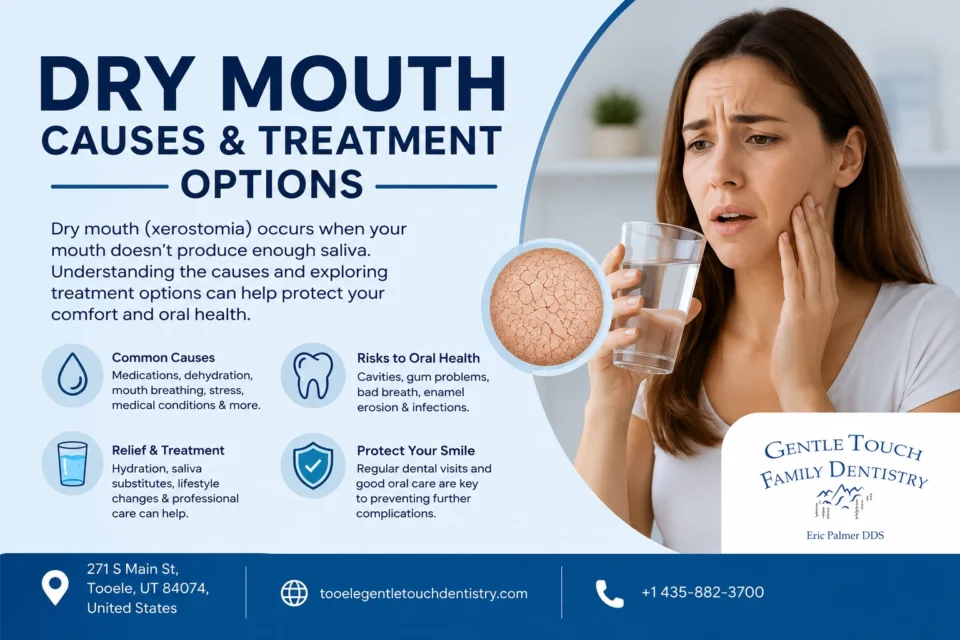
Dehydration
Not drinking enough fluids can temporarily reduce moisture in the mouth.
Dehydration may be more likely during hot weather, exercise, illness, or situations involving significant fluid loss. Increasing fluid intake may help when dehydration is the primary cause.
Medications
Many prescription and over-the-counter medications can contribute to dry mouth as a side effect.
Medications used for a wide variety of health conditions may affect saliva production or make the mouth feel dry.
If you suspect a medication is contributing to your symptoms, do not stop taking it or change the dosage on your own. Discuss the issue with the healthcare professional who prescribed or recommended it. They can determine whether an adjustment or alternative is appropriate.
Mouth breathing
Regularly breathing through the mouth can dry the oral tissues, particularly during sleep.
Some people wake with significant dryness because they sleep with their mouth open. Nasal congestion or other breathing-related factors may contribute.
Tobacco use
Smoking and other tobacco use can contribute to dry or irritated oral tissues and may worsen existing oral health concerns.
Avoiding tobacco can support both oral and overall health.
Alcohol
Alcohol can have a drying effect and may make dry-mouth symptoms more noticeable for some people.
Alcohol-containing oral care products may also feel irritating when the mouth is already dry. A dentist may recommend an alcohol-free alternative depending on your symptoms.
Caffeine
Coffee, tea, energy drinks, and other caffeinated beverages may contribute to dryness in some people, particularly when consumed frequently.
You may find it helpful to pay attention to whether symptoms become worse after drinking caffeinated beverages.
Stress or anxiety
Stress and anxiety can temporarily make the mouth feel dry.
Some people notice dryness during stressful conversations, presentations, medical appointments, or periods of prolonged anxiety.
Persistent symptoms should not automatically be attributed to stress, however, because other causes may also be present.
Medical conditions and treatments
Certain health conditions can affect saliva production. Medical treatments may also contribute to xerostomia in some patients.
Because persistent dry mouth can occasionally be associated with a broader health issue, evaluation may involve both dental and medical professionals depending on the circumstances.
What Are the Symptoms of Dry Mouth?
The most obvious symptom is a mouth that repeatedly feels dry, but xerostomia can cause several other changes.
Possible symptoms include:
- A sticky feeling inside the mouth
- Thick or stringy saliva
- Dry or cracked lips
- A dry or burning sensation on the tongue or other oral tissues
- Difficulty swallowing dry foods
- Difficulty speaking for extended periods
- Changes in how foods taste
- Persistent bad breath
- A frequent need to sip water
- Waking during the night because the mouth feels dry
- Soreness or irritation inside the mouth
Some people may also notice that dentures or other removable dental appliances feel less comfortable when there is not enough saliva to lubricate the oral tissues.
The severity of symptoms can vary throughout the day. For example, dryness may be especially noticeable in the morning or overnight if mouth breathing contributes to the problem.
How Can Dry Mouth Affect Your Teeth and Gums?
Saliva does much more than keep the mouth comfortable.
It is part of the mouth’s natural defense system.
Increased risk of tooth decay
Saliva helps wash away food particles and helps neutralize acids produced by bacteria in dental plaque.
When saliva remains reduced, acids and food residue may stay in contact with the teeth longer. This can increase the risk of cavities, particularly when dry mouth is chronic.
Greater risk of enamel damage
The minerals and buffering properties in saliva help protect tooth enamel.
When the mouth stays dry, teeth may have less natural protection against acidic conditions. Frequent sugary or acidic foods and drinks can make this concern more significant.
Gum and oral tissue irritation
A dry mouth can make the gums, tongue, cheeks, and other soft tissues feel irritated or uncomfortable.
Reduced moisture can also make normal functions such as chewing and speaking less comfortable.
Bad breath
Saliva helps keep the mouth clean by moving food debris and bacteria away from surfaces.
When saliva production decreases, bacteria and food particles may remain in the mouth longer, which can contribute to persistent bad breath.
Oral infections
Reduced saliva may create conditions that make some oral infections more likely.
Changes such as ongoing soreness, unusual patches, or persistent irritation should be evaluated instead of being assumed to be ordinary dryness.
Because chronic xerostomia can increase the risk of dental problems, consistent preventive dentistry can become especially important for protecting teeth and monitoring changes over time.
What Are the Treatment Options for Dry Mouth?
There is no single treatment that works for every case of dry mouth.
The best approach depends on why the symptoms are occurring, how severe they are, and whether the dryness has already affected the teeth or other oral tissues.
Addressing contributing factors
When possible, management begins by identifying factors that may be contributing to dryness.
For example, hydration may be important when fluid intake is inadequate, while persistent mouth breathing may warrant further evaluation.
If medication appears to be involved, your healthcare provider may review whether changes are possible. Again, prescribed medication should not be stopped or altered without professional guidance.
Saliva substitutes and moisturizing products
Some patients may benefit from dentist-recommended products designed to moisturize the mouth or temporarily relieve dryness.
These may include oral rinses, gels, sprays, or saliva substitutes. The most appropriate option can depend on your symptoms and oral health.
Increasing cavity prevention
People with chronic dry mouth may need additional attention to cavity prevention because reduced saliva can make teeth more vulnerable.
A dentist may recommend specific fluoride products or other preventive measures depending on your individual level of risk.
Managing underlying dental or medical problems
If an examination identifies decay, gum concerns, oral infection, or another condition, that problem may need to be treated separately.
When a medical condition may be contributing to reduced saliva production, coordination with a physician or other healthcare professional may also be appropriate.
The goal is not simply to make the mouth temporarily feel wetter. Effective management should address both comfort and the potential oral health effects of persistent low saliva.
What Can You Do at Home to Relieve Dry Mouth?
Several everyday habits may help make dry-mouth symptoms more manageable.
Drink water regularly
Taking small sips of water throughout the day can help keep the mouth more comfortable.
Keeping water nearby may be particularly useful if dryness becomes worse while speaking, working, or sleeping.
Chew sugar-free gum when appropriate
Chewing can stimulate saliva production in people whose salivary glands are still able to respond.
Sugar-free gum may be an option for some patients, although it may not be appropriate for everyone, particularly if chewing causes jaw pain or other discomfort.
Limit frequent sugary foods and drinks
Chronic dry mouth can already increase cavity risk.
Frequently exposing teeth to sugary foods or drinks may add to that risk, so limiting how often they are consumed can help protect the teeth.
Pay attention to caffeine and alcohol
If caffeine or alcohol appears to worsen your symptoms, reducing your intake may help.
Individual responses vary, so pay attention to patterns in how your mouth feels.
Avoid tobacco
Tobacco can contribute to oral dryness and irritation while also creating other significant oral health risks.
Avoiding tobacco is one of the most useful steps you can take for long-term oral health.
Use appropriate oral care products
Some patients with dry mouth find strongly flavored or alcohol-containing oral products uncomfortable.
A dentist can recommend products that are appropriate for your situation, including options designed for sensitive or dry oral tissues.
Brush with fluoride toothpaste
Brush consistently with fluoride toothpaste to help protect teeth against decay.
Because chronic dry mouth can increase cavity risk, maintaining good daily oral hygiene is especially important.
Clean between your teeth every day
Floss or use another appropriate interdental cleaning method to remove plaque from areas that brushing does not reach effectively.
Home care helps reduce risk, but it does not replace professional evaluation when dry mouth is persistent.
What Children’s Drawings Reveal About Their Dental Anxiety at the Clinic
Children’s drawings are more than just cute pictures—they can be [...]
Learn More
When Should You See a Dentist for Dry Mouth?
An occasional dry mouth usually is not a reason for concern.
Persistent, worsening, or unexplained xerostomia is different.
Consider scheduling a dental evaluation if:
- Your mouth feels dry most days
- Symptoms continue despite drinking adequate fluids
- Dryness regularly wakes you at night
- You have difficulty eating, swallowing, or speaking
- You are developing cavities more frequently
- Your gums or other oral tissues are sore or irritated
- You notice persistent bad breath
- You develop mouth sores or unusual changes inside the mouth
- Your symptoms started after beginning a medication
- Dryness is getting progressively worse
Dental Exam Page can help identify changes in the teeth, gums, and oral tissues that may be associated with chronic dry mouth. Your dentist can also discuss possible contributing factors and recommend appropriate preventive strategies based on your oral health.
If symptoms may be related to a medical condition or medication, your dentist may recommend discussing the issue with the appropriate healthcare professional as well.
Patients looking for dental care locally can visit our [Tooele Location Page] for information about care in the area.
FAQs
Is dry mouth bad for your teeth?
Persistent dry mouth can increase the risk of tooth decay because saliva helps wash away food particles, neutralize acids, and protect enamel. Occasional dryness is common, but chronic symptoms deserve additional attention to preventive oral care.
What is the most common cause of dry mouth?
There is no single cause that applies to everyone. Medications, dehydration, mouth breathing, tobacco or alcohol use, stress, health conditions, and medical treatments can all contribute to dry mouth.
Can medications cause dry mouth?
Yes. Dry mouth is a possible side effect of many medications. Do not stop or alter a prescribed medication without consulting the healthcare professional who prescribed it.
Can drinking more water cure dry mouth?
Drinking water can help when dehydration contributes to symptoms and can provide temporary relief in many cases. However, persistent xerostomia caused by medications, health conditions, or other factors may require additional management.
Does dry mouth cause bad breath?
It can. Reduced saliva means food particles and bacteria may remain in the mouth longer, which can contribute to bad breath. Persistent bad breath can have other causes as well, so ongoing symptoms are worth discussing with a dental professional.
Can dry mouth cause cavities?
Chronic dry mouth can increase cavity risk because the teeth have less saliva available to wash away debris and neutralize acids. Good oral hygiene and dentist-recommended preventive measures may help reduce that risk.
Keep Dry Mouth From Becoming a Bigger Dental Concern
Dry mouth can seem like a minor annoyance, but persistent symptoms may affect much more than comfort. When saliva remains low, your teeth and gums lose part of their natural protection against acids, bacteria, and everyday irritation.
At Gentle Touch Family Dentistry, we can evaluate your teeth, gums, and oral tissues for changes associated with chronic dry mouth and help you understand practical ways to protect your oral health. If another health issue or medication may be contributing, we can also help you understand when discussing your symptoms with another healthcare professional may be appropriate.
If dry mouth has become frequent, uncomfortable, or difficult to manage, consider scheduling an evaluation rather than continuing to manage the symptoms on your own.
Get Relief From Dry Mouth
Persistent dry mouth can affect your comfort and oral health. Call today to find the right treatment for lasting relief.