Table of Contents
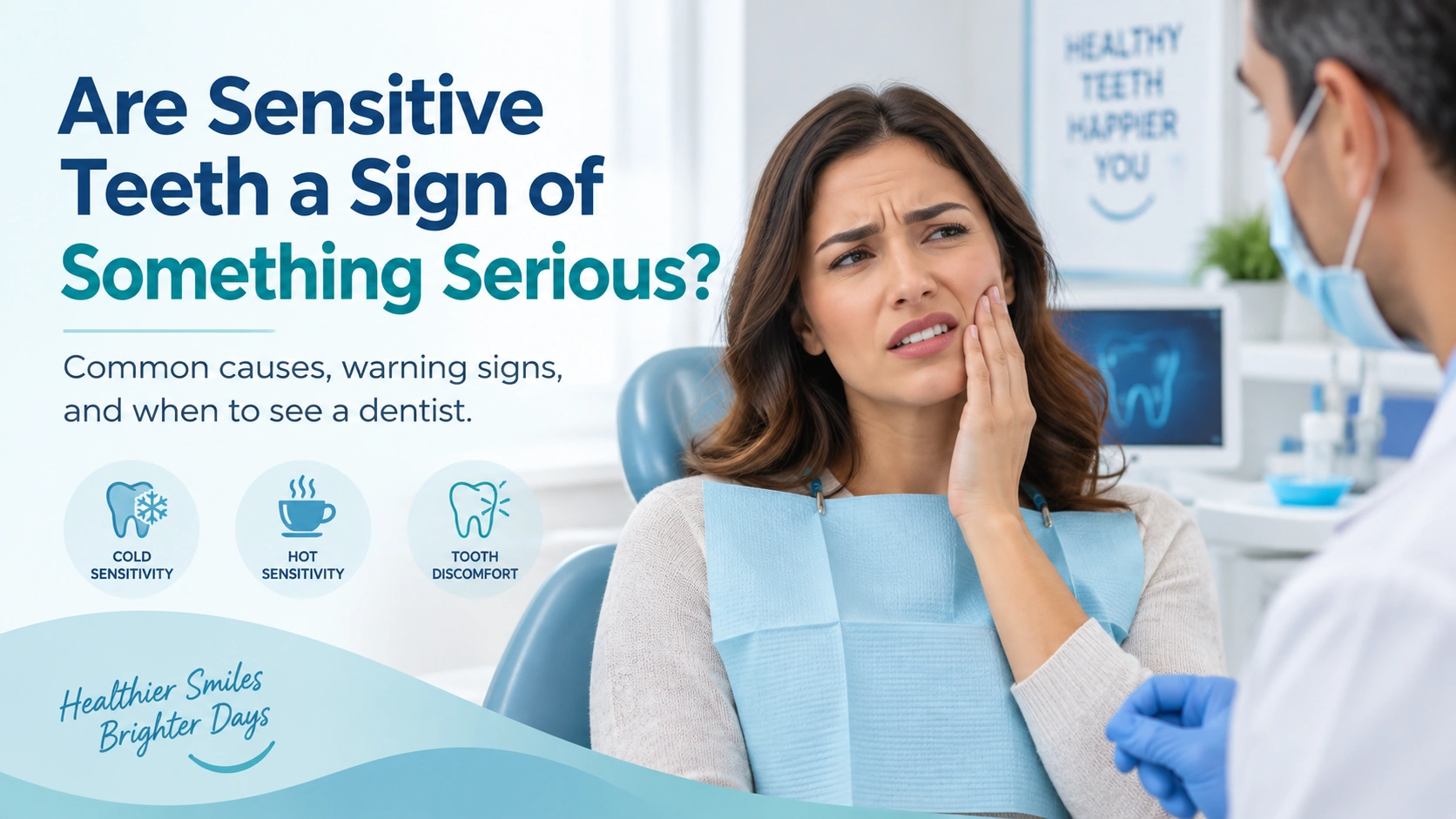
A quick twinge when you drink ice water or eat something sweet does not always mean there is a serious problem with your teeth. Tooth sensitivity is common and can occur when enamel becomes worn, gums recede, or the more sensitive dentin underneath a tooth’s protective surfaces becomes exposed.
However, sensitivity can also be associated with cavities, cracks, worn fillings, gum disease, and other dental problems. The ADA lists tooth decay, fractured teeth, worn fillings, gum disease, worn enamel, and exposed tooth roots among common causes of sensitive teeth.
If you are wondering if sensitive teeth are a sign of something serious, pay attention to how long the discomfort lasts, whether it is getting worse, and whether it affects one specific tooth.
Sensitivity that is persistent, severe, worsening, or accompanied by pain, swelling, a cracked tooth, or discomfort when biting should be professionally evaluated rather than managed indefinitely at home.
Are Sensitive Teeth a Sign of Something Serious?
Sometimes—but not always.
To understand why teeth become sensitive, it helps to know a little about tooth structure. Enamel protects the visible crown of a healthy tooth, while cementum helps cover the tooth root below the gumline. Beneath these protective layers is dentin.
Dentin contains microscopic tubules that can transmit sensations toward the inner part of the tooth. When dentin becomes exposed because enamel has worn away or the gums have receded, hot, cold, acidic, sweet, or physical stimulation may cause a brief sharp sensation.
That type of dentin sensitivity can often be managed successfully.
The concern is that sensitivity is a symptom rather than a diagnosis. You cannot always tell from the sensation alone whether the cause is exposed dentin, a cavity, a cracked tooth, or another problem.
The pattern can provide useful clues. Sensitivity that happens occasionally and disappears quickly may be less concerning than pain that lingers after the hot or cold stimulus is gone. Severe or lingering temperature sensitivity, pain when biting, or swelling can indicate that the tissues inside or around a tooth need closer evaluation.
Rather than assuming every sensitive tooth needs extensive treatment or assuming sensitivity is harmless a dental exam can identify the actual cause.
What Are the Common Causes of Tooth Sensitivity?
Sensitive teeth can develop for several reasons, and more than one factor may be involved at the same time.
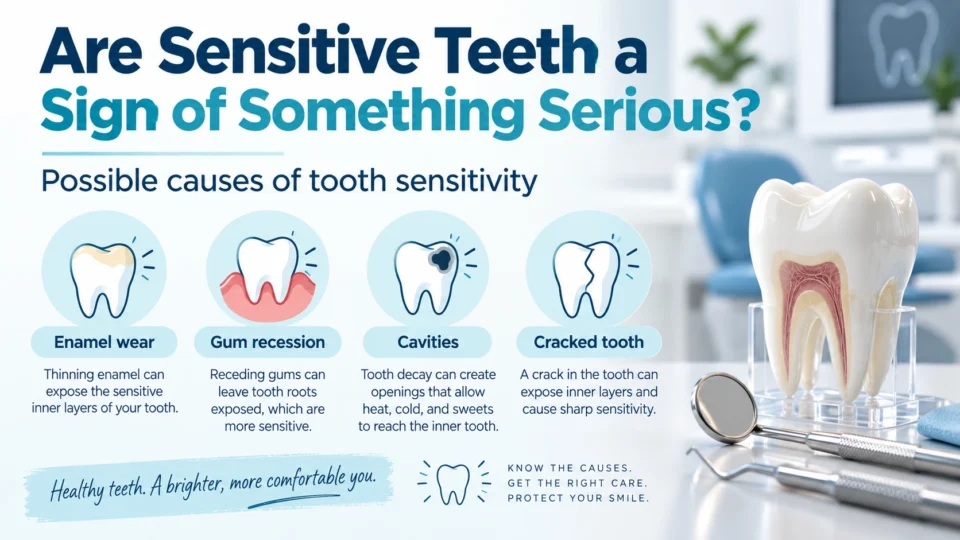
Worn tooth enamel
Enamel protects the dentin underneath it. When enamel becomes thinner or damaged, teeth can become more responsive to temperature and other triggers.
Acid exposure is one possible contributor. Frequent acidic drinks, acidic foods, or stomach acid from conditions involving reflux or repeated vomiting may contribute to dental erosion. Advanced erosive wear can expose dentin and cause hypersensitivity.
Gum recession
When gums recede, part of the tooth root may become exposed.
Roots do not have the same enamel covering as the crowns of teeth. Exposed root surfaces can therefore be particularly sensitive to cold temperatures, touch, and certain foods.
Gum recession can have several causes, so increasing root exposure should be evaluated rather than automatically blamed on aging or brushing.
Cavities
Tooth decay can cause sensitivity, particularly as damage progresses into deeper layers of the tooth.
You may notice sensitivity to cold, sweets, or other stimuli. However, cavities do not always cause symptoms early, which is one reason regular dental evaluations remain important.
Cracked or fractured teeth
A cracked tooth may produce sensitivity or a sharp sensation, especially when chewing or releasing your bite.
Some cracks are easy to see, while others can be difficult to identify without a dental examination. AAE guidance lists a chipped or cracked tooth, severe pain while chewing, and lingering temperature sensitivity among symptoms that can warrant evaluation of the dental pulp.
Worn or damaged fillings
Older fillings and other restorations can eventually wear, fracture, or develop problems around their edges.
If a previously comfortable tooth suddenly becomes sensitive, your dentist may examine both the natural tooth and any existing dental work.
Teeth grinding or clenching
Grinding and clenching place repeated forces on teeth.
Over time, these habits may contribute to tooth wear or cracks, which can sometimes make teeth more sensitive. A dentist can look for characteristic wear patterns and determine whether your bite or grinding habits may be involved.
Gum disease
Gum disease can cause recession and expose root surfaces. More advanced periodontal problems can also affect the tissues supporting the teeth.
Sensitivity combined with persistent bleeding, swelling, gum recession, or loose teeth deserves professional attention.
When Is Tooth Sensitivity Normal or Temporary?
Not every episode of sensitivity indicates ongoing dental disease.
For example, teeth may sometimes feel temporarily sensitive after certain dental procedures. The tissues inside or around a tooth can need time to settle following treatment.
Teeth whitening
Whitening is one of the better-known causes of temporary sensitivity.
The ADA reports that temporary tooth sensitivity is among the most common side effects of peroxide-based tooth whitening. For many patients, the discomfort is mild and temporary.
If whitening causes significant or persistent sensitivity, stop or adjust use according to the product or dental professional’s instructions and discuss the problem with your dentist.
Recent dental treatment
A tooth may sometimes feel temporarily sensitive after a filling, crown, cleaning, or another procedure.
Whether that is expected depends on what treatment was performed and how the tooth responds afterward. If sensitivity becomes more intense instead of improving, lasts longer than your dentist advised, or develops into significant pain, contact the dental office.
Brief sensitivity from exposed dentin
A short, sharp sensation that stops almost immediately after exposure to something cold can occur with dentin hypersensitivity.
Even then, recurring sensitivity is worth mentioning at a dental visit because the dentist can help identify why the dentin is exposed.
The important distinction is between temporary sensitivity that gradually improves and symptoms that persist or progress.
You do not need to panic about every quick twinge. You also should not continue ignoring a tooth that repeatedly hurts.
What Warning Signs Could Indicate a Dental Problem?
Pay closer attention when sensitivity changes from an occasional inconvenience into a persistent or localized symptom.
Warning signs include:
- Sensitivity that keeps getting worse
- Sensitivity limited primarily to one tooth
- Pain that continues after a hot or cold stimulus is removed
- Pain when biting or chewing
- Spontaneous tooth pain without an obvious trigger
- Visible cracks or chips
- A broken or loose filling
- Swelling around a tooth or the gums
- Tender or swollen gums
- Gum bleeding combined with recession or other changes
- A tooth becoming noticeably darker
- A pimple-like bump on the gum
- Facial swelling
Lingering sensitivity to hot or cold, severe pain while chewing, swelling or tenderness, and cracked teeth can sometimes be associated with inflammation or infection involving the pulp inside the tooth. These symptoms require professional diagnosis; they do not automatically mean you need root canal treatment.
Sudden sensitivity after an injury should also be evaluated. A tooth can develop cracks or internal damage even when it looks relatively normal from the outside.
If swelling becomes significant or is accompanied by difficulty breathing or swallowing, seek urgent medical attention.
How Does a Dentist Evaluate Sensitive Teeth?
Determining why a tooth is sensitive usually starts with a discussion of your symptoms.
Your dentist may ask:
- When did the sensitivity begin?
- Is one tooth affected or several?
- Does cold, heat, sweetness, or pressure trigger it?
- How long does the sensation last?
- Does the tooth hurt when you bite?
- Have you recently had dental treatment?
- Do you grind or clench your teeth?
- Have you recently used whitening products?
- Have your gums been receding?
- Have you experienced a dental injury?
Next, the dentist examines your teeth and gums.
They may look for visible cavities, damaged fillings, enamel wear, exposed roots, gum recession, fractures, or other changes. Your bite may also be checked if grinding or excess pressure is suspected.
Depending on your symptoms, the dentist may perform controlled tests to see how an individual tooth responds to temperature, tapping, pressure, or biting.
Dental X-rays may be recommended when they can provide additional diagnostic information. For example, an image can sometimes reveal decay or changes around a tooth root that cannot be fully seen during a visual examination.
The goal is not simply to stop the sensation. It is to identify why the tooth is sensitive so the underlying cause can be addressed appropriately.
What Can Help Reduce Tooth Sensitivity?
The right solution depends on the cause.
If your sensitivity comes from exposed dentin rather than an untreated cavity, crack, or infection, relatively simple measures may provide relief.
Use toothpaste designed for sensitive teeth
Desensitizing toothpaste can contain ingredients that reduce the transmission of sensations through exposed dentin.
The ADA notes that ingredients including potassium, stannous compounds, and arginine are used in toothpastes intended to reduce dentin hypersensitivity. These products generally require repeated use rather than providing an instant fix.
Brush gently with a soft-bristled toothbrush
Aggressive brushing is not necessary to remove plaque.
Use a soft-bristled toothbrush, gentle pressure, and fluoride toothpaste. Scrubbing harder does not clean teeth better and may irritate vulnerable areas along the gumline.
Limit frequent acidic exposure
Frequent acidic drinks and foods may contribute to erosive enamel wear.
You do not need to eliminate all acidic foods from a balanced diet, but reducing repeated exposure such as sipping acidic beverages over several hours can help protect tooth surfaces.
Continue cleaning between your teeth
Sensitivity is not a reason to stop flossing or cleaning between teeth altogether.
If a particular area hurts when you floss, mention it to your dentist. A cavity, damaged restoration, gum inflammation, or another problem may need evaluation.
Use fluoride as recommended
Fluoride helps strengthen enamel and promotes remineralization during early mineral loss. Your dentist may recommend a specific fluoride toothpaste, gel, varnish, or other product depending on your individual cavity and sensitivity risk.
Regular Preventive Dentistry visits can also help your dental team identify enamel wear, gum recession, cavities, and other potential sources of sensitivity before symptoms become more disruptive.
Address the underlying dental problem
Home care cannot repair every cause of sensitivity.
A cavity may need a filling. A cracked or damaged tooth may need restorative treatment. Gum recession may require management based on its cause and severity. Significant pulpal inflammation or infection may require endodontic care.
This is why persistent sensitivity should not be treated indefinitely with home remedies without first determining the cause.
When Should You See a Dentist?
Schedule a dental evaluation when tooth sensitivity:
- Persists despite using a gentler oral-care routine
- Becomes more frequent or intense
- Is consistently limited to one tooth
- Lingers after eating or drinking something hot or cold
- Causes pain when biting or chewing
- Starts after a crack, chip, or dental injury
- Occurs alongside gum recession or bleeding
- Is accompanied by swelling or tenderness
- Interferes with eating, drinking, brushing, or sleep
The ADA recommends discussing concerns about sensitive teeth with a dentist because treatment depends on identifying the underlying source of the sensitivity.
Do not wait for sensitivity to become severe before mentioning it.
For patients in Tooele, an examination can help determine whether you are dealing with straightforward dentin sensitivity or whether a cavity, cracked tooth, worn restoration, gum problem, or another condition needs treatment.
If your sensitivity began after recent dental treatment, your dentist can also tell you whether your symptoms fit the expected recovery pattern or deserve another look.
Sensitivity alone does not tell you exactly what is happening. A professional evaluation can.
FAQs
Is sensitive teeth a sign of a cavity?
It can be. Cavities are one possible cause of tooth sensitivity, especially when sensitivity is new or localized to a particular tooth. However, enamel wear, gum recession, cracks, damaged fillings, and other conditions can produce similar symptoms.
Why is just one tooth suddenly sensitive?
Sensitivity affecting one tooth may be related to exposed dentin, decay, a crack, a restoration, or another localized issue. Because it is difficult to distinguish these causes at home, new or persistent sensitivity in one tooth should be evaluated.
Is sensitivity to cold always serious?
No. Brief cold sensitivity can occur with exposed dentin or gum recession and does not automatically indicate a serious problem. Sensitivity becomes more concerning when it is worsening, severe, or continues after the cold stimulus has been removed.
Can teeth whitening cause sensitive teeth?
Yes. Temporary sensitivity is a common side effect of peroxide-based whitening treatments. If sensitivity is severe or does not resolve as expected, stop or modify treatment according to professional or product guidance and speak with your dentist.
Can sensitive toothpaste fix the underlying problem?
Desensitizing toothpaste can help reduce discomfort caused by dentin hypersensitivity, but it cannot repair every underlying dental condition. A cavity, crack, infection, or damaged restoration still requires appropriate professional care.
When is sensitive tooth pain an emergency?
Sensitivity alone usually is not a dental emergency. However, severe or rapidly worsening pain, significant facial or gum swelling, trauma, or symptoms affecting your ability to breathe or swallow require prompt attention. Tooth pain combined with swelling should be evaluated quickly.
Get to the Source of Tooth Sensitivity With Gentle Touch Family Dentistry
Sensitive teeth do not always signal a serious dental problem, but recurring discomfort is your mouth’s way of telling you that something has changed. Instead of avoiding cold drinks or relying indefinitely on sensitivity toothpaste, finding the cause can help you make better decisions about your dental health.
At Gentle Touch Family Dentistry, we help patients in Tooele understand symptoms such as sensitivity, tooth pain, enamel wear, and gum changes. If your sensitivity is persistent, worsening, localized to one tooth, or accompanied by pain or swelling, our dental team can examine the area and recommend appropriate next steps.
A quick twinge may turn out to be manageable sensitivity, but an evaluation can help make sure a problem that needs treatment is not being overlooked.