Table of Contents
Brushing your teeth is important for fresh breath, but it does not remove every possible source of odor in your mouth.
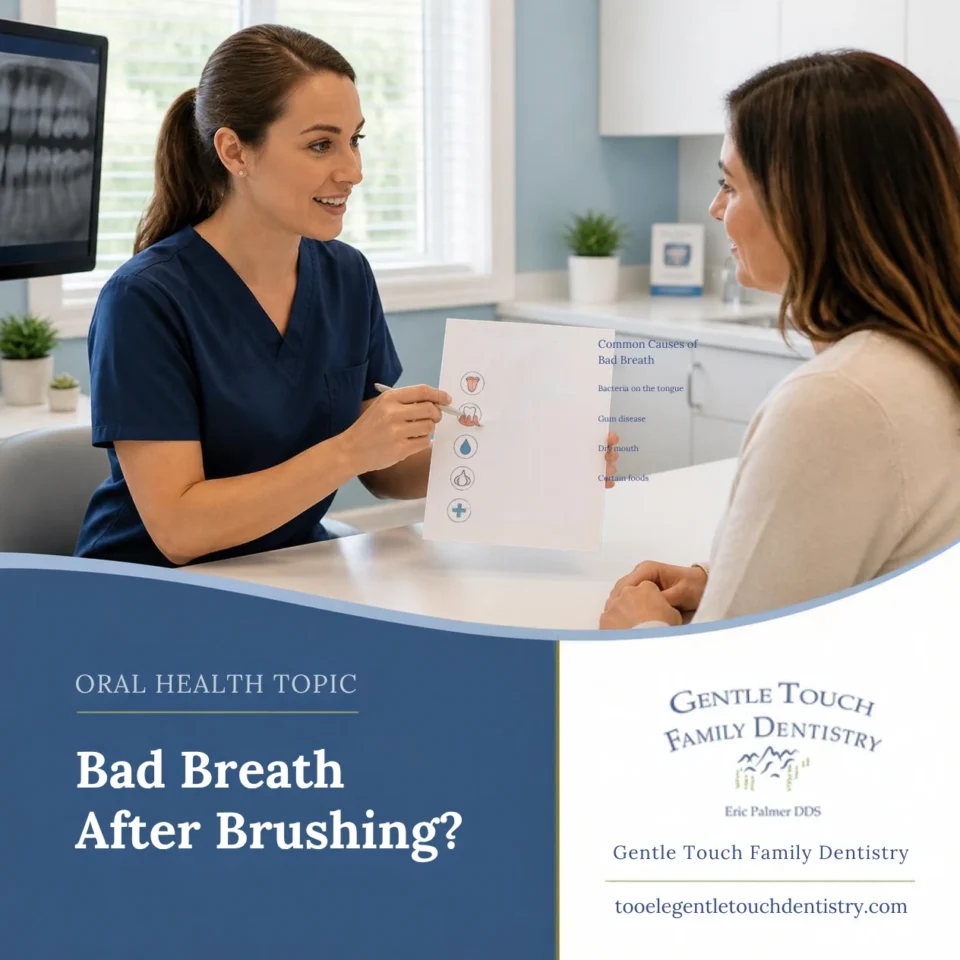
Bad breath that continues even after brushing may be related to bacteria on the tongue, plaque between the teeth, gum disease, dry mouth, tooth decay, an oral infection, tobacco use, or certain foods and drinks. In some cases, the cause may come from outside the mouth, such as a sinus condition, reflux, or another health problem.
That means brushing harder or using more toothpaste will not necessarily solve persistent bad breath.
If the odor continues despite good oral hygiene, the next step is usually to identify the underlying cause rather than simply covering it with mints or mouthwash.
Why Does Bad Breath Continue Even After Brushing?
Brushing mainly cleans the surfaces of your teeth that your toothbrush can reach.
Odor-causing bacteria and food debris may still remain:
- Between the teeth
- Along or beneath the gumline
- On the tongue
- Around dental restorations
- In areas affected by decay or infection
The American Dental Association explains that bacteria naturally live in the mouth and can produce foul-smelling waste products as they break down food.
If brushing temporarily improves your breath but the odor quickly returns, it may mean that another source is still present.
Dry mouth can also make the problem more noticeable. Saliva normally helps wash away food particles and keep bacteria under control. When saliva production is reduced, odors may become stronger even if you brush regularly.
Can Plaque and Bacteria Cause Persistent Bad Breath?
Yes. Plaque is a sticky film of bacteria that continuously forms on the teeth.
Brushing removes much of the plaque on exposed tooth surfaces, but bacteria can remain between teeth and around the gumline if those areas are not cleaned effectively.
The ADA notes that volatile sulfur compounds are major contributors to oral malodor. These compounds can result from food breakdown, dental plaque, and bacteria associated with oral disease.
This is why brushing alone may not be enough.
Cleaning between your teeth every day with floss or another appropriate interdental cleaner helps reach areas a toothbrush cannot easily clean.
Professional dental cleanings are also important because hardened tartar cannot be removed with normal brushing at home.
How Does Gum Disease Affect Breath?
Persistent bad breath can be one of the warning signs of gum disease.
Gum disease develops when plaque bacteria affect the tissues surrounding and supporting the teeth. According to the ADA, warning signs may include:
- Gums that bleed easily
- Red or swollen gums
- Tender gums
- Gum recession
- Persistent bad breath
- A persistent bad taste
- Loose or shifting teeth in more advanced cases
Brushing may temporarily freshen your mouth, but it will not correct deeper inflammation or bacterial buildup associated with periodontal disease.
If persistent bad breath occurs along with bleeding gums, swelling, tenderness, or gum recession, a dental evaluation is appropriate.
You can learn more about gum health and treatment options on our periodontal treatment page.
Can a Dry Mouth Cause Bad Breath?
Yes. Dry mouth, also called xerostomia, is a common contributor to bad breath.
Saliva does more than keep your mouth comfortable. It helps wash food particles away from the teeth and gums and helps control microorganisms in the mouth. When there is not enough saliva, odor-producing bacteria and debris can remain longer.
Dry mouth may be related to:
- Certain medications
- Mouth breathing
- Dehydration
- Salivary gland problems
- Some medical conditions
- Tobacco or alcohol use
NIDCR also lists bad breath as one possible symptom of persistent dry mouth.
If your mouth frequently feels sticky or dry, simply brushing more often may not address the real issue.
Drinking water regularly and chewing sugar-free gum may help stimulate saliva for some people, but ongoing dry mouth should be discussed with your dentist or healthcare provider.
Does Tongue Buildup Contribute to Bad Breath?
Yes. The tongue can hold bacteria, food debris, and other material that contributes to odor.
The surface of the tongue contains many small grooves and structures where bacteria can accumulate, especially toward the back of the mouth.
The ADA recommends brushing the tongue as part of efforts to reduce bad breath. Mayo Clinic also notes that the back of the tongue is often an important source of oral odor.
You can gently clean your tongue with:
- A toothbrush
- A tongue scraper designed for oral hygiene
Avoid aggressive scraping, which can irritate the tissue.
If tongue cleaning noticeably improves your breath but the odor continues to return quickly, there may be additional contributing factors that need evaluation.
Can Cavities or Dental Infections Cause Bad Breath?
Yes. Tooth decay and oral infections may contribute to persistent bad breath.
Mayo Clinic lists tooth decay, gum disease, mouth sores, and infections in the mouth among possible causes of bad breath.
A cavity may create an area where bacteria and food debris collect, particularly if the decay becomes larger or difficult to clean.
An infected tooth may cause additional symptoms such as:
- Tooth pain
- Sensitivity
- Pain when biting
- Swelling
- A bad taste in the mouth
Not everyone with a cavity will develop noticeable bad breath, and bad breath alone does not prove that you have tooth decay or an infection.
A dental exam can help determine whether a tooth or restoration is contributing to the problem.
What Foods and Habits Can Make Bad Breath Worse?
Some causes of bad breath are temporary and related to what you eat or drink.
Common examples include:
- Garlic
- Onions
- Certain spices
- Coffee
- Alcohol
Foods such as garlic and onions can affect your breath even after you brush because compounds from the food can enter the bloodstream and later be released through the lungs.
Other habits may contribute as well.
Tobacco use
Smoking and other tobacco use can cause bad breath and increase the risk of gum disease.
Frequent alcohol use
Alcohol may contribute to mouth dryness in some people, which can make bad breath more noticeable.
Going long periods without eating or drinking
Reduced saliva flow and a dry mouth can allow odors to become stronger.
Temporary food-related breath usually improves as the food compounds leave your system. Persistent bad breath that occurs regardless of what you eat deserves a closer look.
How Can You Reduce Bad Breath at Home?
If your bad breath is mild and there are no other concerning symptoms, improving your daily oral hygiene routine is a reasonable place to start.
Try:
- Brushing twice a day
- Cleaning between your teeth every day
- Gently cleaning your tongue
- Drinking water regularly
- Cleaning removable dentures or oral appliances as directed
- Avoiding tobacco
- Addressing dry mouth with your dentist if it is persistent
- Keeping regular dental appointments
Mouthwash may also help in some situations, but it is important to understand what it can and cannot do.
The ADA explains that cosmetic mouthrinses may temporarily mask bad breath, while certain therapeutic mouthrinses contain ingredients designed to reduce bacteria or odor-producing compounds. Mouthrinse should not replace brushing and interdental cleaning.
If mouthwash improves the smell for only a short period before the odor returns, it may be covering the symptom rather than addressing its cause.
For more information about maintaining oral health between visits, see our preventive dentistry page.
When Is Persistent Bad Breath a Sign of a Dental Problem?
Bad breath becomes more important to investigate when it continues despite regular brushing, flossing, tongue cleaning, and hydration.
Possible dental warning signs include:
- Bleeding gums
- Red or swollen gums
- Gum recession
- Tooth pain
- Sensitivity
- A persistent bad taste
- Loose teeth
- A broken tooth or filling
- Swelling around a tooth or gum
- Dry mouth that does not improve
Persistent bad breath can occur with gum disease and other oral conditions, but the symptom alone cannot identify the cause.
A dentist can examine the teeth, gums, tongue, restorations, and other areas of the mouth to look for possible sources.
If no oral cause is found, your dentist may recommend discussing other possibilities with your primary healthcare provider. The ADA notes that sinus conditions, reflux, diabetes, liver disease, kidney disease, and other medical issues may sometimes contribute to bad breath.
When Should You See a Dentist for Bad Breath?
Consider scheduling a dental visit when bad breath:
- Continues despite consistent oral hygiene
- Returns very quickly after brushing
- Occurs with bleeding or swollen gums
- Happens along with tooth pain or sensitivity
- Is accompanied by a persistent bad taste
- Occurs with significant dry mouth
- Has been noticeable for an extended period
You do not need to feel embarrassed about bringing up bad breath. It is a common oral health concern, and identifying the source is more useful than repeatedly trying to mask it.
Regular dental examinations also allow your dentist to look for plaque buildup, gum inflammation, decay, dry mouth, and other conditions that may contribute to persistent odor.
For patients in Tooele, Gentle Touch Family Dentistry can evaluate persistent bad breath and help determine whether the cause appears to be related to your teeth, gums, tongue, saliva, or another factor.
Learn more about care available locally on our Tooele dentist page.
FAQs
Why does my breath still smell right after brushing?
Brushing may leave bacteria behind on your tongue, between your teeth, and around the gumline. Dry mouth, gum disease, tooth decay, or an oral infection can also cause odor that brushing alone does not resolve.
If the problem continues despite thorough daily oral hygiene, a dental examination can help identify the cause.
Does bad breath mean I have gum disease?
Not necessarily.
Bad breath has many possible causes, including food, dry mouth, tongue buildup, tobacco, and other oral or medical conditions. However, persistent bad breath or a constant bad taste can be a warning sign of gum disease, especially when accompanied by bleeding, swollen, or receding gums.
Should I brush my tongue if I have bad breath?
Yes. Gently brushing or cleaning your tongue may help remove bacteria and debris that contribute to odor.
The ADA includes tongue brushing among recommended steps for reducing bad breath.
Can dry mouth make my breath smell even if my teeth are clean?
Yes. Saliva helps wash away food particles and control microorganisms in the mouth.
When saliva production is reduced, bacteria and debris can remain longer and contribute to odor.
Does mouthwash permanently get rid of bad breath?
Not necessarily.
Some mouthwashes simply mask odor temporarily, while therapeutic rinses may help reduce bacteria or odor-causing compounds. Mouthwash does not replace brushing, flossing, or treatment for an underlying dental problem.
What if my dentist cannot find the cause of my bad breath?
If your dentist determines that your teeth, gums, and mouth appear healthy, another health condition may be contributing.
Sinus problems, reflux, certain medications, and other medical conditions may sometimes play a role. Your dentist may recommend that you speak with your primary healthcare provider for further evaluation.