Table of Contents
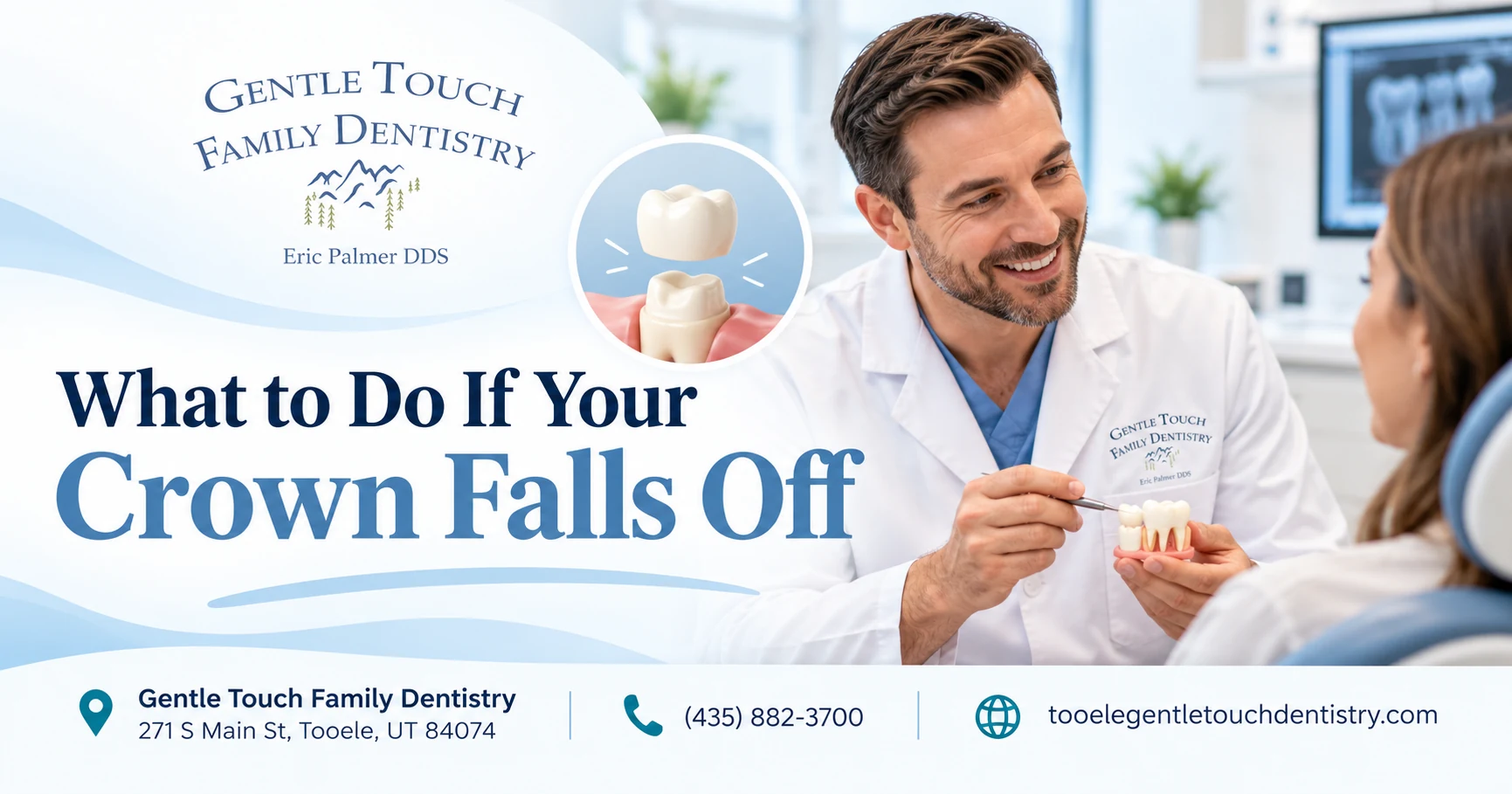
You’re eating dinner, brushing your teeth, or flossing when you suddenly notice something unusual: your dental crown has come loose or fallen out completely. You may feel a rough surface, notice that your tooth looks smaller, or experience sensitivity when something touches it.
While losing a dental crown can be unsettling, knowing what to do next can help protect your tooth until you see a dentist.
If your crown falls off, save the crown, gently rinse your mouth, avoid chewing on the exposed tooth, and contact your dentist as soon as possible. Keep the crown in a clean container and bring it to your appointment. Do not use superglue or household adhesives to put it back.
A missing crown doesn’t always mean the underlying tooth is badly damaged. In some cases, the existing crown can be reattached. In others, the dentist may recommend a replacement or additional treatment.
At Gentle Touch Family Dentistry in Tooele, UT, we understand that unexpected dental problems can be stressful. Here’s how to care for your tooth after a crown falls off and recognize when you need urgent attention.
What Should You Do If Your Crown Falls Off?
The first thing to do is stay calm. A fallen dental crown needs professional attention, but it isn’t always a severe dental emergency.
A crown is a protective restoration that fits over a prepared tooth. When it comes off, the underlying tooth may be more vulnerable to sensitivity, irritation, and damage.
Follow these steps:
- Find the crown. If possible, locate it and remove it from your mouth so you don’t accidentally swallow or inhale it.
- Rinse your mouth gently. Use lukewarm water to clear away loose food particles.
- Save the crown. Place it in a clean, secure container instead of leaving it loose in your pocket.
- Avoid chewing on the exposed tooth. Use the opposite side of your mouth until your dentist evaluates it.
- Contact your dentist promptly. Explain when the crown fell off and whether you’re experiencing pain, sensitivity, or other symptoms.
Don’t try to force the crown back onto your tooth.
Even if it appears undamaged, the crown may no longer fit correctly. The underlying tooth could have changed because of decay, a fracture, or other dental problems.
If you have significant pain, swelling, or a broken tooth, explain those symptoms when you call. They may affect how urgently you need an examination.
Should You Save the Crown?
Yes. If your dental crown falls off and you can find it, keep it and bring it to your appointment.
The crown may still be usable, depending on its condition and the health of the underlying tooth.
Your dentist will examine the restoration to determine whether it remains intact, fits correctly, and can be safely reattached.
How to Store a Fallen Dental Crown
If the crown is dirty, gently rinse it with water. Avoid scraping its interior or using strong household cleaning products.
Place it in a clean, small container with a lid.
Keep the container somewhere safe until your dental appointment.
Don’t leave the crown loose in a bag or pocket where it could become damaged or lost.
If the crown has cracked or broken into pieces, save the pieces when possible. Your dentist can examine them and determine whether a new restoration is necessary.
What If You Accidentally Swallow the Crown?
If you believe you’ve swallowed your crown, don’t attempt to make yourself vomit.
Contact a medical professional for advice, especially if you’re uncertain whether it was swallowed or inhaled. A swallowed crown may pass through the digestive system, but sharp or irregular fragments can require medical assessment.
If you experience choking, difficulty breathing, persistent coughing, or concern that the crown entered your airway, seek emergency medical care immediately.
Do not delay emergency treatment while trying to recover the crown.
How Can You Protect the Exposed Tooth?
When a dental crown comes off, the underlying tooth may feel different from your other teeth.
That’s because the tooth has often been shaped to support the restoration.
Depending on the tooth’s condition, some of its inner structure may be more exposed to temperature changes, food, and chewing pressure.
Until your appointment, your goal is to keep the area clean and avoid unnecessary stress.
Brush Gently Around the Tooth
Continue practicing oral hygiene, but use a soft-bristled toothbrush and gentle pressure around the exposed area.
Brush with fluoride toothpaste and avoid aggressively scrubbing the tooth.
Carefully clean nearby teeth as well.
If the exposed tooth is sensitive, a toothpaste formulated for sensitive teeth may provide temporary relief. Follow the product directions and ask your dentist if discomfort persists.
Avoid picking at the tooth or attempting to scrape away material left behind by the crown.
Avoid Temperature Extremes
A tooth without its crown may react more strongly to hot or cold foods and beverages.
If you notice sensitivity, avoid very hot coffee, ice-cold drinks, or other foods that trigger discomfort.
Choose foods and beverages at comfortable temperatures until the tooth has been evaluated.
Don’t Use Household Glue
Never use superglue, craft glue, or another household adhesive to reattach a dental crown.
These products aren’t intended for dental use and can damage the tooth, irritate oral tissues, or make professional treatment more difficult.
Temporary dental products are available, but they are not substitutes for an examination. Before attempting to place anything over the tooth, contact your dentist for guidance.
If the crown is loose, damaged, or doesn’t fit securely, leave it out and store it safely.
Can You Eat With a Missing Crown?
Yes, you can usually continue eating when a crown has fallen off, provided you aren’t experiencing significant pain or another urgent dental problem.
However, you should make temporary changes to how and what you eat.
The exposed tooth may not tolerate chewing pressure as well as it did when the crown was in place.
Chew on the Opposite Side
Whenever possible, use the side of your mouth opposite the missing crown.
This helps reduce direct pressure on the exposed tooth.
Take smaller bites and chew slowly.
If biting causes sharp pain, stop chewing on that area and contact your dentist.
Choose Softer Foods
Soft foods are generally easier to manage while waiting for your appointment.
Options may include:
- Scrambled eggs
- Yogurt
- Soft pasta
- Mashed potatoes
- Oatmeal
- Soft-cooked vegetables
- Soups that aren’t excessively hot
Choose foods that don’t require forceful biting or prolonged chewing.
Even if the exposed tooth doesn’t hurt, avoid testing it by biting into hard foods.
A tooth can have structural damage without causing immediate pain.
What Foods Should You Avoid?
Certain foods can increase pressure on the exposed tooth or make sensitivity worse.
Until your dentist evaluates the tooth, try to avoid hard, sticky, and excessively chewy foods.
Hard and Crunchy Foods
Foods such as nuts, hard candy, ice, and crunchy snacks may place additional pressure on the exposed tooth.
Biting into hard foods could aggravate an existing crack or weaken the tooth further.
Sticky Foods
Caramel, taffy, chewy candy, and similar foods can cling to dental surfaces.
These foods may cause discomfort or interfere with a loose restoration.
Even if your crown seems to fit when you place it near the tooth, don’t chew with it unless your dentist has confirmed that doing so is safe.
Foods That Trigger Sensitivity
Very hot, cold, or sugary foods may cause discomfort when the tooth is exposed.
Sensitivity varies from person to person.
If a particular food or beverage causes pain, avoid it until you receive dental advice.
These precautions are temporary. Once the tooth has been examined and restored, your dentist can explain when you can return to your usual diet.
Why Do Dental Crowns Fall Off?
Dental crowns are designed to remain securely attached, but several factors can cause them to loosen over time.
Understanding the possible cause can help explain why an examination is necessary.
Wear or Failure of Dental Cement
Dental cement helps attach a crown to the prepared tooth.
Over time, the bond can weaken or fail.
When this happens, a crown may come off even if the restoration itself appears intact.
However, it’s important to determine why the attachment failed before placing the crown again.
Decay Beneath the Crown
A crown protects much of the tooth, but it doesn’t make the underlying tooth immune to decay.
Cavities can develop near the edges of a crown, especially where the restoration meets the natural tooth.
If decay changes the shape or strength of the supporting tooth, the crown may loosen.
Your dentist may need to treat the decay before deciding whether the original crown can be reused.
Teeth Grinding and Clenching
Grinding or clenching can place substantial pressure on teeth and restorations.
Repeated forces may contribute to loosening, cracking, or other damage.
If you grind your teeth, your dentist may discuss ways to manage those forces after the tooth has been restored.
Damage to the Crown or Underlying Tooth
Chewing hard objects, dental injuries, or fractures can affect a crown’s stability.
Sometimes the crown comes off because part of the underlying tooth has broken.
That situation may require additional restoration rather than simply reattaching the original crown.
For more information about crowns and their role in protecting damaged teeth, explore our dental crowns in Tooele service page.
Can a Fallen Crown Be Reattached?
In some cases, yes.
A dentist may be able to reattach the original crown if it remains in good condition and the underlying tooth is healthy enough to support it.
Before reattachment, your dentist will evaluate the tooth and crown.
The examination may include checking for decay, fractures, changes in fit, or problems with the bite.
If the crown is intact and fits correctly, professional recementation may be appropriate.
However, if the crown no longer fits or the tooth has been damaged, additional treatment may be necessary.
What Happens During the Dental Visit?
Your dentist will first examine the exposed tooth and the crown you’ve saved.
They may take dental X-rays if needed to evaluate the supporting tooth.
If reattachment is appropriate, the dentist can prepare the surfaces and secure the crown using suitable dental materials.
The fit and bite should also be checked.
If the restoration cannot be reused, your dentist will explain the alternatives.
Do not assume that a crown can be safely reattached simply because it looks undamaged. Professional evaluation helps determine whether the tooth and restoration are suitable for reuse.
When Does the Crown Need to Be Replaced?
A new crown may be necessary when the original restoration is broken, no longer fits properly, or cannot adequately protect the remaining tooth.
The condition of the underlying tooth also affects the decision.
For example, if decay has developed beneath the crown, your dentist may need to remove the damaged tooth structure before planning a new restoration.
If the tooth has fractured, treatment will depend on the location and extent of the break.
A replacement crown may be considered when:
- The old crown is cracked or significantly damaged.
- The crown no longer fits the prepared tooth.
- Decay has changed the tooth’s supporting structure.
- Part of the underlying tooth has broken.
- The restoration cannot provide an appropriate fit or bite.
Not every tooth can be restored with another crown.
In some situations, additional treatment may be required. Your dentist will explain the findings and appropriate options after an examination.
A missing crown doesn’t automatically mean the tooth needs to be extracted or that an entirely new crown is required.
Is a Missing Crown a Dental Emergency?
A fallen crown isn’t always an emergency requiring immediate treatment, but it should be evaluated promptly.
If the tooth is comfortable, there is no swelling, and no obvious fracture is present, you may be able to wait for a dental appointment while following appropriate precautions.
However, certain symptoms warrant more urgent attention.
Contact a dentist promptly if you experience:
- Severe or increasing tooth pain
- Swelling around the tooth or gums
- A visible crack or broken tooth
- Significant sensitivity that interferes with eating or drinking
- Bleeding or injury associated with the crown coming off
- Signs of infection, such as swelling with fever or a bad taste from drainage
If swelling is rapidly worsening or you have difficulty breathing or swallowing, seek emergency medical care immediately.
At Gentle Touch Family Dentistry, we provide emergency dentistry in Tooele during regular business hours.
Our team can discuss your symptoms and help determine what type of appointment may be appropriate. Same-day appointments depend on availability, so calling first is recommended.
When Should You Contact Your Dentist?
It’s best to contact your dentist as soon as you notice that your crown has fallen off, even if you aren’t experiencing pain.
Waiting too long may leave the exposed tooth vulnerable to additional problems.
When you call, explain:
- Which tooth lost its crown.
- Whether the crown is intact or broken.
- When the crown came off.
- Whether you’re experiencing pain or sensitivity.
- Whether the tooth appears cracked or damaged.
- Whether you’ve noticed swelling or other concerning symptoms.
Also let the office know if you still have the crown.
These details can help the dental team understand your concern and provide appropriate instructions before your visit.
If your crown comes off outside regular office hours, keep it safe, avoid chewing on the affected tooth, and arrange dental care as soon as practical.
Seek urgent dental or emergency medical help if serious symptoms develop.
For patients looking for dental care in Tooele, Gentle Touch Family Dentistry offers restorative care, including crown evaluations, along with assistance for dental emergencies.
FAQs
Can I Leave My Crown Off for a Few Days?
You may be able to wait briefly for an appointment if the tooth isn’t painful and there are no urgent symptoms. However, contact your dentist promptly for guidance because the exposed tooth may be vulnerable to sensitivity, damage, or changes that affect the crown’s fit. Avoid chewing on that side while waiting.
What Happens if My Crown Falls Off but Doesn’t Hurt?
A missing crown can still require treatment even when the tooth feels comfortable. The absence of pain doesn’t rule out decay, a fracture, or a problem with the restoration. Save the crown and arrange a dental examination.
Can I Put My Dental Crown Back on Myself?
Do not force the crown back into place or use household adhesives. The crown and supporting tooth need to be evaluated for damage and proper fit. If you cannot see a dentist immediately, call for advice about suitable temporary precautions.
How Long Can a Tooth Stay Without a Crown?
There is no single safe timeframe for every tooth. The risk depends on the remaining tooth structure, sensitivity, decay, and whether the tooth has cracked. Contact your dentist promptly rather than planning to leave the tooth uncovered for an extended period.
Will I Need a New Crown if Mine Falls Off?
Not necessarily. If the existing crown is intact and fits correctly, your dentist may be able to reattach it. If the crown or underlying tooth is damaged, a replacement or another treatment may be needed.
Can a Crown Fall Off More Than Once?
Yes. Repeated loosening may indicate a problem with the crown’s fit, the underlying tooth, the cement bond, or biting forces. If your crown keeps coming off, your dentist should evaluate the cause rather than repeatedly reattaching it without further assessment.
Lost Your Dental Crown? Contact Gentle Touch Family Dentistry in Tooele
A fallen dental crown can catch you off guard, but taking a few simple steps can help protect your tooth while you arrange dental care.
Save the crown, keep the exposed tooth clean, avoid hard or sticky foods, and don’t attempt to reattach it with household glue.
Most importantly, schedule a dental evaluation so the cause can be identified and the appropriate treatment discussed.
At Gentle Touch Family Dentistry in Tooele, UT, we’re here to help you understand your options and care for your smile.
Whether your existing crown can be reattached or your tooth needs another restoration, our team can examine the problem and explain the next steps.
Contact Gentle Touch Family Dentistry or call (435) 882-3700 to request an appointment for a missing or loose dental crown.