Table of Contents
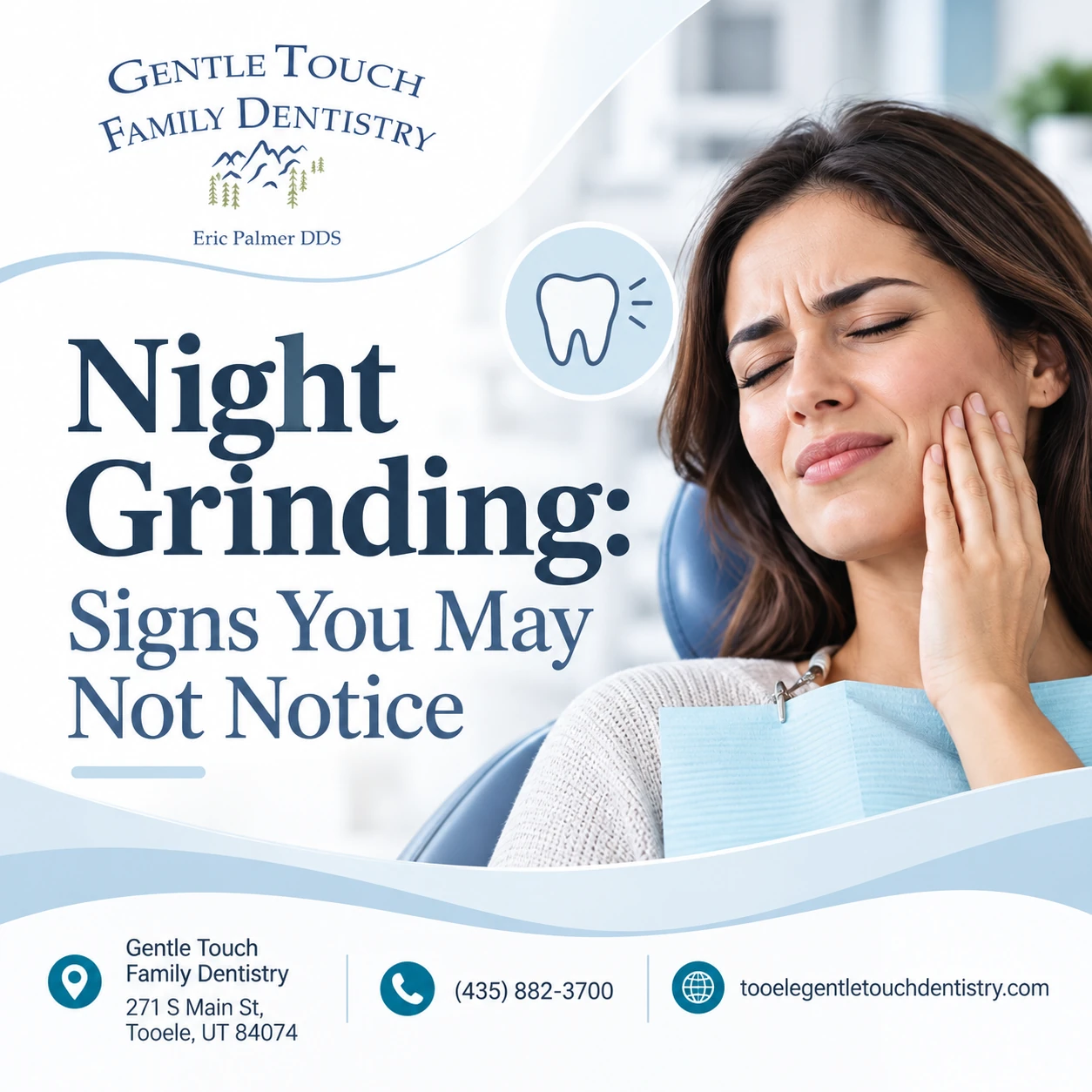
You wake up with a sore jaw, a mild headache, or teeth that feel unusually sensitive. You might assume you slept in an uncomfortable position or had a stressful day. But these symptoms could also be related to something happening while you’re asleep: teeth grinding.
Nighttime teeth grinding, also called sleep bruxism, involves involuntarily grinding or clenching your teeth during sleep. Because it happens when you’re not awake, you may not realize it’s occurring until you notice discomfort or changes in your teeth.
Common signs of teeth grinding at night include morning jaw soreness, worn or flattened teeth, increased tooth sensitivity, chipped teeth, headaches, and damaged fillings or crowns. Some people also learn about their grinding because a partner hears unusual sounds while they sleep.
These symptoms don’t automatically mean you have bruxism. Other dental conditions, jaw problems, and sleep-related concerns can cause similar issues.
At Gentle Touch Family Dentistry in Tooele, UT, we encourage patients to pay attention to changes in their teeth and jaw. Recognizing possible warning signs early can help you decide when a dental examination may be useful.
What Is Nighttime Teeth Grinding?
Nighttime teeth grinding is a condition known as sleep bruxism.
It occurs when someone involuntarily grinds, clenches, or presses their teeth together while sleeping.
Grinding generally involves movement between the upper and lower teeth. Clenching involves holding the teeth together with force, sometimes without noticeable movement.
Both can place pressure on the teeth, chewing muscles, and jaw joints.
Some people experience bruxism only occasionally. Others have more frequent or intense episodes.
Mild grinding doesn’t always cause damage or require treatment. However, repeated or forceful grinding may contribute to tooth wear, muscle discomfort, and problems with existing dental restorations.
Why Is Sleep Bruxism Difficult to Recognize?
Unlike habits that happen while you’re awake, nighttime grinding occurs without your conscious awareness.
You may not hear or feel it happening.
In some cases, a family member notices grinding sounds during the night. But not everyone with sleep bruxism makes audible noises.
Clenching can occur quietly.
This means you may have possible signs of grinding even if nobody has heard you grind your teeth.
A dental examination can help identify patterns of wear or damage that warrant further evaluation.
What Signs of Night Grinding Can Be Easy to Miss?
Some signs of sleep bruxism are subtle, especially when they develop gradually.
You might not notice a change in your teeth because the process can happen over months or years.
Other symptoms may appear only after waking and improve as the day continues.
Possible warning signs include:
- Jaw muscles that feel tired or tight in the morning
- Teeth that appear shorter or flatter than before
- Small chips along the biting edges
- Increased sensitivity to hot, cold, or sweet foods
- Morning headaches, particularly around the temples
- Facial muscle tenderness
- Discomfort when chewing
- Repeated cracking or loosening of dental restorations
- A partner reporting grinding noises during sleep
Some people have several symptoms, while others notice only one.
The presence of these symptoms doesn’t confirm a diagnosis. For example, tooth sensitivity can result from cavities, gum recession, or other dental conditions.
Similarly, headaches and jaw soreness can have several possible causes.
What matters is whether the symptoms are recurring, worsening, or accompanied by visible dental changes.
Can Morning Jaw Soreness Be a Sign of Bruxism?
Yes. Morning jaw soreness can be associated with nighttime teeth grinding or clenching.
Your chewing muscles are responsible for moving and stabilizing your jaw. When these muscles remain active or repeatedly contract during sleep, they may feel tired or tender afterward.
You might notice discomfort near your cheeks, temples, or jawline when you wake up.
Some people describe the sensation as tightness rather than sharp pain.
Why Does Your Jaw Feel Tired?
Think about how your muscles feel after repeated activity.
Although sleep bruxism isn’t the same as intentionally exercising your jaw, repeated clenching can place strain on the muscles involved in chewing.
This may contribute to morning stiffness or soreness.
Other possible symptoms include discomfort when opening your mouth widely or tenderness when chewing breakfast.
Jaw soreness isn’t specific to bruxism, though.
Temporomandibular disorders, muscle tension, dental infections, and other conditions can cause similar discomfort.
If jaw pain occurs regularly, affects eating, or interferes with normal movement, arrange a dental evaluation.
Avoid forcing your jaw open or repeatedly testing painful movements.
Why Do Teeth Become Worn, Flattened, or Chipped?
Your teeth are designed to handle normal biting and chewing forces.
However, repeated grinding can create additional friction and pressure between tooth surfaces.
Over time, these forces may contribute to enamel wear or damage.
Flattened Chewing Surfaces
One possible sign of teeth grinding at night is a change in the shape of your teeth.
Back teeth may appear flatter, while the edges of front teeth can look worn or uneven.
Because these changes often happen gradually, they may be easier for a dentist to notice during an examination than for you to recognize at home.
A dentist may compare current findings with previous dental records to identify changes over time.
Chipped or Cracked Teeth
Excessive grinding forces may contribute to small chips or fractures.
For example, a tooth with a thin biting edge or an existing restoration may be more vulnerable to additional stress.
However, not every chipped tooth is caused by bruxism.
Accidental injuries, decay, normal wear, and other factors can also damage teeth.
If you notice a new chip or crack, have it examined rather than assuming grinding is the cause.
Can Worn Enamel Grow Back?
Enamel does not regenerate once it has been lost.
That’s one reason progressive tooth wear deserves attention.
However, not all visible wear is caused by grinding. Acid erosion, abrasive habits, and other factors may produce changes that require different management.
Your dentist can assess the pattern of wear and discuss whether protecting the teeth or restoring damaged areas is appropriate.
Can Night Grinding Cause Tooth Sensitivity?
Nighttime grinding may contribute to tooth sensitivity in some people.
Repeated force and tooth wear can affect the protective surfaces of the teeth.
When enamel becomes thinner or cracks develop, teeth may become more sensitive to temperature changes or pressure.
You might notice discomfort when drinking cold water, eating something sweet, or biting into certain foods.
Sensitivity Doesn’t Always Mean Grinding
Many dental problems can cause similar symptoms.
Cavities, gum recession, exposed root surfaces, cracked teeth, and problems with existing fillings may all contribute to sensitivity.
For this reason, tooth sensitivity alone isn’t enough to diagnose sleep bruxism.
If one tooth is particularly painful or sensitive when biting, the dentist may need to evaluate it for a localized problem.
Don’t assume that a nightguard will resolve every type of tooth sensitivity.
The appropriate treatment depends on what’s causing the discomfort.
How Can Bruxism Affect Dental Crowns and Fillings?
Teeth grinding can place repeated pressure on both natural teeth and dental restorations.
Fillings, crowns, and other restorations are designed to withstand normal function, but they aren’t immune to damage.
Excessive grinding or clenching may contribute to fractures, wear, or loosening in certain circumstances.
Damage to Dental Fillings
Large fillings replace tooth structure lost to decay or other damage.
When repeated forces act on the restoration and the surrounding tooth, the filling may be exposed to additional stress.
Possible problems include chipped filling material, cracks in the surrounding tooth, or discomfort when chewing.
However, fillings can also fail because of new decay, aging, or other causes unrelated to grinding.
A dental examination is needed to determine why the restoration is damaged.
Damage to Dental Crowns
Crowns cover teeth that need additional restoration or protection.
Although crowns can be made from durable materials, repeated heavy forces may contribute to wear, cracking, or other complications.
A crown that repeatedly loosens or breaks deserves an evaluation of the supporting tooth, restoration fit, and bite.
For patients who want to learn about restoring damaged teeth, Gentle Touch Family Dentistry provides information about dental crowns in Tooele.
A crown is not automatically necessary because someone grinds their teeth.
The decision to restore a tooth depends on the condition of the tooth and the extent of any damage.
Repeated Restoration Problems May Be a Clue
If you’ve needed repairs to the same tooth or restoration several times, tell your dentist.
Repeated damage may prompt a closer look at biting forces and possible bruxism.
It doesn’t prove that nighttime grinding is responsible, but it’s useful information when evaluating the problem.
Can Headaches or Facial Tension Be Related to Grinding?
Some people with sleep bruxism report headaches or facial muscle discomfort after waking.
The discomfort may be noticeable around the temples or along the sides of the face.
Because the chewing muscles connect with structures around the jaw and temples, muscle overactivity may contribute to certain headache patterns.
However, headaches can have many causes, including tension, migraine, sleep problems, and medical conditions.
What Kind of Headache Might Occur?
Bruxism-related discomfort may be described as a dull ache or pressure around the temples.
Some people also experience jaw tenderness or tightness at the same time.
A headache that occurs after waking, particularly alongside other signs of tooth grinding, may be worth discussing with your dentist.
But a headache alone doesn’t establish bruxism.
If headaches are severe, new, persistent, or worsening, consult a healthcare professional.
Seek emergency medical care for a sudden, extremely severe headache or one accompanied by serious neurological symptoms.
Facial Tension and Jaw Discomfort
Clenching may contribute to tightness in the muscles near the cheeks and jaw.
Some people notice discomfort when chewing or speaking for extended periods.
If facial pain continues throughout the day or your jaw movement becomes limited, further assessment may be needed.
Bruxism and temporomandibular disorders can occur together, but they aren’t the same condition.
Your dentist can help determine whether the symptoms suggest a dental or jaw-related issue that needs additional evaluation.
What Causes People to Grind Their Teeth at Night?
There isn’t one single cause of sleep bruxism.
Researchers have identified several factors associated with the condition, but these relationships can be complex.
Possible contributing factors include stress, sleep-related conditions, certain medications, and lifestyle influences.
Stress and Emotional Tension
Stress and anxiety may be associated with increased teeth grinding or clenching.
However, not everyone who experiences stress develops bruxism.
Likewise, some people grind their teeth even when they don’t feel particularly stressed.
Stress reduction may be useful for overall well-being, but it shouldn’t be presented as a guaranteed cure.
Sleep-Related Conditions
Sleep bruxism has been associated with certain sleep disorders, including obstructive sleep apnea.
This doesn’t mean everyone who grinds their teeth has sleep apnea.
However, symptoms such as loud snoring, witnessed pauses in breathing, gasping during sleep, or persistent daytime sleepiness should be discussed with a healthcare professional.
A dental examination may identify possible tooth damage, but it cannot independently diagnose every sleep-related condition.
Medications and Other Factors
Some medications and substances may be associated with bruxism.
Certain antidepressant medications, stimulant use, smoking, alcohol, and caffeine consumption have been identified as possible factors in some people.
These associations do not prove that a particular medication or habit is causing your symptoms.
Never stop or change a prescribed medication without consulting the healthcare professional who manages it.
If you suspect that grinding began after a medication change, share that information with your dentist and prescribing clinician.
How Does a Dentist Check for Signs of Bruxism?
A dental examination can help identify changes consistent with grinding or clenching.
Your dentist may begin by asking about symptoms, including jaw soreness, tooth sensitivity, headaches, and reports of nighttime grinding sounds.
They may also ask whether you’ve noticed changes in your teeth or experienced repeated problems with restorations.
Examining Tooth Wear and Restorations
During the examination, the dentist may look for unusual wear patterns, chipped teeth, fractures, or damaged dental restorations.
They may also assess the condition of existing fillings and crowns.
Previous dental records can provide useful context if the tooth surfaces have changed over time.
Evaluating Jaw Muscles and Movement
Your dentist may check for tenderness in the chewing muscles and ask whether you experience discomfort when opening or closing your mouth.
They may also evaluate your bite and jaw movement when appropriate.
These findings help guide the evaluation, but none is proof of sleep bruxism on its own.
Is a Sleep Study Necessary?
Most patients with suspected bruxism do not automatically require a sleep study.
However, a sleep specialist may recommend additional testing when symptoms suggest a sleep disorder or when further assessment is clinically appropriate.
A sleep study can be used to evaluate certain sleep-related conditions and, in some circumstances, assess sleep-related muscle activity.
Your dentist or healthcare professional can help determine whether a referral is warranted.
At Gentle Touch Family Dentistry, our general dentistry services include dental examinations and evaluations of oral health concerns.
If you’ve noticed worn teeth, recurring discomfort, or damaged restorations, a dental visit can help clarify the next steps.
When Should You Seek Treatment for Night Grinding?
Not everyone who grinds their teeth needs treatment.
Occasional grinding without pain or damage may require monitoring rather than active intervention.
However, professional evaluation becomes more important when symptoms continue or dental damage develops.
Consider scheduling an appointment if you notice:
- Recurring morning jaw soreness
- Persistent tooth sensitivity
- Worn or flattened teeth
- New chips or cracks
- Frequent headaches with jaw discomfort
- Repeatedly damaged or loosened fillings or crowns
- Pain when chewing
- Changes in jaw movement
A dentist can evaluate the symptoms and recommend care based on the findings.
What Treatment Options May Be Discussed?
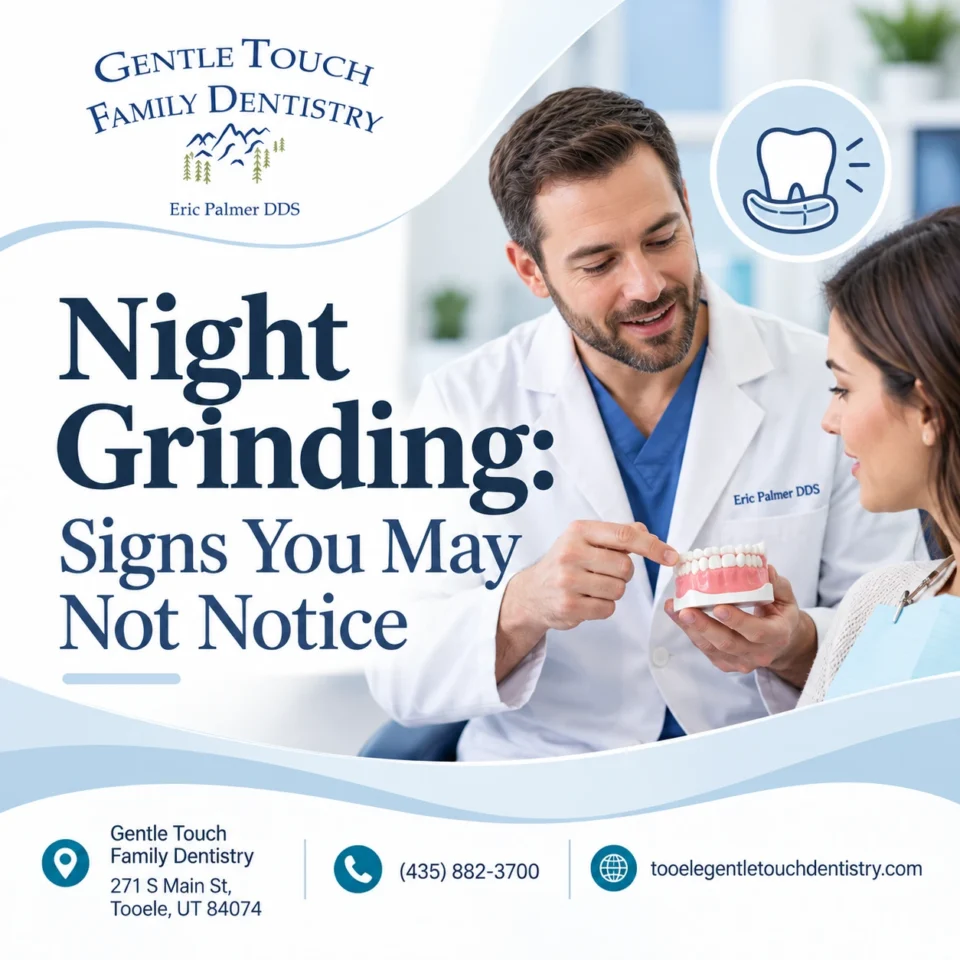
For some patients, a dentist may recommend a custom oral appliance or nightguard to help protect teeth from grinding forces.
A nightguard doesn’t necessarily stop the grinding activity itself, and it isn’t the right solution for every patient.
Management may also involve addressing damaged teeth, monitoring wear, discussing contributing habits, or coordinating care with another healthcare professional.
If sleep apnea is suspected, appropriate medical or sleep-specialist evaluation may be important.
Patients should not assume that an over-the-counter guard will solve persistent pain or sleep-related symptoms.
The best approach depends on the condition of your teeth, jaw, restorations, and overall health.
FAQs
What Are the Most Common Signs of Teeth Grinding at Night?
Common signs include morning jaw soreness, worn or flattened teeth, tooth sensitivity, chipped teeth, headaches, and damaged restorations. A partner may also hear grinding noises during sleep. These signs can have other causes, so a dental examination is important for evaluation.
Can You Grind Your Teeth at Night Without Knowing It?
Yes. Sleep bruxism occurs while you’re asleep, so you may be unaware of the activity. Some people discover it through symptoms or observations made during a dental examination. Others are told by a partner who hears grinding sounds.
Does Waking Up With a Sore Jaw Mean I Have Bruxism?
Not necessarily. Morning jaw soreness can be associated with nighttime grinding or clenching, but it can also result from other dental or muscle-related conditions. If the discomfort happens regularly, ask your dentist to evaluate it.
Can Teeth Grinding Damage Dental Crowns?
Repeated grinding forces may contribute to wear, cracks, loosening, or other problems affecting dental crowns. However, crown damage can also occur for reasons unrelated to bruxism. A dentist can examine the crown and underlying tooth to determine the appropriate treatment.
Can a Nightguard Stop Teeth Grinding?
A nightguard primarily helps protect teeth and restorations from certain grinding forces. It may not eliminate the underlying grinding activity. Your dentist can help determine whether an appliance is appropriate and whether other concerns need evaluation.
Is Nighttime Teeth Grinding Dangerous?
Mild or occasional grinding may not cause meaningful problems. Frequent or forceful bruxism can contribute to tooth wear, fractures, jaw discomfort, headaches, and damaged restorations. A dental evaluation is useful when symptoms or signs of damage develop.
Concerned About Night Grinding? Visit Gentle Touch Family Dentistry in Tooele
You may not notice yourself grinding your teeth at night, but your teeth and jaw can sometimes show signs of repeated pressure.
Morning soreness, unexplained sensitivity, worn enamel, chipped teeth, and recurring problems with crowns or fillings are all reasons to pay closer attention.
These symptoms don’t automatically mean you have bruxism. However, they deserve professional evaluation when they are persistent, painful, or associated with visible dental changes.
At Gentle Touch Family Dentistry in Tooele, UT, we help patients understand their oral health concerns through dental examinations and personalized treatment recommendations.
If you’ve noticed possible signs of nighttime teeth grinding, our team can examine your teeth and restorations, discuss your symptoms, and recommend appropriate next steps.
Contact Gentle Touch Family Dentistry to request an appointment and learn more about protecting your teeth from damage associated with grinding.