Table of Contents
Sometimes but it depends on the size of the chip and whether the tooth is causing symptoms.
A small chip limited to the outer enamel, with no pain, sensitivity, bleeding, or swelling, may not be a same-day dental emergency. Cleveland Clinic notes that some small chips may require no treatment or only minor smoothing or cosmetic repair.
A larger chip is different. If the tooth is painful, sensitive, bleeding, visibly fractured, or injured badly enough to expose deeper tooth structure, it should be evaluated promptly. Larger chips can expose the sensitive inner parts of a tooth and create a pathway for bacteria, increasing the risk of further damage or infection.
Even when a chip seems minor, schedule a dental appointment so a dentist can confirm that the damage is limited to enamel.
Can a Chipped Tooth Wait?
A small, painless chip may sometimes wait for a regular dental appointment rather than requiring emergency treatment.
That is more likely when:
- Only a tiny piece of enamel is missing
- The tooth does not hurt
- There is no new sensitivity
- There is no bleeding
- The tooth does not feel loose
- There is no facial or gum swelling
- The chip did not result from a major facial injury
Cleveland Clinic notes that treatment for chipped teeth ranges from no treatment for small chips to more extensive restorative care for larger injuries.
However, you cannot always judge the depth of a chip by looking at it in the mirror. A dentist should still examine the tooth, especially if the chip occurred suddenly or after trauma.
How Serious Is a Chipped Tooth?
The seriousness of a chipped tooth depends on how much tooth structure has been lost and which layers are affected.
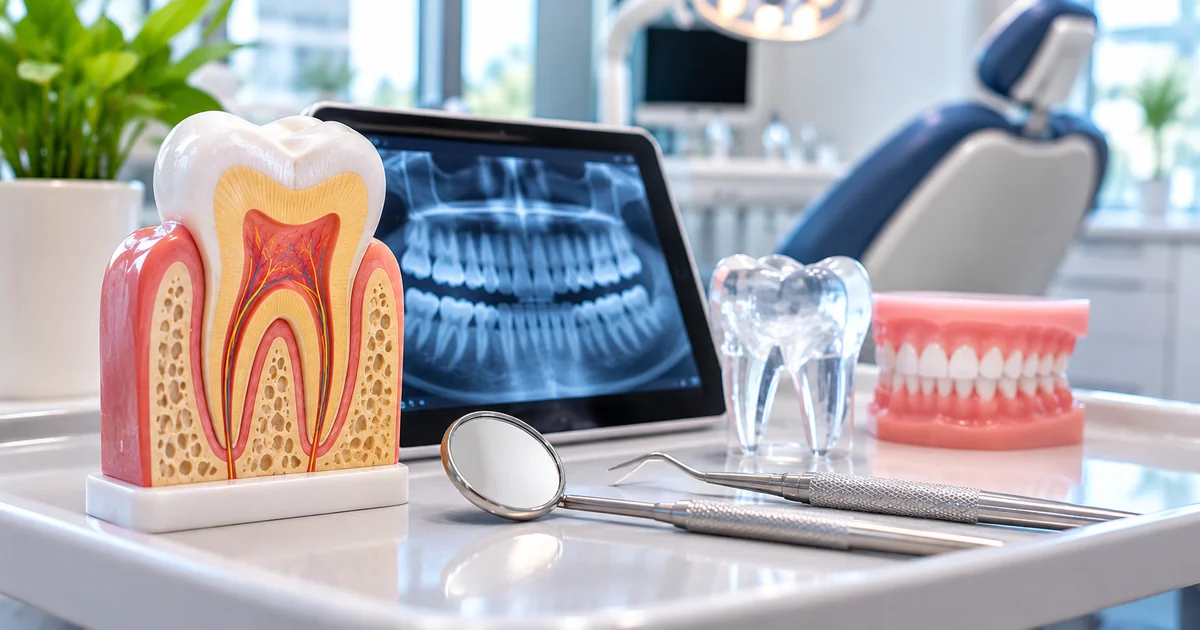
A tooth has several layers:
- Enamel: the hard outer surface
- Dentin: the softer layer beneath enamel
- Pulp: the innermost area containing nerves and blood vessels
A very small enamel chip may be mainly cosmetic.
If the damage reaches dentin, the tooth may become more sensitive to temperature, pressure, or sweets.
If a fracture reaches the pulp, the tooth may become painful and more vulnerable to inflammation or infection. Cleveland Clinic notes that chips severe enough to expose the nerve may require root canal treatment, often followed by a crown.
That is why the depth of the damage matters more than the visible size alone.
When Is a Small Tooth Chip Not an Emergency?
A small chip may not require emergency treatment when the tooth is otherwise comfortable and stable.
For example, a minor chip may be less urgent if:
- It affects only a small edge of a front tooth
- There is no pain
- Hot and cold foods do not trigger sensitivity
- The tooth is not loose
- The gums are not swollen
- There was no significant blow to the face or jaw
Some small chips can simply be polished smooth. Others may be repaired with bonding if appearance is a concern.
“Not an emergency” does not mean “ignore it indefinitely.”
Cleveland Clinic recommends scheduling a dental visit after noticing a chip because only a dental professional can determine whether the damage extends beyond the enamel.
When Does a Chipped Tooth Need Urgent Dental Care?
Prompt dental care becomes more important when the chip is associated with pain, deeper structural damage, or trauma.
Contact a dentist promptly if you notice:
- Moderate or severe tooth pain
- Significant sensitivity to hot or cold
- Pain when biting
- A large piece of tooth has broken away
- Bleeding from inside or around the tooth
- The tooth feels loose
- Swelling around the tooth or gum
- A visible deep crack
- A chip caused by a strong impact or accident
The ADA recommends prompt professional evaluation for cracked or injured teeth and advises rinsing the mouth with warm water and using a cold compress if swelling is present.
If the injury also involves a suspected jaw fracture, significant facial trauma, or difficulty breathing or swallowing, emergency medical care may be necessary.
What Symptoms Mean You Should Call a Dentist Right Away?
Call a dentist promptly if a chipped tooth develops symptoms suggesting deeper damage or infection.
Warning signs include:
- Severe or worsening pain
- Persistent throbbing
- Pain when chewing
- Increasing sensitivity
- Facial or gum swelling
- Fever
- A foul taste or drainage
- Red or swollen gums around the tooth
A chip or crack can sometimes allow bacteria to reach the pulp and cause an abscess. Mayo Clinic notes that dental abscesses may cause severe throbbing pain, fever, pain with chewing, and facial or neck swelling.
Difficulty breathing or swallowing with facial or neck swelling is an emergency and requires immediate medical attention.
For urgent dental symptoms, visit our emergency dentistry page.
Can a Chipped Tooth Get Worse If You Wait?
It can.
A small chip limited to enamel may remain stable, but larger damage can weaken the tooth or leave deeper layers more exposed.
Cleveland Clinic notes that a major chip can expose sensitive internal tissue to bacteria and potentially lead to infection.
Waiting may also allow:
- The chip to fracture farther
- Sensitivity to increase
- Food to collect around the damaged area
- A weakened tooth to break during chewing
- Infection to develop if the pulp becomes involved
This does not mean every small chip will become a serious problem.
The safest approach is to have the tooth examined so the dentist can determine whether the damage is superficial or structurally important.
What Can You Do Until Your Dental Appointment?
There are a few safe steps you can take while waiting to be seen.
Cleveland Clinic recommends scheduling a dental visit and protecting the damaged tooth rather than trying to repair it permanently at home.
Until your appointment:
- Avoid biting or chewing with the chipped tooth
- Choose softer foods
- Continue brushing and flossing gently
- Keep food from collecting around the damaged area
- Save a larger broken fragment if you can find it
- Use dental wax to cover a rough edge if it is irritating your tongue or cheek
- Apply an ice pack externally if there is swelling
Cleveland Clinic notes that a broken fragment may be stored in milk and brought to the dental appointment, and that orthodontic wax can temporarily cover the damaged area.
Do not try to permanently glue or repair the tooth yourself.

When Might a Dental Crown Be Needed?
A crown may be recommended when a substantial portion of the tooth has broken away or the remaining tooth is too weak for a small repair.
A dental crown is a tooth-shaped restoration that fits over the damaged tooth and helps protect the remaining structure.
Cleveland Clinic notes that crowns may be used when a large tooth fragment has been lost or when a tooth is significantly weakened or broken.
A crown may be considered when:
- The chip is large
- A major portion of the biting surface is missing
- The tooth has a large existing filling
- The remaining tooth structure is weakened
- The tooth has undergone root canal treatment
- A crack makes the tooth vulnerable to further fracture
Not every chipped tooth needs a crown.
Learn more about when this type of restoration may be used on our dental crowns page.
What Other Treatments Can Repair a Chipped Tooth?
Treatment depends on the location, depth, and size of the chip.
Possible options include:
Smoothing or polishing
A very small enamel chip may only need a rough or sharp edge smoothed.
Dental bonding
Bonding uses tooth-colored composite resin to rebuild a missing area and is commonly used for minor chips.
Dental filling
A filling may be appropriate for some chipped back teeth or smaller areas of missing structure.
Veneer
A veneer may sometimes be used to restore the appearance of a chipped front tooth when more coverage is needed than bonding can provide.
Dental crown
A crown may protect a tooth with more extensive damage.
Root canal treatment
If the chip extends into the pulp and causes inflammation or infection, root canal treatment may be needed to save the tooth.
Tooth extraction
Severely damaged teeth that cannot be predictably restored may occasionally need to be removed, although dentists generally try to preserve natural teeth when possible.
How Does a Dentist Determine the Best Treatment?
A dentist first needs to determine how deep the chip extends and whether the remaining tooth is stable.
The evaluation may include:
- Looking closely at the chipped area
- Checking for cracks
- Testing for sensitivity
- Asking whether the tooth hurts when you bite
- Examining the surrounding gums
- Checking whether the tooth is loose
- Evaluating your bite
Dental X-rays may be recommended depending on the severity of the injury and whether deeper damage is suspected. Cleveland Clinic notes that X-rays may be needed when evaluating some chipped teeth.
The dentist will then consider:
- How much tooth structure remains
- Whether the damage is limited to enamel
- Whether dentin or pulp is involved
- The location of the tooth
- Chewing forces
- Existing fillings or restorations
- Whether infection is present
The goal is to choose the most conservative treatment that adequately protects the tooth.
For patients in Tooele, Gentle Touch Family Dentistry can examine a chipped tooth and help determine whether it needs simple repair, restorative treatment, or more urgent care.
Visit our Tooele dentist page to learn more about local dental care.
FAQs
Can I wait a week with a chipped tooth?
A tiny, painless enamel chip may sometimes be able to wait for a routine dental visit.
However, only a dentist can determine how deep the damage extends. Cleveland Clinic recommends scheduling an appointment after noticing a chip, particularly because untreated deeper damage can lead to additional problems.
Is a painless chipped tooth an emergency?
Usually not if the chip is very small and limited to enamel.
However, a painless tooth can still have structural damage, so schedule a dental evaluation rather than assuming no treatment is needed.
Is sensitivity after chipping a tooth a bad sign?
Sensitivity may indicate that the chip has exposed dentin or affected deeper tooth structure.
New or significant sensitivity is a reason to contact a dentist sooner rather than simply waiting to see whether it disappears.
Can a chipped tooth become infected?
Yes, if the damage extends deeply enough for bacteria to reach the pulp.
Mayo Clinic notes that bacteria can enter the inner tooth through a chip or crack and cause an abscess.
Can a dentist fix a chipped tooth without a crown?
Yes.
Small chips may be treated with polishing, bonding, or a filling. A crown is generally considered when more tooth structure has been lost or the remaining tooth needs greater protection.
Should I go to the emergency room for a chipped tooth?
Most chipped teeth are best treated by a dentist rather than a hospital emergency department.
Seek emergency medical care if the injury involves serious facial trauma or if swelling causes difficulty breathing or swallowing.