
Table of Contents

The answer depends on how far the tooth decay has progressed.
Very early tooth decay can sometimes be stopped or reversed before an actual hole forms in the tooth. At this stage, enamel has lost minerals but the surface is still intact. Minerals in saliva, fluoride, improved oral hygiene, and changes in diet can help support remineralization.
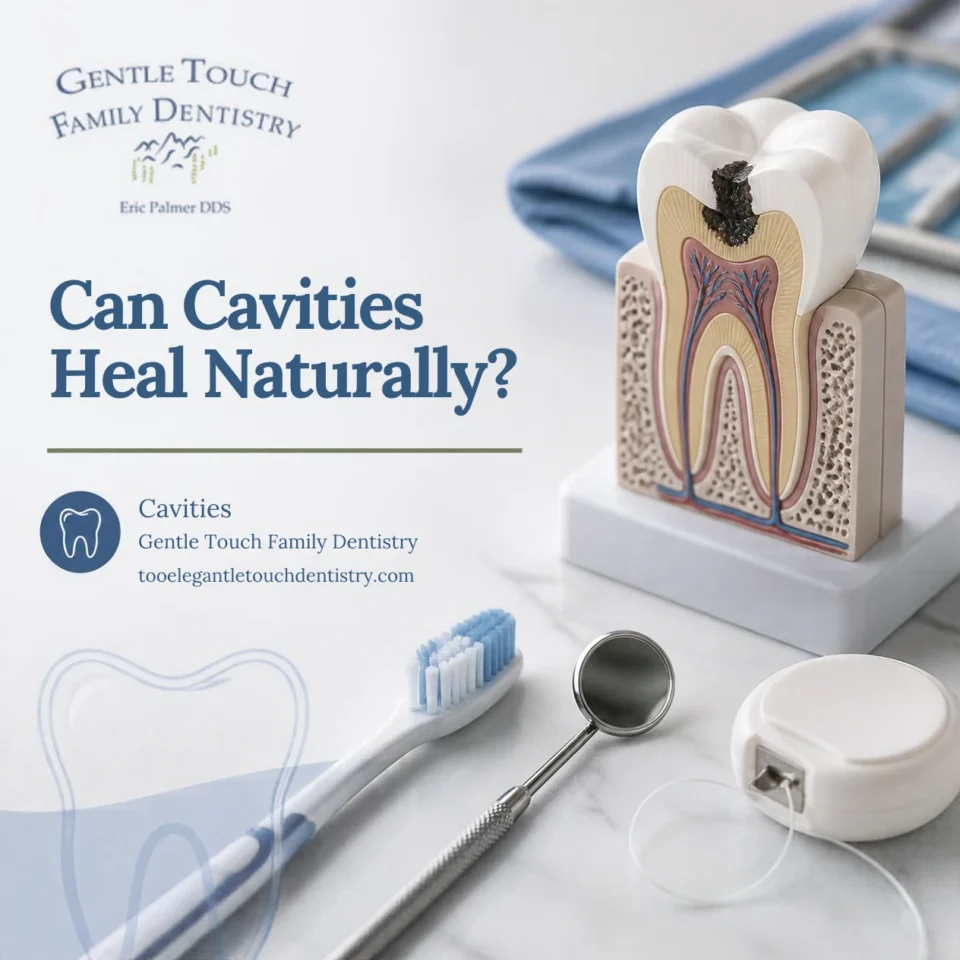
However, once decay has caused the enamel to break down and form a true cavity, the missing tooth structure cannot naturally grow back. A cavity is permanent structural damage and generally needs professional treatment to restore the tooth.
That distinction matters because “early decay” and “a cavity” are often used as though they mean exactly the same thing.
Can Cavities Heal Naturally?
A fully formed cavity cannot heal itself naturally.
Your teeth can participate in a natural repair process called remineralization, but remineralization works best before the enamel surface has collapsed.
Early in the decay process, acids produced by bacteria remove minerals such as calcium and phosphate from enamel. Saliva and fluoride can help replace some of those minerals. If the balance shifts back in favor of repair, early decay may stop progressing and the enamel can become stronger again.
Once enough mineral has been lost that the enamel physically breaks down, remineralization cannot recreate the missing portion of the tooth.
A useful way to think about it is:
- Early mineral loss: potentially reversible
- Intact but weakened enamel: may be remineralized or arrested
- Actual hole in the tooth: cannot naturally grow back
- Deeper decay: may require restorative dental treatment
If you are unsure which stage applies to your tooth, a dental exam is the best way to find out.
What Is the Difference Between Early Decay and a Cavity?
Early tooth decay begins before there is a visible hole.
Acids produced by bacteria in dental plaque gradually remove minerals from enamel. One early sign may be a white or chalky-looking area where mineral loss has occurred.
At this stage, the enamel surface may still be intact.
NIDCR explains that tooth decay can sometimes be stopped or reversed at this point because enamel can replace minerals with help from saliva and fluoride.
A true cavity forms when mineral loss continues long enough for the enamel to weaken and physically break down.
Once that happens, the tooth has lost structure. The body cannot regenerate that missing enamel in the same way that skin can repair a minor cut.
This is why dentists distinguish between noncavitated decay and cavitated decay when deciding how a lesion should be managed. The ADA describes dental caries as a dynamic disease involving cycles of demineralization and remineralization rather than simply a hole that appears all at once.
Can Tooth Enamel Remineralize?
Yes. Enamel can regain minerals during the early stages of tooth decay.
Your mouth naturally goes through cycles of mineral loss and mineral replacement throughout the day.
When bacteria in plaque use sugars and starches from food, they produce acids. Those acids can remove minerals from enamel.
Between those acid attacks, saliva helps neutralize the environment and supplies minerals such as calcium and phosphate. Fluoride provides additional protection by helping strengthen enamel and replace minerals that have been lost.
Remineralization does not mean that a large cavity closes itself.
Instead, it means that weakened but still-intact enamel may become stronger and the early decay process may stop progressing.
That is why catching tooth decay early can make such a difference.
What Helps Support Remineralization?
Several everyday habits can help shift the balance away from continued mineral loss and toward enamel repair.
Brush with fluoride toothpaste
Brushing twice a day with fluoride toothpaste helps provide fluoride directly to tooth surfaces.
Clean between your teeth
Plaque can collect between teeth where a toothbrush may not reach effectively. Floss or another interdental cleaner can help reduce plaque buildup in these areas.
Reduce frequent sugar exposure
How often your teeth are exposed to sugar matters.
Every time cavity-causing bacteria metabolize sugars and starches, acids are produced. Frequent snacking or sipping sugary drinks can create repeated acid attacks throughout the day.
Drink water
Water helps rinse the mouth and supports saliva’s natural protective role. Fluoridated water can also provide ongoing fluoride exposure.
Maintain regular dental care
Dentists can identify early lesions that you may not notice yourself and may recommend fluoride or other preventive strategies based on your cavity risk.
The goal is not to find a single “natural cure.” It is to create conditions that allow early, intact enamel to recover minerals rather than continue losing them.
How Does Fluoride Help Early Tooth Decay?
Fluoride plays an important role in both preventing decay and supporting remineralization.
NIDCR states that fluoride strengthens enamel and can help reverse early decay by replacing minerals that have been lost.
Fluoride can come from several sources, including:
- Fluoride toothpaste
- Fluoridated drinking water
- Certain fluoride mouth rinses
- Professional fluoride applications
The appropriate amount and type of fluoride depends on age, cavity risk, and individual dental needs.
For patients with higher cavity risk or active early lesions, a dentist may recommend additional fluoride treatment beyond regular toothpaste.
Fluoride is most useful before a lesion becomes structurally cavitated. Once a true hole has formed, fluoride may still help protect surrounding tooth structure, but it cannot rebuild the missing portion of the tooth.
Can Diet Affect Early Cavities?
Yes. Diet influences how often your teeth are exposed to cavity-causing acid attacks.
Bacteria in dental plaque use sugars and other fermentable carbohydrates from foods and drinks to produce acids. Repeated exposure can tip the balance toward demineralization.
Common sources include:
- Soda
- Sweetened coffee or tea
- Candy
- Cookies
- Sugary snacks
- Sports drinks
- Juice
- Frequent starchy snacks
You do not need a perfectly sugar-free diet to support healthy enamel. Frequency matters.
Sipping a sweetened drink over several hours may expose the teeth to repeated acid attacks, while having something sweet with a meal may create a shorter exposure period.
Balanced meals, fewer between-meal sugary snacks, water between meals, and good oral hygiene can all help reduce cavity risk.
When Is Tooth Decay Too Advanced to Heal Naturally?
Tooth decay is too advanced for natural remineralization once enough tooth structure has been destroyed to create a physical cavity.
At that stage, the enamel cannot simply regenerate.
Signs of more advanced decay may include:
- A visible hole
- A dark or damaged area in the tooth
- Sensitivity to sweets
- Sensitivity to hot or cold
- Pain while chewing
- Toothache
However, symptoms are not a reliable way to determine how far decay has progressed. Early cavities may cause little or no discomfort.
A dentist may use a visual examination, dental instruments, and X-rays when appropriate to determine whether a lesion is still noncavitated or has progressed far enough to require restorative treatment.
When Is a Dental Filling Needed?
A dental filling is commonly used when decay has produced a cavity that cannot be remineralized back into intact tooth structure.
During treatment, the dentist removes damaged or decayed tooth tissue and restores the area with a filling material. NIDCR describes fillings as the standard method for repairing a small hole, or cavity, in a tooth.
Whether a filling is needed depends on factors such as:
- Whether the enamel surface has cavitated
- How deeply the decay extends
- Where the lesion is located
- Whether the area can be kept clean
- The patient’s overall cavity risk
- How much healthy tooth structure remains
Not every early area of demineralization automatically needs a filling.
Likewise, a true cavity should not be assumed to be something that can simply be brushed away.
If treatment is required, you can learn more about restoration options on our dental fillings page.
How Can Preventive Dentistry Help Catch Decay Early?
Preventive dentistry is especially important because early decay often does not hurt.
By the time a tooth becomes painful, the problem may already be more advanced.
Routine examinations allow your dentist to look for:
- Early enamel changes
- White spot lesions
- Cavities between teeth
- Areas where plaque tends to collect
- Changes around existing fillings
- Gum recession and exposed root surfaces
- Other factors that may increase cavity risk
Dental X-rays can also reveal decay in areas that may not be visible during a routine visual examination.
When decay is identified at the noncavitated stage, preventive treatment may help arrest or remineralize the lesion instead of waiting for it to become a larger cavity.
The ADA also recognizes nonrestorative approaches for managing certain noncavitated caries lesions, depending on the lesion type and individual clinical situation.
Learn more about routine exams, prevention, and tooth protection on our preventive dentistry page.
When Should You See a Dentist for a Suspected Cavity?
Schedule a dental evaluation if you notice a suspicious area on a tooth or think decay may be developing.
Signs worth having checked include:
- A white, brown, or dark spot on a tooth
- A visible hole
- New sensitivity to sweets
- Sensitivity to hot or cold
- Tooth pain
- Pain when biting
- Food repeatedly getting stuck in the same spot
You should also continue routine dental visits even when nothing hurts.
Early decay may have no noticeable symptoms, and determining whether a lesion can be remineralized or needs a restoration usually requires a professional evaluation.
For patients in Tooele, Gentle Touch Family Dentistry can evaluate areas of suspected decay and explain whether the tooth appears appropriate for preventive management, monitoring, or restorative care.
Learn more about our practice on our Tooele dentist page.
FAQs
Can you naturally reverse a cavity?
Early tooth decay may sometimes be reversed before a hole forms in the enamel. Minerals from saliva and fluoride can help remineralize weakened enamel.
Once tooth structure has broken down into a true cavity, however, the missing portion of the tooth cannot naturally grow back.
Can brushing get rid of a cavity?
Brushing with fluoride toothpaste can help prevent new decay and support remineralization of early enamel damage.
Brushing cannot rebuild tooth structure after an actual hole has formed. A dentist should evaluate a suspected cavity to determine whether preventive care or a filling is appropriate.
Can enamel grow back?
Enamel does not regenerate after a portion of it has been physically lost.
However, intact enamel that has begun losing minerals can undergo remineralization, which strengthens the existing surface by replacing some lost minerals.
What does an early cavity look like?
Early decay may appear as a white or chalky spot where enamel has lost minerals. More advanced decay may appear brown or dark or eventually create a visible hole.
Not all decay is easy to see at home, especially when it occurs between teeth.
Does fluoride heal cavities?
Fluoride can help stop or reverse early, noncavitated tooth decay by supporting remineralization.
It cannot regrow enamel that has already been destroyed to form a physical cavity.
How do I know if my cavity can remineralize?
You cannot reliably determine this at home.
A dentist needs to evaluate whether the tooth has early mineral loss with an intact surface or whether structural breakdown has already created a cavity. That distinction determines whether preventive care, monitoring, or restorative treatment is appropriate.