
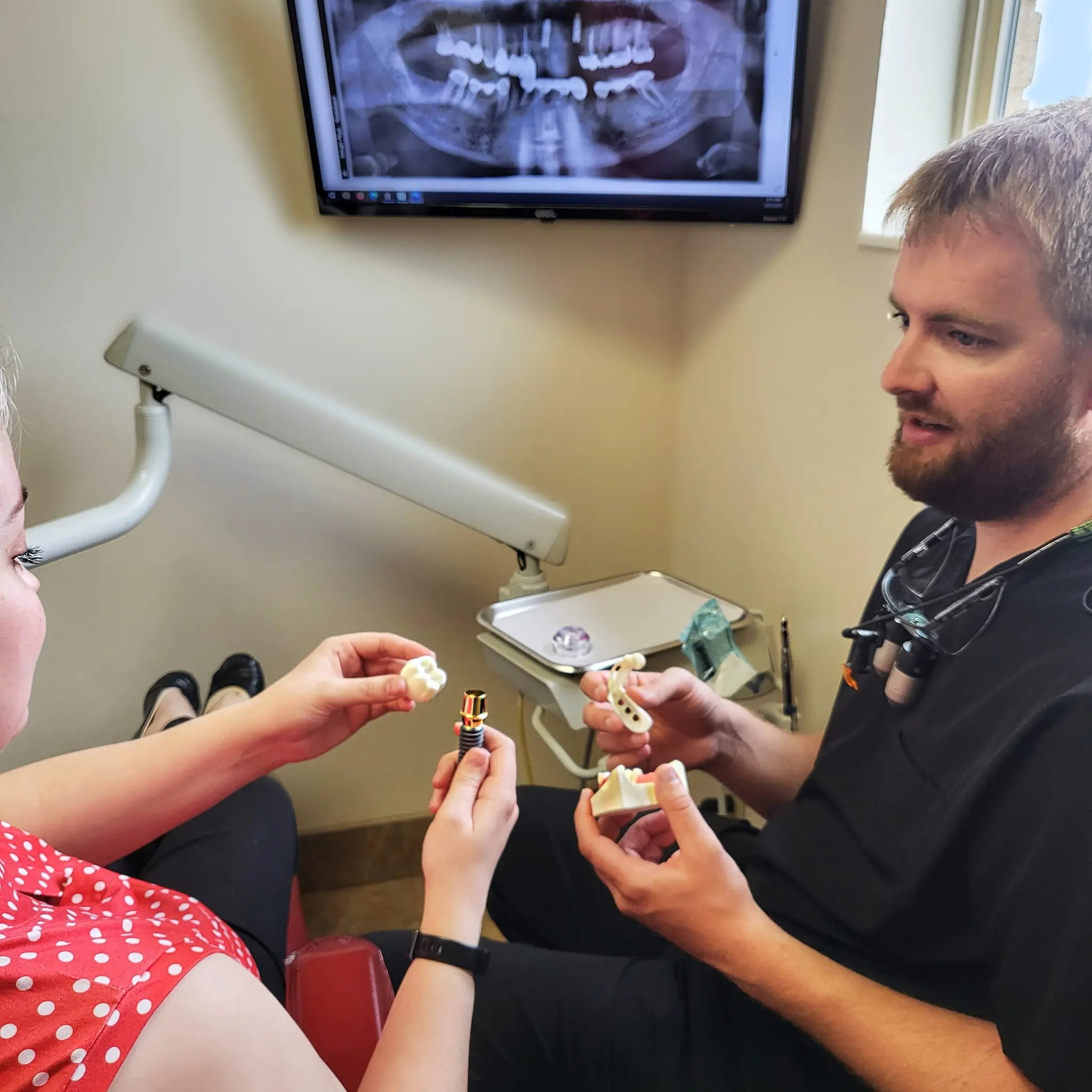
Most people think dental implants are just about replacing missing teeth. A better smile. Easier chewing. Fewer gaps. What rarely gets talked about is what happens to your face when teeth go missing and how implants can quietly protect much more than your bite.
Your teeth play a big role in supporting your facial structure, jawbone, and even how youthful you look over time. When they’re gone, changes happen slowly and often without warning.
How do dental implants affect facial structure over time?
Dental implants do more than fill empty spaces. They actively support the structure of your face over time by replacing both the tooth and its root. That root replacement is the key difference between implants and other options.
Here’s how implants help maintain facial structure:
- They stimulate the jawbone during chewing
- They help preserve bone density
- They prevent nearby teeth from shifting
- They support the natural contours of the face
- They help maintain proper bite alignment
- They reduce long-term facial collapse
When you chew, your jawbone needs stimulation to stay strong. Natural tooth roots provide that stimulation. Dental implants act the same way, sending signals to the bone that keep it active and healthy. Without this stimulation, the bone begins to shrink over time.
As bone loss progresses, the lower part of the face can appear shorter, sunken, or uneven. Implants help slow or stop this process. Over the years, that support makes a visible difference. Patients often don’t notice daily changes, but when they compare photos from years apart, the impact becomes clear. Dental implants help your face keep its natural shape instead of gradually changing due to bone loss.
Can missing teeth cause changes in face shape and jawbone support?
Yes, missing teeth can absolutely change the shape of your face, and it happens more often than people realize. The process is slow, which makes it easy to miss until the changes are noticeable.
When a tooth is lost, the jawbone underneath no longer receives stimulation. As a result:
- The bone begins to shrink
- The jaw loses height and width
- The cheeks may appear hollow
- Lips may lose support
- Wrinkles around the mouth can deepen
- The bite can shift and strain the jaw
This loss of support affects more than appearance. It can change how your jaw functions and how your teeth come together. Over time, this may lead to jaw discomfort, uneven wear on remaining teeth, and difficulty chewing.
Facial changes don’t happen overnight. They develop gradually, which is why many patients don’t connect them to missing teeth. But the connection is very real. Replacing missing teeth early, especially with dental implants, helps protect the jawbone and maintain facial balance. It’s not just about restoring what’s missing. It’s about preventing future changes that are much harder to reverse later on.
Do dental implants help prevent facial sagging and bone loss?
Dental implants are one of the most effective ways to prevent bone loss after tooth loss, which directly helps reduce facial sagging. Bone loss is the main reason the face begins to look collapsed or aged after missing teeth.
Here’s why implants make such a difference:
- They replace the tooth root, not just the crown
- They keep the jawbone active
- They slow or stop bone resorption
- They support facial muscles and soft tissue
- They maintain natural spacing between teeth
Without implants, the jawbone gradually shrinks. As bone volume decreases, the skin and muscles above it lose support. This can lead to sagging around the mouth, deeper smile lines, and a tired or sunken appearance.
Dental implants help preserve the bone structure that holds everything in place. While they aren’t cosmetic treatments, their impact on appearance is very real. Many patients notice that their face looks fuller and more balanced after implant treatment. Preventing bone loss also protects the long-term health of your smile, making implants both a functional and aesthetic investment.
What is the connection between dental implants and maintaining a youthful appearance?
Youthful appearance isn’t just about smooth skin. It’s about structure. Strong bone support plays a major role in how the face ages, and dental implants help protect that foundation.
When teeth are missing, the lower face often shows the earliest signs of aging:
- Thinner lips
- Deeper folds around the mouth
- A shorter-looking lower face
- Less definition along the jawline
Dental implants help counteract these changes by maintaining jawbone height and facial support. Because implants function like natural teeth, they allow you to chew normally, which keeps facial muscles active. Active muscles and healthy bone work together to maintain natural facial contours.
Patients are often surprised to learn that restoring teeth can influence how youthful they look. While implants won’t stop aging, they can slow some of the facial changes associated with tooth loss. The result is a more natural, balanced appearance that still looks like you, just healthier. That’s a benefit many patients never expect but deeply appreciate once they see the results.
Let’s Protect More Than Just Your Smile
At Gentle Touch Family Dentistry, we believe dental implants are about more than replacing teeth. They’re about protecting your facial structure, your comfort, and your confidence for the long run. We take the time to explain how implants support bone health and appearance, not just function.
If you’re missing teeth or exploring your options, we’re here to help you make an informed decision. Reach out to us today and let’s talk about how dental implants can support your smile and your facial health for years to come.