Table of Contents
Brushing your teeth thoroughly is important, but using more pressure does not necessarily make your teeth cleaner. In fact, the American Dental Association recommends using a soft-bristled toothbrush with gentle pressure to help reduce the risk of injuring the gums.
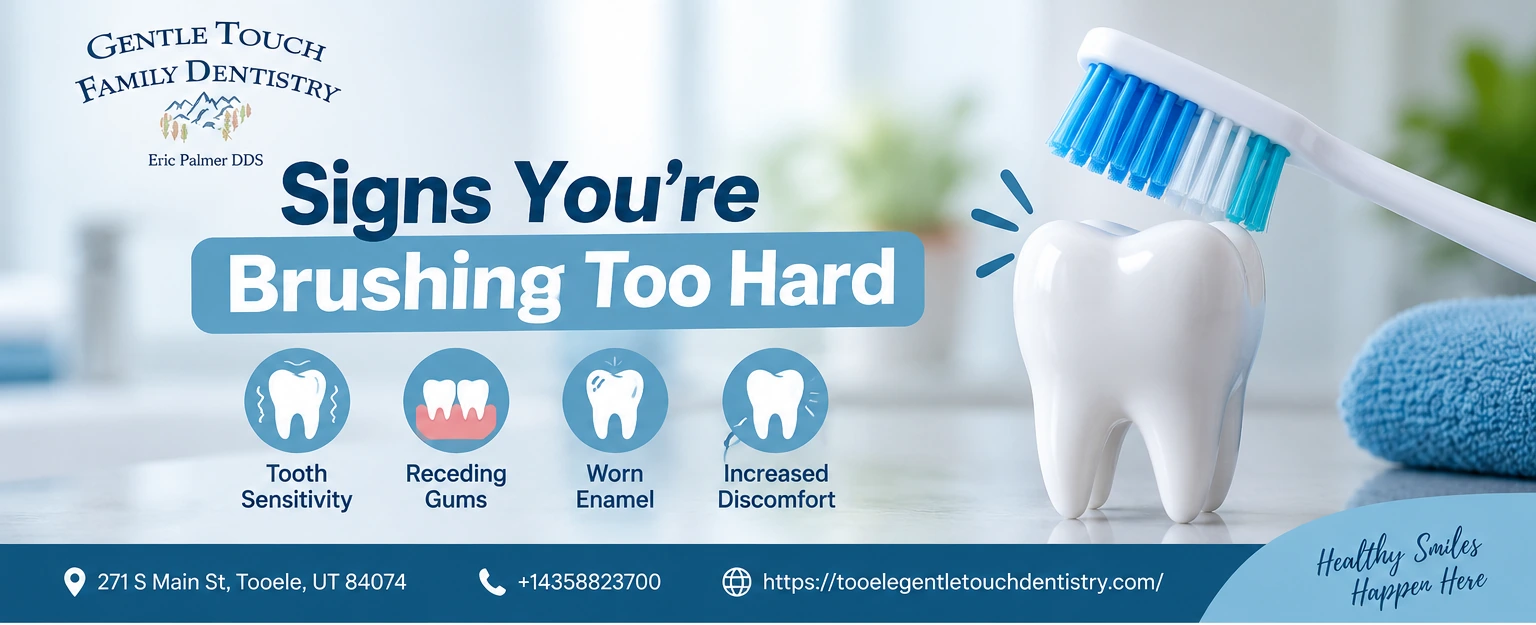
Some common signs you’re brushing too hard include irritated gums, increasing sensitivity, changes along the gumline, and toothbrush bristles that become flattened or splayed unusually quickly. These signs do not prove that brushing pressure is the only cause, but they can be a reason to take a closer look at your technique.
The goal of brushing is to remove plaque effectively, not scrub the teeth as forcefully as possible. A gentle, consistent technique with fluoride toothpaste can clean teeth while being kinder to the surrounding gum tissue.
What Are the Signs You’re Brushing Too Hard?
It is easy to assume that stronger brushing means better cleaning. In reality, plaque is a soft bacterial film, and removing it does not require aggressive scrubbing.
Possible clues that you may be applying too much pressure include:
- Your gums feel sore or irritated after brushing. Regular discomfort may mean your technique is too aggressive or that another gum problem needs attention.
- Your gumline appears to be changing. If the gums seem to be pulling away from certain teeth, have the area evaluated rather than assuming brushing is the only cause.
- Your teeth have become more sensitive. Exposed dentin or root surfaces can react to cold, heat, sweets, or brushing.
- You notice worn areas near the gumline. Excessive mechanical brushing is one possible contributor to non-carious tooth-surface wear, although several factors can be involved.
- Your toothbrush bristles become bent or flattened quickly. Some wear is normal, but repeatedly crushing the bristles shortly after replacing the brush may be a clue that you are pressing harder than necessary.
- You see bleeding when you brush. Bleeding gums should not automatically be blamed on brushing pressure. Plaque-related gingivitis and other gum conditions can also cause bleeding, so persistent bleeding deserves a dental evaluation.
One symptom by itself does not necessarily mean you are brushing incorrectly. Gum recession, sensitivity, and bleeding can all have several possible causes.
If these changes continue despite switching to gentler brushing, a dentist can help determine what is actually happening.
Can Brushing Too Hard Damage Your Teeth?
Excessive brushing pressure can contribute to mechanical wear, particularly when aggressive technique is combined with other factors.
The ADA notes that dental abrasion physical loss of tooth structure caused by something other than tooth-to-tooth contact may occur in rare cases of excessive or aggressive toothbrushing. Normal brushing with a soft-bristled toothbrush and an appropriate fluoride toothpaste, however, is considered unlikely to cause erosive enamel wear.
This distinction is important.
You do not need to be afraid of brushing your teeth thoroughly. Brushing twice a day remains one of the foundations of good oral hygiene. The problem is not regular brushing; it is repeatedly using more force than necessary.
Tooth wear around the gumline can also have more than one cause. Acid exposure, grinding, bite forces, toothpaste abrasiveness, tooth position, and other factors may contribute to changes in the tooth surface.
That is why visible wear should be evaluated rather than self-diagnosed as “toothbrush damage.”
The most useful approach is to clean thoroughly while keeping pressure light.
Can Aggressive Brushing Cause Gum Recession?
Aggressive brushing may contribute to gum irritation or injury, but gum recession is more complicated than simply brushing too hard.
The ADA recommends soft bristles and gentle pressure partly because these habits may reduce the risk of gingival injury.
Research into whether toothbrushing itself directly causes gum recession has produced mixed results. A systematic review found that factors such as brushing force, technique, bristle hardness, and brushing duration have been associated with recession in some studies, but the overall evidence was not strong enough to establish a simple cause-and-effect relationship.
Gum recession may also be associated with periodontal disease, naturally thin gum tissue, tooth position, previous orthodontic movement, tobacco use, and other factors.
If your gums appear to be pulling away from your teeth, switching to a gentler technique is sensible, but do not assume that this will identify or correct the underlying cause.
A dental examination can determine whether the gumline is stable, whether periodontal inflammation is present, and whether another factor may be contributing.
Why Does Brushing Too Hard Cause Sensitivity?
Tooth sensitivity often occurs when dentin becomes less protected.
Dentin lies beneath the enamel on the crown of the tooth and beneath the protective tissues around the tooth root. When gums recede or tooth structure near the gumline becomes worn, dentin may become exposed.
That can make a tooth more responsive to cold drinks, hot foods, sweets, acidic foods, or even the touch of a toothbrush. The ADA notes that sensitivity commonly involves exposed dentin or gum recession and recommends soft bristles and gentler brushing techniques for people dealing with sensitive teeth.
However, brushing pressure is only one possible explanation for sensitivity.
A cavity, cracked tooth, worn filling, enamel erosion, grinding, recent dental treatment, or gum recession from another cause can create similar symptoms.
If sensitivity is persistent, getting worse, or limited to one particular tooth, it is better to have it evaluated than to simply switch toothpaste and ignore it.
What Is the Proper Brushing Technique?
Good brushing is about coverage and consistency rather than force.
The ADA recommends brushing twice a day for about two minutes with fluoride toothpaste and a soft-bristled toothbrush. The toothbrush can be positioned at approximately a 45-degree angle toward the gumline so the bristles can clean along the area where the teeth and gums meet. Gentle, short strokes should be used across the tooth surfaces.
NIDCR similarly advises brushing gently with small circular motions instead of scrubbing hard back and forth. All surfaces of the teeth should be cleaned, including the outer surfaces, inner surfaces, and chewing surfaces.
Think of brushing as carefully sweeping plaque away rather than trying to polish a stain off a hard surface.
Take your time and let the bristles do the work. Pressing harder does not compensate for missing areas, rushing, or failing to clean between the teeth.
Your dentist or dental hygienist can also demonstrate a technique suited to your mouth, especially if you have gum recession, braces, dental restorations, implants, or areas that are difficult to reach.
How Can You Avoid Brushing With Too Much Pressure?
Start by paying attention to how you hold your toothbrush.
If you grip the handle tightly and scrub with your entire arm, it may be easier to apply unnecessary force. Try using controlled movements with your hand and fingers instead.
A soft-bristled toothbrush is usually the better choice for routine cleaning. Both the ADA and NIDCR recommend soft bristles along with gentle brushing.
If you use an electric toothbrush, check whether your model has a pressure sensor. Some powered brushes can alert you when you are pressing harder than recommended. Regardless of whether you use a manual or powered brush, gentle technique remains important.
It can also help to look at your toothbrush regularly. Bristles naturally wear with use and should be replaced when they become worn. If your brush repeatedly looks crushed, severely bent, or dramatically splayed after only a short period, consider whether you are using more force than necessary.
Do not respond by brushing less thoroughly. Instead, slow down and concentrate on reaching every tooth surface gently for the recommended amount of time.
Cleaning between your teeth is important as well. Brushing harder cannot remove plaque effectively from every tight space between neighboring teeth, which is why interdental cleaning remains a separate part of oral hygiene.
Regular professional teeth cleaning can also help remove tartar that brushing and flossing at home cannot remove. The Gentle Touch Family Dentistry teeth-cleaning page notes that professional cleaning includes removal of plaque and tartar and can provide an opportunity to discuss home oral-care habits.
When Should You See a Dentist?
Changing your brushing technique may help if you have been using excessive pressure, but persistent symptoms should not simply be blamed on your toothbrush.
Schedule a dental evaluation if you notice ongoing gum bleeding, increasing gum recession, persistent tooth sensitivity, visible wear near the gumline, tooth pain, loose teeth, or gums that remain red, swollen, or tender.
These symptoms can sometimes be related to conditions other than brushing pressure. For example, NIDCR lists red or swollen gums, bleeding, gum recession, loose teeth, and tooth sensitivity among possible signs associated with periodontal disease.
A dentist can examine your teeth and gums, look at the pattern of any wear or recession, and determine whether your brushing habits need adjustment or another dental issue needs attention.
Preventive visits can also be a good time to ask your hygienist to watch your brushing technique. Small adjustments to the angle, pressure, or motion of your toothbrush may make home care more effective and comfortable.
For patients in Tooele, ongoing preventive care also gives your dental team an opportunity to compare your gumline and tooth surfaces over time rather than relying only on what you can see in the mirror.
FAQs
How do I know if I am pressing too hard when brushing?
Sore gums, rapidly flattened toothbrush bristles, increasing sensitivity, or changes near the gumline may be clues that you are using excessive pressure. These signs can also have other causes, so persistent symptoms should be evaluated by a dentist.
Does brushing harder remove more plaque?
You do not need aggressive pressure to remove plaque effectively. Dental guidance recommends gentle brushing with soft bristles, fluoride toothpaste, and enough time to clean all tooth surfaces.
Can brushing too hard make my teeth sensitive?
Excessive brushing may contribute to gum or tooth-surface changes that leave dentin less protected, which can lead to sensitivity. However, cavities, cracks, erosion, and other dental conditions can cause similar symptoms.
Will my gums grow back if I start brushing more gently?
Changing an aggressive brushing technique may help prevent additional irritation, but gum tissue that has already receded does not necessarily return to its previous position. Because recession can have several causes, a dentist should evaluate persistent or progressing changes.
Should I use a soft or hard toothbrush?
For routine home care, the ADA recommends a soft-bristled toothbrush and gentle pressure. Soft bristles can clean effectively while helping reduce the risk of gum injury.
Can an electric toothbrush help me stop brushing too hard?
It may help, especially if the brush includes a pressure sensor that alerts you when excessive force is being used. A powered toothbrush is not required, however. A manual soft-bristled toothbrush can also clean effectively when used with proper technique.
Protect Your Smile With a Gentler Touch
Brushing harder is not the same as brushing better. Using a soft-bristled toothbrush, light pressure, fluoride toothpaste, and a careful technique can help clean your teeth while being gentler on your gums.
At Gentle Touch Family Dentistry, we help patients in Tooele understand how everyday habits can affect their teeth and gums. If you are noticing persistent sensitivity, gum recession, bleeding, or unusual wear near the gumline, our team can evaluate the area and help you determine the appropriate next steps.
Small improvements to your daily routine can make brushing more comfortable while still giving your teeth the thorough cleaning they need.