Table of Contents
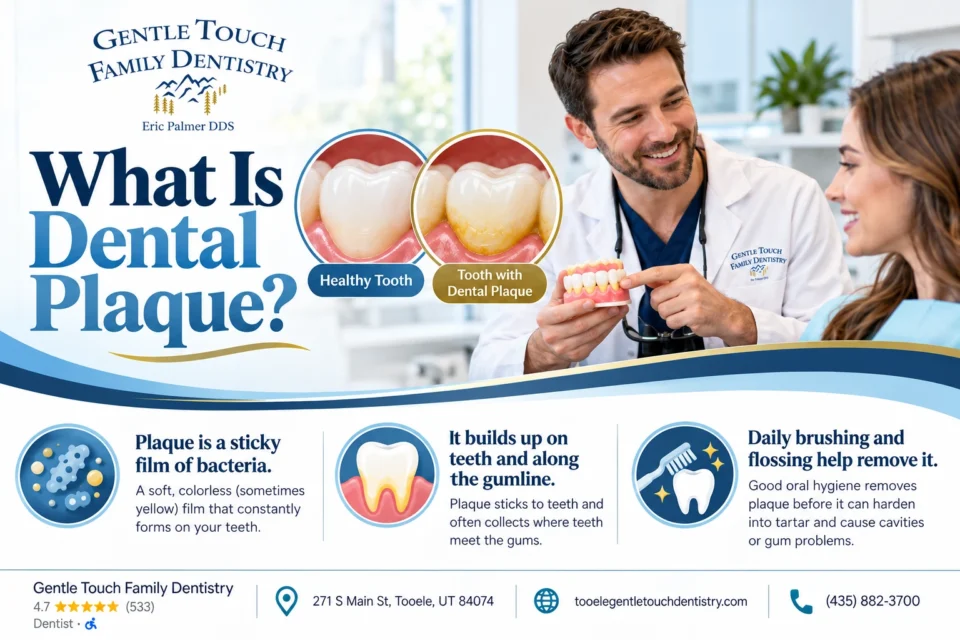
Dental plaque is the soft, sticky film of bacteria that continually forms on your teeth. It can be difficult to see, but it develops every day even when your teeth feel clean.
Plaque itself is common. The problem starts when it remains on the teeth long enough for its bacteria to contribute to tooth decay or irritate the gums. Plaque that is not removed can also harden into tartar, which cannot be brushed or flossed away at home.
Regular brushing, cleaning between your teeth, and professional dental care work together to keep plaque under control.
What Is Dental Plaque?
Dental plaque is a type of biofilm that develops on teeth and other surfaces in the mouth.
In simple terms, a biofilm is a community of bacteria that sticks to a surface. NIDCR describes dental plaque as a sticky film containing bacteria that can form on natural teeth as well as dental restorations and appliances.
You may notice plaque as a soft or slightly fuzzy coating on your teeth, particularly if you have not brushed for several hours.
Plaque tends to collect:
- Along the gumline
- Between teeth
- Around dental fillings or crowns
- In grooves on chewing surfaces
- Around braces or other dental appliances
- In areas that are difficult to brush effectively
Because plaque forms continually, keeping your mouth healthy is less about preventing it from ever appearing and more about removing it consistently before it causes problems or hardens into tartar.
How Does Dental Plaque Form?
Plaque begins forming naturally on tooth surfaces.
Soon after teeth are cleaned, proteins from saliva create a thin layer on the enamel. Bacteria in the mouth can attach to this layer and to one another, gradually creating the sticky biofilm we call plaque.
Food plays an important role in what those bacteria do next.
When certain bacteria in plaque come into contact with sugars and starches from foods and drinks, they produce acids. Those acids can attack tooth enamel and remove minerals from its surface.
Foods and drinks that can contribute to repeated acid exposure include:
- Candy
- Cookies
- Soda
- Juice
- Sweetened drinks
- Bread and other starches
- Frequent sugary snacks
This does not mean eating one sugary food immediately creates a cavity. Tooth decay develops through repeated interactions between bacteria, diet, saliva, fluoride, and time.
What Is Plaque Made Of?
Plaque is not simply leftover food stuck to your teeth.
It is primarily a bacterial biofilm that also contains material from the mouth and food debris. NIDCR describes plaque as a sticky biofilm composed of bacteria and food particles.
The bacteria within plaque use nutrients from foods and drinks and produce substances that help the biofilm stay attached to tooth surfaces.
This is why simply rinsing your mouth with water does not remove all plaque.
The film needs to be physically disrupted through brushing and cleaning between the teeth.
What Happens If Plaque Is Not Removed?
Plaque can affect both the teeth and gums when it remains in place.
Two of the main concerns are:
- Tooth decay, because plaque bacteria can produce acids that remove minerals from enamel
- Gum inflammation, because plaque along the gumline can irritate the surrounding tissues
Plaque can also absorb minerals from saliva and harden into tartar, also called calculus.
Once tartar forms, brushing and flossing will not remove it. It generally needs to be removed by a dentist or dental hygienist using professional instruments.
That is one reason daily home care and routine professional cleanings serve different purposes.
Can Plaque Cause Cavities?
Yes. Dental plaque plays an important role in the tooth decay process.
Bacteria within plaque use sugars and starches from food and drinks and produce acids. These acids can remove minerals from tooth enamel.
Your mouth also has natural defenses.
Saliva contains minerals such as calcium and phosphate, and fluoride can help enamel replace some of the minerals lost during acid attacks. This process is called remineralization.
Problems develop when mineral loss repeatedly exceeds mineral replacement.
Over time:
- Enamel begins losing minerals.
- An early white spot may develop.
- Continued mineral loss weakens the enamel.
- The enamel may eventually break down.
- A cavity can form.
Removing plaque regularly helps reduce the bacterial buildup involved in this process.
How Does Plaque Affect Gum Health?
Plaque that collects around the gumline can irritate gum tissue.
One of the earliest results may be gingivitis, a mild form of gum disease. Signs can include:
- Red gums
- Swollen gums
- Tenderness
- Bleeding during brushing or flossing
NIDCR explains that plaque buildup can cause gingivitis and that plaque-related gingivitis can often be reversed with effective daily brushing and cleaning between the teeth.
If plaque remains long enough to harden into tartar, the rough surface can make the area more difficult to keep clean. Continued bacterial buildup and inflammation may contribute to more serious periodontal disease in susceptible patients.
Healthy gums generally should not bleed routinely during normal brushing or flossing. If bleeding continues, schedule a dental evaluation rather than assuming you simply need to brush harder.
What Is the Difference Between Plaque and Tartar?
Plaque and tartar are closely related, but they are not the same thing.
Plaque
Plaque is:
- Soft
- Sticky
- Continually forming
- Primarily made up of bacteria in a biofilm
- Removable with effective brushing and interdental cleaning
Tartar
Tartar, also called calculus, is:
- Hardened plaque
- Mineralized by substances in saliva
- Firmly attached to the tooth surface
- Not removable with normal brushing or flossing
NIDCR explains that calculus forms when plaque absorbs calcium from saliva and hardens. Once this happens, professional dental instruments are needed to remove it.
This distinction is important.
You can manage much of your daily plaque buildup yourself, but tartar requires professional cleaning.
How Can You Remove Plaque at Home?
Because plaque is soft, effective daily oral hygiene can remove much of it before it hardens.
Brush twice a day
Brush your teeth twice daily with fluoride toothpaste.
Pay attention to the gumline and the outer, inner, and chewing surfaces of each tooth rather than quickly brushing only the easiest areas.
Clean between your teeth
A toothbrush cannot thoroughly reach every surface between neighboring teeth.
The ADA recommends cleaning between the teeth daily to remove plaque from these areas. Dental floss, interdental brushes, or other appropriate interdental cleaners may be options depending on your needs.
Clean around dental work carefully
Plaque can collect around crowns, fillings, implants, bridges, orthodontic appliances, and other dental work.
Your dental team can show you appropriate techniques or tools if these areas are difficult to clean.
Do not try to scrape tartar off yourself
If a hard deposit remains despite brushing and flossing, it may be tartar rather than plaque.
Trying to remove hardened deposits yourself with sharp objects can injure your gums or teeth. Professional cleaning is the safer approach.
How Do Professional Teeth Cleanings Help?
Daily brushing and interdental cleaning are essential, but they cannot remove hardened tartar.
During a professional cleaning, a dentist or dental hygienist can remove tartar from areas where it has accumulated. NIDCR states that once plaque hardens into tartar, professional cleaning is required for removal.
Professional cleanings also provide an opportunity to address areas where plaque repeatedly accumulates.
Your dental team may point out:
- Places you tend to miss while brushing
- Areas where flossing or another interdental tool could help
- Tartar buildup along the gumline
- Signs of gum inflammation
- Areas that may need closer monitoring
The goal is not to replace your home routine. Professional care and daily home care work together.
Learn more about routine professional care on our teeth cleaning page.
How Can You Prevent Plaque Buildup?
Because plaque continually reforms, you cannot permanently stop it from appearing.
You can, however, keep buildup under control.
Helpful habits include:
- Brush twice a day with fluoride toothpaste
- Clean between your teeth regularly
- Pay attention to the gumline
- Limit frequent sugary foods and drinks
- Drink water regularly
- Clean removable oral appliances as directed
- Keep routine dental appointments
- Avoid tobacco
NIDCR recommends twice-daily brushing with fluoride toothpaste, regular cleaning between the teeth, and routine dental visits with professional cleanings to help maintain healthy teeth and gums.
Consistency matters more than trying to make your teeth perfectly plaque-free at every moment.
Preventive dental visits can also help identify early signs of decay or gum inflammation before they become more noticeable.
For more information about protecting your teeth and gums over time, visit our preventive dentistry page.
FAQs
Is dental plaque normal?
Plaque forms naturally and continually in the mouth.
The concern is not simply that plaque exists, but whether it is regularly removed. Plaque that remains on teeth can contribute to cavities, gum inflammation, and tartar formation.
Can you see plaque on your teeth?
Plaque is often colorless or pale, so it may not always be easy to see.
You may sometimes notice it as a soft or fuzzy coating, particularly near the gumline or after going several hours without brushing.
Does brushing remove plaque?
Yes. Effective brushing can remove plaque from the tooth surfaces your toothbrush reaches.
Because toothbrush bristles cannot fully clean between neighboring teeth, interdental cleaning is also important for removing plaque from those spaces.
Can flossing remove tartar?
No. Flossing helps remove plaque before it hardens, but it cannot remove established tartar.
Once plaque becomes calculus or tartar, a dentist or dental hygienist must remove it professionally.
How quickly does plaque come back after brushing?
Plaque begins reforming naturally after teeth are cleaned because bacteria continuously live in the mouth and attach to tooth surfaces.
That is why plaque control depends on a consistent daily routine rather than occasional deep brushing.
Does plaque always cause cavities?
No. Having plaque does not mean you will automatically develop a cavity.
Tooth decay depends on several interacting factors, including bacteria, frequency of sugar and starch exposure, saliva, fluoride, oral hygiene, and time. However, plaque bacteria are an important part of the decay process.