
Table of Contents
You may notice soreness at the very back of your mouth, swelling near your gums, or discomfort when chewing. Sometimes, these symptoms appear as your wisdom teeth begin coming in. Other times, wisdom teeth cause problems even when you can’t see them.
Wisdom teeth are the last set of permanent molars to develop, usually appearing during the late teenage years or early adulthood. While some wisdom teeth grow normally and remain healthy, others don’t have enough room to emerge properly.
Wisdom teeth can cause problems when they become trapped beneath the gums, grow at an angle, or only partially emerge. These situations can make the area difficult to clean, trap food and bacteria, irritate gum tissue, and sometimes affect neighboring teeth.
Not every wisdom tooth needs to be removed. A dentist can examine the area, evaluate how the teeth are positioned, and determine whether monitoring or treatment is appropriate.
At Gentle Touch Family Dentistry in Tooele, UT, we help patients understand changes in their oral health and recognize when dental concerns need attention. Here’s what to know about common wisdom tooth problems and when to schedule an examination.
Why Do Wisdom Teeth Cause Problems?
Wisdom teeth, also called third molars, are located at the very back of your mouth. Most people develop up to four, although some have fewer or none at all.
Unlike your other permanent teeth, wisdom teeth usually emerge later, often between ages 17 and 21.
By that time, the rest of your permanent teeth are generally already in place.
For some people, there is enough room for wisdom teeth to grow into a normal position. They can function like other molars and may not cause any problems.
For others, there isn’t enough space for these teeth to emerge completely.
A wisdom tooth may grow toward the neighboring molar, remain under the gums, or come through only partway.
These positioning problems can make cleaning difficult and increase the likelihood of certain dental conditions.
Common wisdom tooth complications include pain, gum inflammation, infections, tooth decay, and damage to nearby teeth.
However, the presence of wisdom teeth doesn’t automatically mean problems will develop.
The decision to monitor or treat them depends on their position, condition, and effects on your oral health.
What Does It Mean When a Wisdom Tooth Is Impacted?
An impacted wisdom tooth is a tooth that cannot fully emerge into its normal position.
It may be blocked by another tooth, gum tissue, or surrounding bone.
Some impacted wisdom teeth remain completely hidden beneath the gums, while others partially break through.
Fully Impacted Wisdom Teeth
A fully impacted wisdom tooth remains beneath the gumline.
You may not be aware that it’s present because it isn’t visible when you look inside your mouth.
Some fully impacted wisdom teeth remain stable without causing symptoms.
Others may develop problems involving nearby teeth or surrounding tissues.
A dental examination and appropriate X-rays can help determine the tooth’s position and whether it requires monitoring or treatment.
Partially Impacted Wisdom Teeth
A partially impacted wisdom tooth has emerged through the gums but hasn’t come through completely.
This may leave a flap of gum tissue covering part of the tooth.
Food particles and bacteria can become trapped underneath that tissue.
Because the area is difficult to clean, irritation and infection may develop.
You might notice swelling, tenderness, or an unpleasant taste near the back of your mouth.
Partially impacted wisdom teeth are one reason patients may experience recurring discomfort even when the tooth appears to be coming in normally.
What Symptoms Can Problem Wisdom Teeth Cause?
Wisdom tooth problems don’t always begin with severe pain.
Some symptoms develop gradually, while others appear unexpectedly.
Common warning signs include:
- Pain or tenderness behind the last molar
- Swollen, red, or irritated gums
- Discomfort when chewing
- Food frequently becoming trapped near the back teeth
- An unpleasant taste or persistent bad breath
- Difficulty opening your mouth comfortably
- Swelling around the jaw or cheek
- Sensitivity or discomfort in a neighboring molar
The symptoms can vary depending on whether the wisdom tooth is impacted, partially erupted, decayed, or surrounded by inflamed gum tissue.
You may experience discomfort that comes and goes.
However, the absence of symptoms doesn’t guarantee that a wisdom tooth is healthy.
Some problems, including decay or damage involving a nearby molar, may not cause noticeable pain immediately.
A dental examination can help identify the source of the symptoms.
Can Wisdom Teeth Cause Pain or Swelling?
Yes. Wisdom teeth can cause pain or swelling when they are erupting, pressing against surrounding structures, or contributing to inflammation or infection.
Mild tenderness may occur as a tooth moves through the gum tissue.
However, persistent or increasing discomfort should not automatically be dismissed as normal eruption pain.
Why Does the Area Become Painful?
Several conditions may contribute to discomfort.
A partially emerged tooth may irritate the surrounding gum tissue.
An impacted tooth may affect a neighboring tooth or surrounding structures.
Decay or infection can also cause pain.
Sometimes, discomfort near a wisdom tooth actually comes from the molar beside it.
Because these problems can feel similar, an examination is needed to determine the cause.
What About Swollen Gums?
Swelling behind the last molar can occur when bacteria and debris collect around a partially erupted wisdom tooth.
The gums may appear red, tender, or puffy.
If the area becomes increasingly swollen, painful, or difficult to clean, contact your dentist promptly.
Swelling accompanied by fever, drainage, or difficulty opening your mouth can indicate a more serious problem requiring urgent evaluation.
Do not attempt to cut, lift, or remove gum tissue yourself.
Can Wisdom Teeth Lead to Gum Infection?
Yes. One common problem involving partially erupted wisdom teeth is an infection or inflammation of the surrounding gum tissue called pericoronitis.
This condition often develops when a flap of gum partially covers the tooth.
Food and bacteria can collect beneath the flap, creating an area that is difficult to clean.
The tissue may become irritated, swollen, and painful.
Signs of Pericoronitis
Possible symptoms include:
- Red or swollen gum tissue around the wisdom tooth
- Pain near the back of the mouth
- An unpleasant taste or odor
- Tenderness when chewing
- Difficulty opening the mouth normally
- Swelling that extends toward the cheek or jaw
Symptoms can range from mild irritation to a more significant infection.
A dentist may recommend appropriate local care, treatment of the inflammation, or other interventions based on the findings.
Antibiotics are not necessary for every episode of gum inflammation and should be used only when clinically indicated.
If the problem keeps returning, removal of the wisdom tooth may be considered.
Can the Infection Spread?
Dental infections can sometimes spread beyond the original area.
Severe swelling, fever, increasing pain, or difficulty swallowing may indicate a more serious infection.
Seek emergency medical care immediately if you have difficulty breathing or swallowing, or rapidly progressing swelling involving your face, jaw, or neck.
These symptoms should not wait for a routine dental appointment.
Why Are Wisdom Teeth Hard to Keep Clean?
Wisdom teeth are positioned farther back than your other molars, making them harder to reach with a toothbrush and dental floss.
When they emerge at an unusual angle or only partially break through the gums, cleaning becomes even more challenging.
Food can become trapped between the wisdom tooth and the molar in front of it.
Bacteria and plaque may accumulate in these areas, increasing the risk of cavities and gum inflammation.
Cavities Around Wisdom Teeth
A wisdom tooth can develop decay like any other tooth.
However, its position may make cavities harder to detect and treat.
Decay can also develop on the back surface of the neighboring molar when the area between the two teeth is difficult to clean.
If a wisdom tooth has extensive decay or cannot be restored effectively, extraction may be recommended.
Can Better Brushing Prevent Problems?
Good oral hygiene can reduce the buildup of plaque and food debris, but it cannot correct the position of an impacted tooth.
Continue brushing twice daily with fluoride toothpaste and cleaning between your teeth.
If the area is difficult to reach, ask your dentist or dental hygienist about suitable cleaning techniques.
Avoid aggressively pushing tools beneath swollen gum tissue.
Even with careful brushing, some wisdom teeth remain difficult to maintain because of their position.
Regular dental examinations help monitor these areas.
Can Wisdom Teeth Damage Nearby Teeth?
In certain cases, yes.
A wisdom tooth that grows at an angle may contact the second molar directly in front of it.
This can create areas where plaque accumulates and cleaning becomes difficult.
Over time, the neighboring tooth may develop decay or gum-related problems.
Some impacted teeth may also be associated with damage to nearby tooth roots or surrounding bone.
Pressure and Neighboring Molars
Patients sometimes describe wisdom tooth discomfort as pressure at the back of the jaw.
However, feeling pressure doesn’t automatically mean the wisdom tooth is pushing other teeth out of alignment.
Wisdom teeth have historically been blamed for crowding the front teeth, but the relationship is more complicated, and routine removal solely to prevent future crowding is not consistently supported by evidence.
A dentist should evaluate the actual position of the wisdom tooth and any documented damage before recommending treatment.
Can Cysts Develop Around Wisdom Teeth?
In uncommon cases, a cyst can develop around an impacted wisdom tooth.
A cyst is a fluid-filled sac that may affect nearby structures as it enlarges.
These changes may not cause noticeable symptoms at first.
Dental imaging can help identify abnormalities that require further evaluation.
Not every impacted wisdom tooth develops a cyst, and the possibility alone doesn’t establish that removal is necessary.
When Is Wisdom Tooth Removal Recommended?
Wisdom tooth removal may be recommended when a tooth causes recurring problems, develops disease, or threatens the health of surrounding teeth or tissues.
However, not every wisdom tooth needs to be extracted.
If a wisdom tooth is healthy, positioned appropriately, functioning normally, and easy to clean, a dentist may recommend leaving it in place.
Even some impacted wisdom teeth can be monitored when they aren’t causing disease or other concerning findings.
Reasons Removal May Be Considered
A dentist may recommend removing a wisdom tooth when there is evidence of:
- Repeated gum infections around a partially erupted tooth
- Tooth decay that cannot be predictably restored
- Damage to the neighboring molar
- Significant gum disease involving the area
- Certain cysts or other abnormalities
- Ongoing symptoms associated with the tooth
- Other documented conditions where removal provides a clear clinical benefit
The decision also depends on the complexity and risks of the procedure.
For example, the roots of a lower wisdom tooth may be close to important nerves. That relationship can affect surgical planning and whether specialist evaluation is recommended.
Your dentist should explain the expected benefits, possible risks, and alternatives before treatment.
For more information about extraction procedures, visit our tooth extraction services in Tooele page.
When Is Wisdom Tooth Pain a Dental Emergency?
Not every wisdom toothache requires emergency treatment, but some symptoms should be assessed urgently.
Occasional mild discomfort without swelling or other symptoms may not require immediate treatment.
However, worsening pain, significant swelling, or signs of infection should not be ignored.
When to Contact a Dentist Promptly
Arrange a prompt dental evaluation if you experience:
- Persistent or worsening pain near a wisdom tooth
- Swelling or redness around the back gums
- Repeated episodes of gum inflammation
- Discomfort that makes eating difficult
- An unpleasant taste accompanied by pain
- Difficulty opening your mouth comfortably
The dental team can help determine how soon you should be examined.
When to Seek Urgent or Emergency Care
More serious symptoms may require urgent dental treatment or emergency medical attention.
Seek prompt evaluation for severe pain, fever, increasing swelling, or suspected infection.
Go to an emergency department immediately if you have difficulty breathing or swallowing, rapidly spreading facial or neck swelling, or other signs of a serious infection.
If you are uncertain about the seriousness of wisdom tooth pain, contacting a dental professional is a reasonable next step.
Gentle Touch Family Dentistry provides emergency dentistry services for patients experiencing urgent dental concerns.
Contact the practice to discuss symptoms and appointment availability rather than assuming a specific appointment time is guaranteed.
How Does a Dentist Evaluate Wisdom Teeth?
A wisdom tooth examination helps determine whether the tooth is growing normally, contributing to symptoms, or affecting nearby structures.
Your dentist will usually begin by discussing your symptoms and medical history.
They may ask when the discomfort started, whether it comes and goes, and whether you have noticed swelling or problems when chewing.
Examining the Teeth and Gums
The dentist will examine the back of your mouth for visible wisdom teeth, gum inflammation, decay, and other signs of concern.
They may assess the neighboring molars and surrounding tissues.
If a wisdom tooth has only partially emerged, the dentist can evaluate whether the gum tissue around it is inflamed.
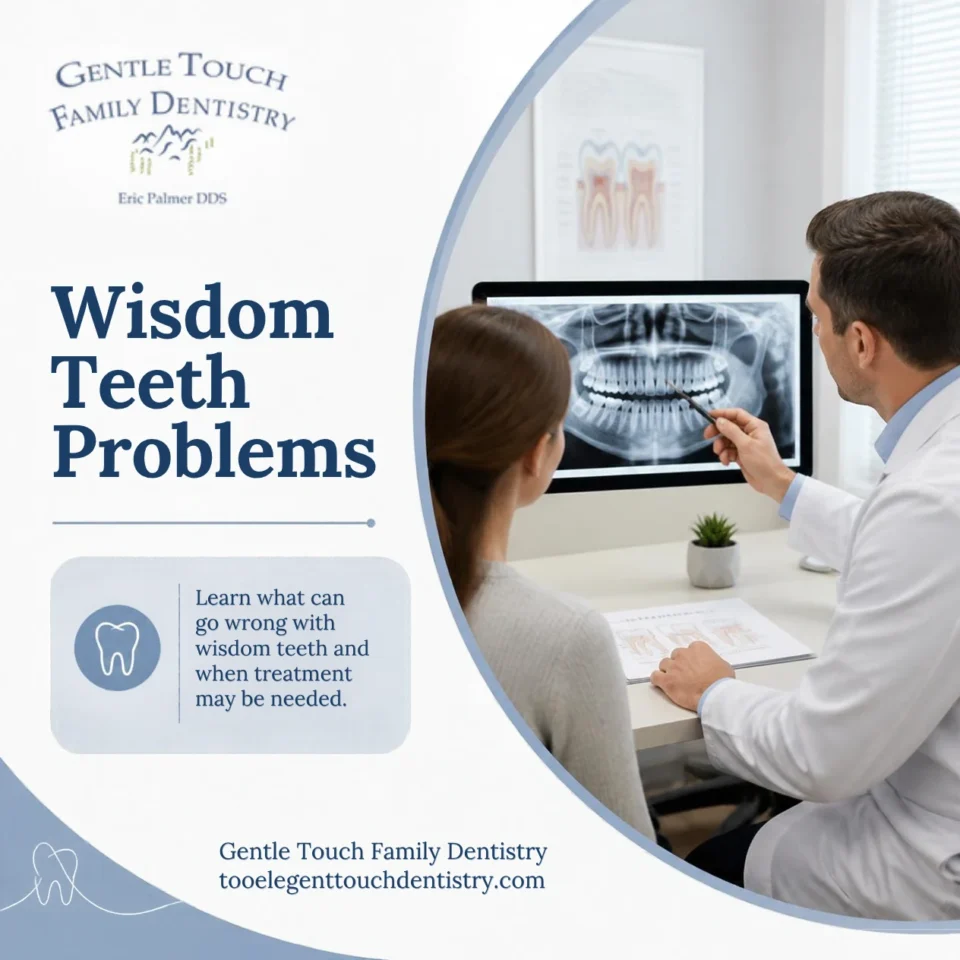
Using Dental X-Rays
Dental X-rays can help show the position of wisdom teeth beneath the gums.
They may reveal whether a tooth is angled toward another molar, remains impacted, or is associated with abnormalities that require further assessment.
Additional imaging may be appropriate in selected cases, particularly when a complex extraction is being considered.
The type of imaging depends on the clinical question.
Discussing Monitoring or Treatment
After the examination, your dentist can explain whether the wisdom tooth appears healthy, requires monitoring, or may benefit from treatment.
If removal is recommended, you’ll have an opportunity to discuss the reasons, possible risks, and whether specialist care may be appropriate.
If the tooth is not causing problems and there are no concerning findings, regular monitoring may be sufficient.
At Gentle Touch Family Dentistry, we encourage patients to ask questions and understand their dental care options.
For patients seeking a dentist in Tooele, an examination can help clarify concerns about wisdom teeth and determine appropriate next steps.
FAQs
Why Do Wisdom Teeth Cause Problems More Often Than Other Teeth?
Wisdom teeth develop later and may not have enough room to emerge normally. Their position at the back of the mouth can also make cleaning more difficult. When wisdom teeth are impacted or partially erupted, problems such as decay, gum inflammation, and infection can develop.
Do All Wisdom Teeth Need to Be Removed?
No. Healthy wisdom teeth that are properly positioned and can be cleaned may remain in place. Some impacted teeth without disease can also be monitored. A dentist can evaluate their condition and recommend whether removal is necessary.
Can Wisdom Teeth Hurt Even If They Haven’t Come Through?
Yes. Impacted wisdom teeth may cause discomfort even when they remain beneath the gums. However, pain at the back of the mouth can also result from decay, gum disease, or problems involving other molars. A dental examination and appropriate imaging can help identify the cause.
Can Wisdom Teeth Cause Swollen Gums?
Yes. Partially erupted wisdom teeth can allow food and bacteria to collect beneath surrounding gum tissue, leading to inflammation or infection. Swelling that persists, worsens, or occurs with fever should be evaluated promptly.
How Do I Know if My Wisdom Tooth Is Infected?
Possible signs include increasing gum pain, swelling, redness, an unpleasant taste, drainage, or difficulty opening your mouth. Fever or spreading swelling may indicate a more serious infection. A dentist must evaluate the area to determine whether an infection is present and what treatment is needed.
Can Wisdom Teeth Cause Problems Later in Life?
Yes. Wisdom teeth can develop decay, gum disease, or other problems after early adulthood. Even wisdom teeth that have not caused symptoms should be evaluated during regular dental examinations. Monitoring helps identify changes that may require treatment.
Concerned About Your Wisdom Teeth? Visit Gentle Touch Family Dentistry in Tooele
Wisdom teeth don’t always cause problems, but their position can make them more difficult to clean and more likely to develop certain dental conditions.
Pain, swelling, recurring gum irritation, and discomfort near the back molars are all reasons to schedule an examination.
If your wisdom teeth are healthy and not affecting surrounding structures, monitoring may be appropriate. If they are causing infection, decay, or other complications, your dentist can explain the available treatment options.
At Gentle Touch Family Dentistry in Tooele, UT, we help patients understand their dental concerns and make informed decisions about their oral health.
Whether you’re noticing wisdom tooth discomfort or simply want to know how your wisdom teeth are developing, our team can evaluate your concerns and discuss appropriate next steps.
Contact Gentle Touch Family Dentistry to request an appointment and learn more about caring for your wisdom teeth.