Table of Contents
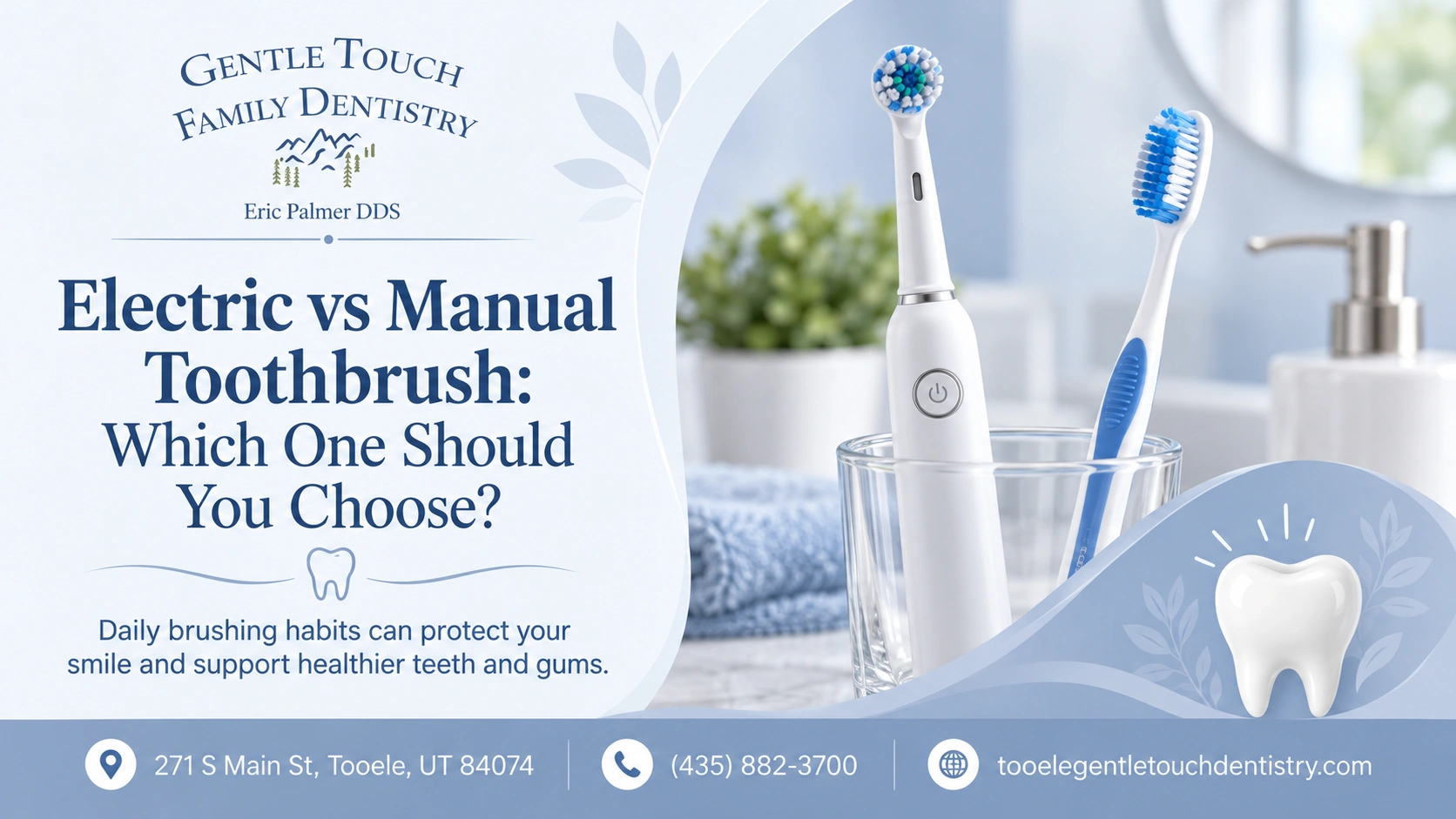
Choosing between an electric and manual toothbrush does not have to be complicated. Both can effectively remove plaque and support healthy teeth and gums when you use them properly and brush consistently.
The main difference is how much of the brushing motion the toothbrush performs for you. A manual brush relies entirely on your hand movements, while an electric toothbrush uses a powered motion such as oscillating, rotating, or vibrating bristles.
When comparing an electric vs manual toothbrush, an electric model may make thorough brushing easier for some people and research suggests certain powered brushes can provide an advantage in reducing plaque and gingivitis. However, that does not mean everyone needs to switch. A soft-bristled manual toothbrush can still be an effective and affordable choice when used with good technique.
The best toothbrush is ultimately one that fits your needs, feels comfortable, and helps you brush thoroughly twice a day.
Electric vs Manual Toothbrush: What’s the Difference?
Both types of toothbrushes are designed to accomplish the same basic goal: removing plaque and food debris from tooth surfaces and along the gumline.
With a manual toothbrush, you create all of the cleaning movement yourself. You control the brush angle, speed, pressure, and motion as you move from tooth to tooth.
An electric toothbrush uses a motor to move the brush head or bristles. Depending on the model, the brush may use oscillating-rotating, side-to-side, sonic, or another powered movement. You still need to position the toothbrush correctly and guide it around your mouth, but the device creates much of the brushing action.
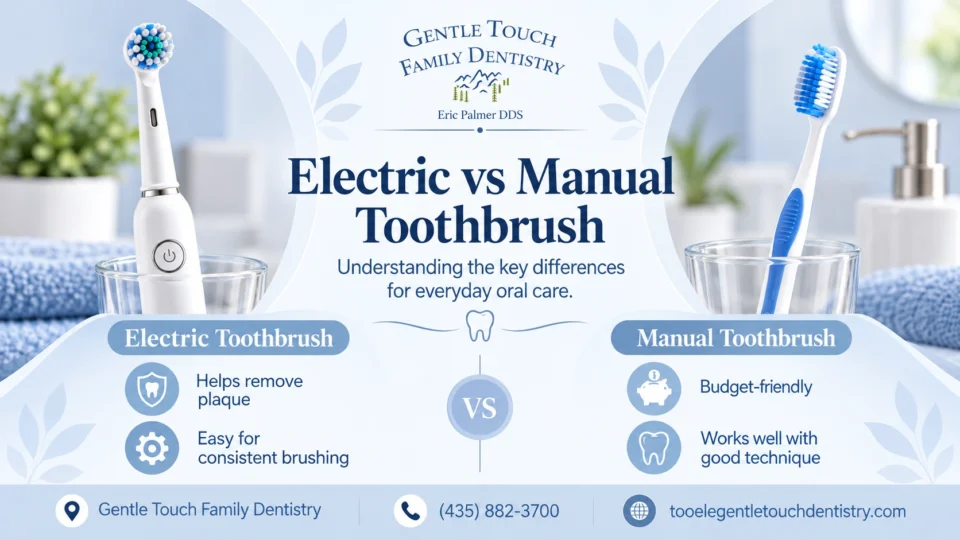
Here is a simple comparison:
| Feature | Electric Toothbrush | Manual Toothbrush |
| Cleaning motion | Powered by the brush | Created by your hand |
| Cost | Generally higher | Generally lower |
| Ease of use | May require less hand movement | Requires more manual technique |
| Timers | Common on many models | Usually requires self-timing |
| Pressure sensors | Available on some models | Usually not available |
| Portability | Requires more equipment | Lightweight and simple |
| Effectiveness | Can be very effective | Can be very effective |
| Replacement | Brush heads plus device | Entire toothbrush |
The American Dental Association states that both manual and powered toothbrushes can effectively remove plaque. The right choice therefore depends less on whether one category is universally “better” and more on which option helps you maintain an effective routine.
What Are the Benefits of an Electric Toothbrush?
One of the biggest advantages of an electric toothbrush is that it performs much of the brushing motion automatically.
That can make maintaining consistent technique easier, particularly for people who have trouble controlling a manual brush.
Research has also found advantages for powered toothbrushes in plaque removal and gingivitis reduction. A 2026 network meta-analysis comparing different toothbrush technologies found that oscillating-rotating powered toothbrushes ranked highest among the evaluated brush types for reducing plaque and gingivitis. However, effectiveness varies by brush technology, user technique, and individual circumstances.
Electric toothbrushes may also include features designed to improve everyday brushing.
Many models include a built-in two-minute timer, which can help people avoid stopping too soon. Some divide the brushing period into smaller intervals so you spend a similar amount of time cleaning each section of your mouth.
Pressure sensors are another useful feature. If you tend to scrub aggressively, certain electric brushes can warn you when you are applying more pressure than necessary.
For people who struggle with hand movement, the powered brushing action may be especially useful. Instead of repeatedly creating small brushing motions, the user can focus primarily on positioning the brush head correctly and slowly guiding it from tooth to tooth.
Electric toothbrushes do have limitations. They typically cost more upfront, replacement heads add ongoing expense, and the device must be charged or have batteries available. Some people also find the vibration or sound uncomfortable at first.
These factors matter because a toothbrush that you dislike using is unlikely to improve your routine simply because it is electric.
What Are the Pros and Cons of a Manual Toothbrush?
Manual toothbrushes remain a dependable option for everyday oral hygiene.
Their biggest advantage is simplicity. They are widely available, inexpensive, easy to replace, and convenient to carry while traveling. There is no battery to charge, no electrical component to maintain, and no separate brush-head system to buy.
Manual brushes also give you complete control over the cleaning motion. Someone with good brushing technique can thoroughly clean their teeth with a soft-bristled manual toothbrush.
The main limitation is that effective brushing depends more heavily on your technique.
You must control the angle of the toothbrush, make appropriate movements, spend enough time brushing, and avoid using excessive pressure. If you tend to rush, miss areas, or scrub aggressively, a basic manual brush does not usually provide feedback to alert you.
A manual brush also requires more hand movement. For most people this is not a problem, but it may make brushing more difficult for someone with arthritis, limited mobility, a disability, or another condition affecting dexterity.
The ADA recommends using a toothbrush with soft bristles because they reduce the risk of injuring the gums compared with harder bristles. That guidance applies regardless of whether you prefer a simple manual brush or a powered model.
Which Toothbrush Cleans Teeth More Effectively?
Both toothbrush types can clean teeth effectively, but research suggests powered toothbrushes may offer an advantage in plaque and gingivitis reduction.
A well-known Cochrane review found that powered toothbrushes produced greater reductions in plaque and gingivitis than manual toothbrushes in the studies evaluated. More recent research has continued to find advantages for certain electric toothbrush technologies.
However, this does not mean an electric toothbrush automatically gives every person healthier teeth.
Research compares groups of people under particular conditions. Your results at home still depend on factors such as how long you brush, whether you reach every surface, how much pressure you apply, whether you use fluoride toothpaste, and whether you clean between your teeth.
An expensive electric toothbrush used quickly and inconsistently can perform poorly. A simple manual toothbrush used carefully twice a day can be very effective.
That is why the ADA recognizes both powered and manual toothbrushes as effective options.
Another important point is that neither brush can remove hardened tartar once it has formed. Plaque that mineralizes into tartar requires professional removal. Regular teeth cleaning complements your home routine by allowing a dental professional to remove deposits that brushing and flossing cannot fully eliminate.
Think of toothbrush choice as one part of oral hygiene rather than the deciding factor in whether your teeth stay healthy.
Who May Benefit Most From an Electric Toothbrush?
Some people may find that an electric toothbrush makes effective brushing easier.
People with reduced manual dexterity are one example. Arthritis, neurological conditions, injuries, disabilities, and other circumstances can make the repeated hand movements required with a manual toothbrush challenging. The ADA specifically notes that people with dexterity problems may find a powered toothbrush easier to use.
Electric brushes may also be convenient for people wearing braces or other dental appliances. Cleaning carefully around brackets, wires, and other components can require extra attention, and a powered brush may make the routine easier for some patients.
Children and teenagers who tend to rush may benefit from built-in timers, although parents should choose age-appropriate products and continue providing supervision when needed.
People who routinely brush too hard may appreciate a model with a pressure sensor. The warning can help build awareness of excessive force and encourage a gentler technique.
An electric brush may also simply be more enjoyable to use. If the device motivates you to brush for the full recommended time and clean more consistently, that behavioral benefit can be valuable.
None of these situations means an electric toothbrush is mandatory. Someone with limited dexterity, braces, or another specific concern can ask a dentist or dental hygienist which type of brush and brush head may be easiest for their individual needs.
What Should You Look for When Choosing a Toothbrush?
Start with soft bristles.
The ADA recommends soft-bristled toothbrushes because they effectively clean teeth while minimizing the risk of gum abrasion. A harder brush is not necessary to remove plaque, and aggressive brushing can irritate the gumline.
Next, consider the size and shape of the brush head. You should be able to comfortably reach your back teeth and move the brush around your mouth without difficulty.
If you are considering an electric model, useful features may include a two-minute timer, pressure sensor, comfortable handle, replaceable brush heads, and a charging system that fits your routine.
You do not necessarily need the toothbrush with the most settings. Features are helpful only if they make brushing easier or more consistent.
Cost also matters. Remember to consider replacement brush heads when comparing the long-term cost of electric brushes. If ongoing replacement expenses would make you delay changing worn brush heads, a quality manual brush may be the more practical option.
For either type, look for products with the ADA Seal of Acceptance when available. The Seal indicates that evidence regarding the toothbrush’s safety and effectiveness for plaque removal and gingivitis reduction has been evaluated by the ADA.
Finally, choose a brush you will actually use. Comfort and consistency often matter more in everyday life than having the most advanced toothbrush available.
Does Brushing Technique Matter More Than Toothbrush Type?
Toothbrush type matters, but technique remains extremely important.
Even an advanced electric toothbrush cannot clean a surface it never reaches.
The ADA recommends brushing for about two minutes twice a day with fluoride toothpaste. For a manual toothbrush, the brush should generally be positioned at approximately a 45-degree angle toward the gumline and moved using gentle, short strokes.
Avoid scrubbing forcefully. Plaque is a soft bacterial film, so effective brushing does not require pushing the bristles as hard as possible against your teeth.
With many electric brushes, the technique is slightly different. Instead of creating a vigorous back-and-forth scrubbing movement, you generally guide the powered brush slowly around the mouth and allow the moving bristles to perform much of the work. Follow the manufacturer’s instructions because different powered designs can require somewhat different positioning.
Whichever toothbrush you use, make sure you clean the outer, inner, and chewing surfaces of every tooth. Pay particular attention to the gumline and back teeth, which are easy to rush past.
Brushing also does not replace cleaning between your teeth. Toothbrush bristles cannot reliably reach every tight space between neighboring teeth, so floss or another appropriate interdental cleaner should remain part of your daily routine.
Replace your toothbrush or electric brush head when the bristles become visibly worn or frayed. The ADA generally recommends replacement every three to four months or sooner when needed.
Consistency matters most. A toothbrush that helps you comfortably clean all of your teeth twice every day is usually a better choice than a more advanced brush that sits unused on the bathroom counter.
FAQs
Is an electric toothbrush actually better than a manual toothbrush?
Research suggests some powered toothbrushes may remove more plaque and reduce gingivitis more effectively than manual brushes on average. However, both manual and electric toothbrushes can clean teeth effectively when used correctly. Your technique, consistency, and ability to reach all tooth surfaces remain important.
Do dentists recommend electric toothbrushes?
Dentists may recommend electric toothbrushes for certain patients, particularly people with limited dexterity, braces, difficulty maintaining good brushing technique, or a tendency to rush. However, the ADA considers both manual and powered brushes effective options.
Can a manual toothbrush clean teeth just as well?
A manual toothbrush can provide effective plaque removal when you brush thoroughly with good technique. Use soft bristles, fluoride toothpaste, gentle pressure, and enough time to clean all tooth surfaces.
Are expensive electric toothbrushes worth it?
Not necessarily for everyone. Features such as pressure sensors and timers can be useful, but you do not need every available setting to brush effectively. Consider whether the features make your daily routine easier enough to justify the additional cost.
Are electric toothbrushes good for people who brush too hard?
An electric toothbrush with a pressure sensor may help someone recognize when they are pressing too firmly. However, switching brushes does not automatically correct aggressive technique. You still need to guide the brush gently around your teeth and gums.
How often should I replace my toothbrush?
The ADA recommends replacing a toothbrush approximately every three to four months or sooner if the bristles become visibly worn or frayed. Electric toothbrush heads should also be replaced according to their condition and the manufacturer’s instructions.
Find the Toothbrush That Works for Your Smile
Choosing between electric and manual does not need to become another complicated dental decision. Both options can support healthy teeth and gums when you use them consistently, brush gently with fluoride toothpaste, and pay attention to your technique.
At Gentle Touch Family Dentistry, we help patients in Tooele build practical oral hygiene routines that fit their individual needs. If you are unsure which toothbrush is right for you, have difficulty removing plaque, or want feedback on your brushing technique, our dental team can evaluate your oral health and provide personalized recommendations.
The best toothbrush is not necessarily the most expensive or technologically advanced one. It is the toothbrush that helps you clean your teeth thoroughly, comfortably, and consistently every day.