Table of Contents
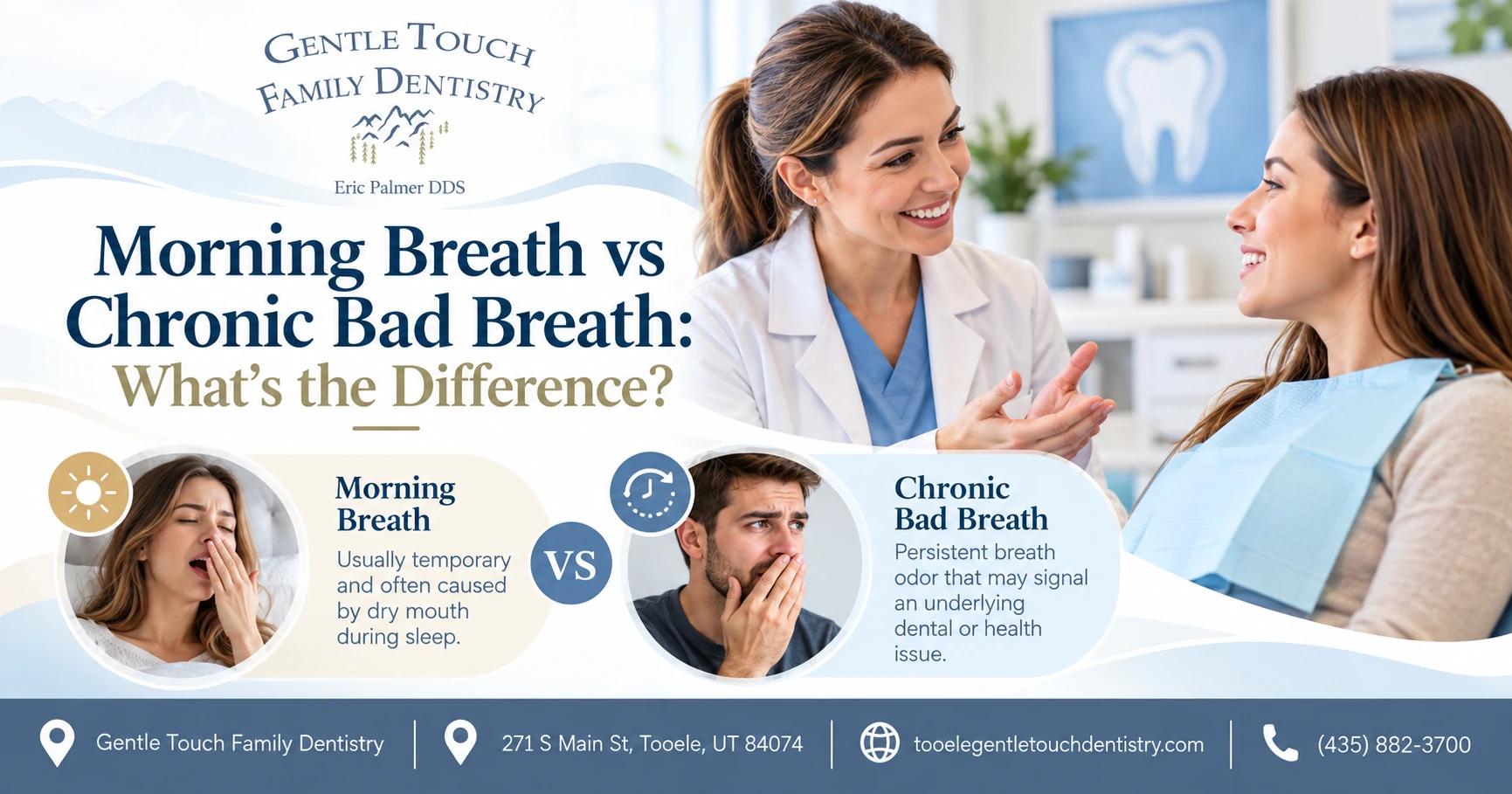
Almost everyone notices less-than-fresh breath from time to time, especially first thing in the morning. The important difference between morning breath and chronic bad breath is usually how long the odor lasts and whether it improves after eating, drinking, and cleaning your mouth.
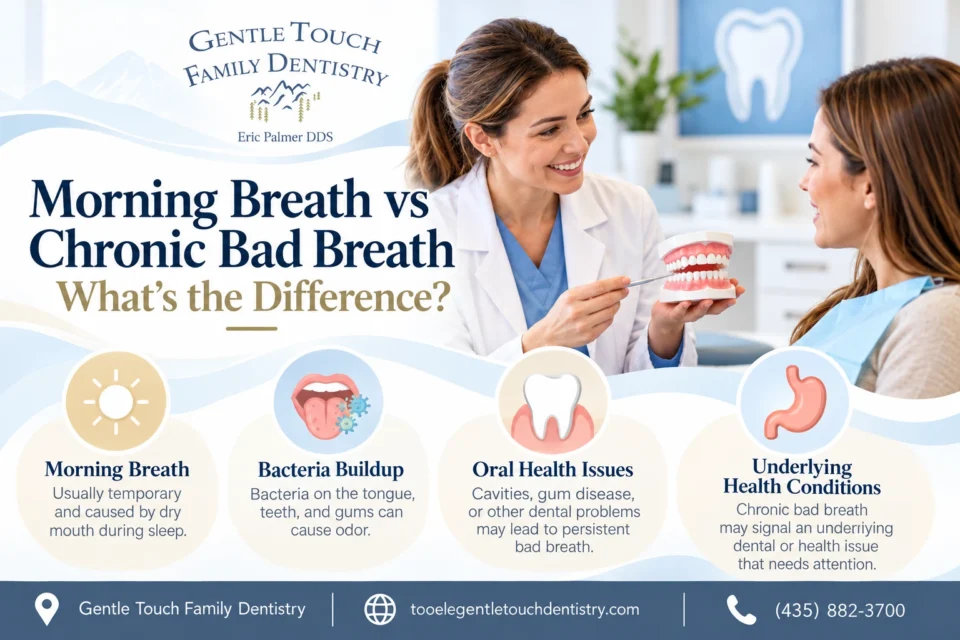
Morning breath is commonly temporary. Saliva production decreases while you sleep, allowing odor-producing bacteria and food debris to remain in the mouth longer. Once saliva flow increases and you brush, clean between your teeth, drink water, and eat, the odor often improves.
Chronic bad breath, also called persistent halitosis, continues regularly despite normal oral hygiene. It may be associated with plaque buildup, gum disease, dry mouth, tooth decay, oral infection, certain habits, or conditions outside the mouth.
The difference matters because morning breath usually does not indicate a problem on its own. Bad breath that remains throughout the day may deserve a closer look.
Morning Breath vs Chronic Bad Breath: What Is the Difference?
The easiest way to compare the two is by looking at their pattern.
Morning breath usually:
- Is strongest after waking
- Improves after brushing and cleaning your tongue
- Gets better after drinking water or eating
- Is related partly to reduced saliva during sleep
- Does not usually continue strongly throughout the day
Chronic bad breath usually:
- Returns frequently or remains throughout the day
- Persists despite brushing and flossing
- May occur with a bad taste in the mouth
- Can be associated with gum problems, dry mouth, dental disease, or other conditions
- May require professional evaluation to identify the cause
Neither type should be diagnosed based only on odor. Persistent bad breath has many possible causes, which is why identifying the pattern is more useful than trying to cover it with mints or mouthwash.
Why Is Bad Breath Common in the Morning?
Morning breath is largely related to what happens to saliva while you sleep.
Saliva normally helps rinse away food particles, control microorganisms, and keep the mouth moist. Saliva flow decreases naturally during sleep, so bacteria have more opportunity to break down material in the mouth and produce odor-causing compounds.
Mayo Clinic specifically notes that dry mouth naturally occurs during sleep and contributes to morning breath. Sleeping with your mouth open can make dryness worse.
Morning breath may be more noticeable if you:
- Breathe through your mouth while sleeping
- Snore
- Do not drink enough water
- Smoke or use tobacco
- Drink alcohol before bed
- Have ongoing dry mouth
- Have significant plaque or tongue buildup
For many people, the odor improves once normal saliva production resumes.
What Causes Chronic Bad Breath?
Chronic bad breath is more complicated because it can have several possible causes.
Most bad breath begins in the mouth. Common contributors include:
- Plaque and food debris
- Bacteria on the tongue
- Gum disease
- Dry mouth
- Tooth decay
- Oral infections
- Tobacco use
- Poorly cleaned dentures or appliances
Mayo Clinic also lists some causes outside the mouth, including certain nose and throat conditions, tonsil stones, reflux, medications, and some health conditions.
That does not mean persistent bad breath points to a serious illness. Dental causes are common, and a dental examination is often a reasonable first step.
If the mouth appears healthy, your dentist may recommend discussing other possible causes with a medical provider.
How Does Dry Mouth Affect Breath?
Dry mouth can contribute to both morning breath and chronic bad breath.
Saliva performs several protective functions. It moistens the mouth, washes food particles away from the teeth and gums, helps control microorganisms, and contributes minerals that support tooth health.
When there is not enough saliva, odor-producing bacteria and debris may remain in the mouth longer.
Temporary dryness during sleep is common. Persistent dry mouth during the day is different and may be related to:
- Certain medications
- Some health conditions
- Problems affecting the salivary glands
- Tobacco use
- Alcohol
- Dehydration
NIDCR identifies bad breath as one possible symptom of ongoing dry mouth and recommends having persistent dryness evaluated to determine its cause.
If you regularly wake with a very dry mouth and continue feeling dry throughout the day, mention it at your next dental visit.
Can Gum Disease Cause Persistent Bad Breath?
Yes. Gum disease can contribute to bad breath that does not simply disappear after brushing.
Plaque bacteria can irritate the gums and, as gum disease progresses, deeper spaces can develop around the teeth where bacteria collect.
Persistent bad breath is among the possible signs of periodontitis. Other signs may include:
- Bleeding gums
- Swollen or tender gums
- Gum recession
- A persistent bad taste
- Loose teeth in more advanced cases
Mayo Clinic lists bad breath that will not go away among the symptoms associated with periodontitis.
Bad breath by itself does not prove that gum disease is present. However, ongoing odor combined with bleeding, swelling, recession, or tenderness should be professionally evaluated.
You can learn more about gum health and available care on our periodontal treatment page.
Can Cavities or Dental Infections Affect Breath?
They can.
Tooth decay and infections in the mouth are among the dental conditions that may contribute to persistent bad breath.
A cavity can create an area where bacteria and food debris collect, particularly as the damage becomes larger or harder to clean.
An infected tooth may also cause symptoms such as:
- Tooth pain
- Pain when biting
- Sensitivity
- Gum swelling
- A persistent bad taste
Bad breath alone cannot tell you whether a cavity or infection is present.
If you notice persistent odor along with tooth pain, swelling, or another new dental symptom, a dentist should examine the area.
How Can You Improve Morning Breath?
For ordinary morning breath, improving your nighttime and morning oral hygiene routine may be enough.
Helpful habits include:
- Brush your teeth thoroughly before bed
- Clean between your teeth daily
- Gently brush or clean your tongue
- Drink enough water throughout the day
- Clean retainers, dentures, mouth guards, and other oral appliances properly
- Avoid tobacco
- Address ongoing dry mouth if present
In the morning, drinking water and resuming normal eating and oral hygiene can help increase moisture and reduce accumulated odor.
A tongue scraper may also be useful if you tend to develop a noticeable tongue coating.
Morning breath does not need to be completely eliminated to be considered normal. The more important question is whether it improves once you are awake and caring for your mouth normally.
What Can Help With Chronic Bad Breath?
Chronic bad breath usually requires more than simply masking the smell.
A practical home routine includes:
- Brushing at least twice a day
- Cleaning between the teeth daily
- Cleaning the tongue
- Drinking water regularly
- Keeping oral appliances clean
- Avoiding tobacco
- Managing persistent dry mouth with professional guidance
- Keeping regular dental appointments
Mouthwash may provide additional benefit, but it should not replace brushing and interdental cleaning. The ADA notes that mouthrinses may help reduce bad breath in some cases while emphasizing that they are an addition to, not a replacement for, effective brushing and flossing.
If chronic odor is being caused by plaque buildup, gum disease, a dental infection, or another oral condition, that underlying problem may need treatment before the bad breath improves.
When Should Bad Breath Be Professionally Evaluated?
Consider having bad breath evaluated if it:
- Persists throughout the day
- Continues despite consistent brushing and flossing
- Returns very quickly after cleaning your mouth
- Has lasted for an extended period
- Occurs with bleeding or swollen gums
- Happens along with tooth pain
- Is accompanied by a persistent bad taste
- Occurs with ongoing dry mouth
Mayo Clinic recommends seeing a dentist when bad breath remains after improving oral hygiene and making basic lifestyle changes.
A professional evaluation is especially useful because the cause may not be something you can see or identify yourself.
How Can a Dental Checkup Help Identify the Cause?
A dental checkup gives your dentist an opportunity to examine several possible sources of chronic bad breath rather than simply treating the odor itself.
Your dentist may evaluate:
- Plaque and tartar buildup
- Gum inflammation
- Periodontal pockets
- Cavities
- Damaged dental restorations
- Signs of infection
- Tongue coating
- Dry mouth
- Dentures or other dental appliances
Dental X-rays may also be appropriate when decay, infection, or another problem cannot be fully evaluated visually.
Mayo Clinic notes that dental treatment for halitosis may include managing plaque and gum disease and addressing faulty restorations where bacteria can accumulate.
If your teeth and gums appear healthy, your dentist may suggest evaluating possible non-dental causes with your healthcare provider.
For more information about routine examinations, visit our dental checkup page.
FAQs
Is morning breath normal?
Yes. Morning breath is common because saliva production decreases during sleep, allowing bacteria and odor-causing material to remain in the mouth longer.
It should generally improve after waking, drinking water, eating, and cleaning your teeth and tongue.
How do I know if I have chronic bad breath?
Bad breath may be considered persistent when it repeatedly remains during the day despite regular brushing, flossing, tongue cleaning, and hydration.
Because it can be difficult to judge your own breath accurately, ongoing odor noticed by others or accompanied by other oral symptoms is worth discussing with your dentist.
Why is my breath worse when I wake up with a dry mouth?
Saliva normally helps wash away food debris and control microorganisms. During sleep, saliva flow naturally decreases, and mouth breathing can make the mouth even drier.
Less saliva creates conditions that can make odor more noticeable.
Can gum disease cause bad breath all day?
Yes. Persistent bad breath can occur with periodontal disease, particularly when bacteria collect around and below the gumline.
If bad breath occurs with bleeding, swollen, tender, or receding gums, schedule a dental evaluation.
Why does mouthwash only help my bad breath temporarily?
Some mouthwashes reduce odor for a limited period but do not address the underlying cause.
If plaque, gum disease, dry mouth, decay, or another condition is responsible, that problem may need to be addressed directly. Mouthwash should be used in addition to regular brushing and interdental cleaning, not instead of them.
Should I see a dentist or doctor for chronic bad breath?
A dentist is often a useful first step because many common causes of bad breath begin in the mouth.
If your dentist does not find an oral cause, you may be referred to a physician or another healthcare professional to evaluate other possibilities.