Table of Contents
Kids should start flossing when two neighboring teeth begin touching, which can happen during the toddler years. Once teeth touch, toothbrush bristles may not effectively clean the narrow spaces between them. Flossing helps remove plaque and food debris from these areas, supporting healthy teeth and gums. However, young children usually need a parent or caregiver to perform this important step.
At Gentle Touch Family Dentistry in Tooele, UT, we help parents understand how to build healthy dental habits as their children grow. From choosing the right flossing tools to teaching proper techniques, small daily routines can make caring for your child’s teeth easier and more effective.
Quick Answer: When Should Kids Start Flossing?
Children should begin flossing as soon as two adjacent teeth touch.
There is no exact age when every child needs to start because primary teeth erupt and develop at different rates.
Some toddlers develop tight contacts between their teeth relatively early, while other children have visible spaces between many of their baby teeth.
The most important factor is whether the teeth touch, not your child’s age.
The American Dental Association recommends beginning interdental cleaning when two teeth contact one another.
The American Academy of Pediatrics provides similar guidance and notes that children often need help with flossing until approximately age 10.
Here is a general overview of how flossing responsibilities may change as children grow:
- Babies: Parents should begin brushing once the first tooth appears. Flossing becomes necessary when adjacent teeth touch.
- Toddlers: Parents or caregivers usually perform flossing.
- Preschoolers: Children can begin learning the routine, but adults should continue handling most of the cleaning.
- Elementary school children: Children may practice independently while parents supervise and help.
- Older children: Many become capable of flossing effectively around ages 10 or 11, although readiness varies.
Children develop coordination at different rates.
Some may manage flossing earlier, while others need assistance for longer.
At Gentle Touch Family Dentistry, we encourage parents to focus on whether their children can clean between their teeth gently and thoroughly rather than relying on a strict age requirement.
Why Flossing Matters for Children
Brushing twice daily with fluoride toothpaste is essential for children’s oral health.
However, a toothbrush cannot effectively reach every surface between neighboring teeth.
When teeth touch, these areas can become places where plaque and food particles accumulate.
Plaque Can Build Up Between Teeth
Dental plaque is a sticky film of bacteria that naturally develops on tooth surfaces.
When bacteria use sugars and other fermentable carbohydrates from food, they produce acids that can contribute to tooth decay.
Removing plaque regularly helps reduce cavity risk.
Cavities Can Form Between Baby Teeth
Tooth decay is not limited to the visible chewing surfaces.
Cavities can develop between neighboring teeth where parents may not notice early changes.
Flossing helps clean these areas, although it cannot guarantee that cavities will never develop.
Flossing Supports Gum Health
Plaque buildup near the gums can contribute to inflammation.
Gums may become red, swollen, or prone to bleeding.
Gentle flossing helps remove plaque along these areas and supports healthy gum tissue.
Baby Teeth Need Proper Care
Some parents assume flossing is less important because baby teeth eventually fall out.
However, primary teeth help children chew, speak, and maintain space for permanent teeth.
Untreated cavities can cause pain, infection, or premature tooth loss.
Early Habits Can Continue Into Adulthood
Children who become familiar with flossing may find it easier to maintain the routine as they grow older.
Introducing flossing as a normal part of daily care can help reduce resistance.
The goal is to teach healthy habits without making oral hygiene stressful.
Should Kids Floss as Soon as Teeth Touch?
Yes. When adjacent teeth begin touching, flossing generally becomes important because the space between them may be difficult to clean with a toothbrush.
Parents should periodically look at their child’s developing teeth and ask their dentist whether interdental cleaning is needed.
Why Tooth Contact Matters
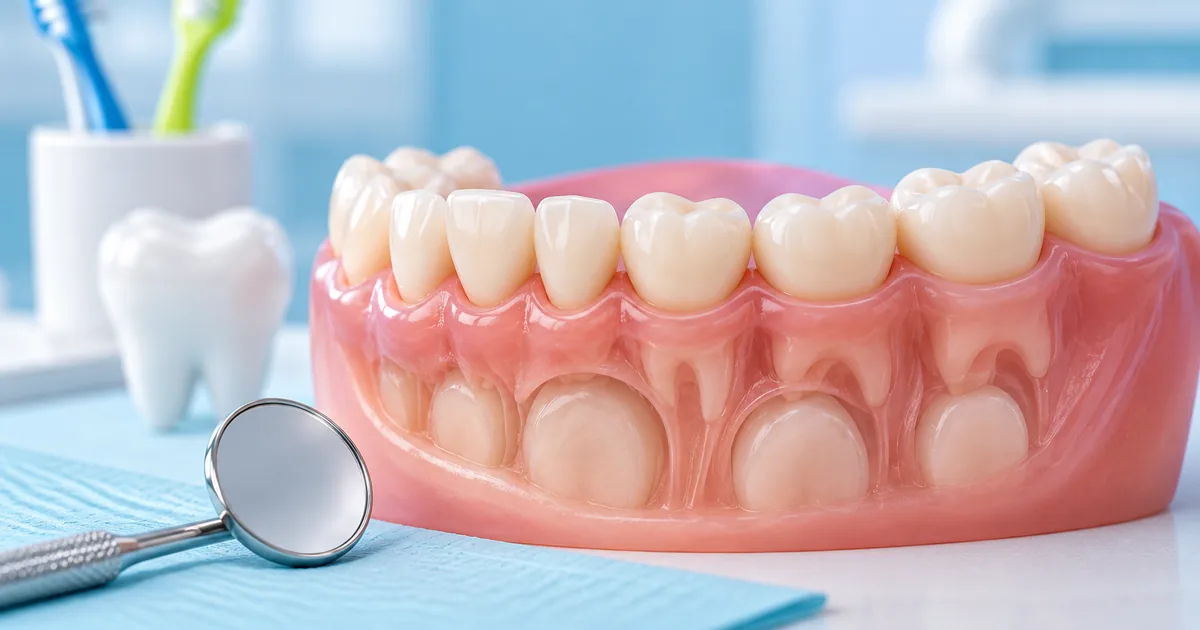
When two teeth are separated by a visible space, toothbrush bristles may reach more of their surfaces.
However, once the teeth touch, a narrow contact area forms.
Plaque can accumulate on the surfaces just below that contact.
Floss can pass between the teeth to help remove buildup.
What If My Toddler Has Only a Few Teeth?
A toddler does not need a full set of baby teeth before flossing begins.
If two erupted teeth touch, those teeth may need interdental cleaning.
Other teeth with wide spaces may not require the same technique.
How Can Parents Tell If Teeth Are Touching?
Look for neighboring teeth that appear to meet without a noticeable gap.
However, it can be difficult to determine whether some contacts are tight, especially toward the back of the mouth.
Your child’s dentist can examine these areas and demonstrate where flossing is most useful.
What About Baby Molars?
Primary molars often have broad surfaces that contact neighboring teeth.
These areas can be vulnerable to plaque accumulation.
Parents may need to pay particular attention to cleaning between the back teeth.
Does Every Space Need Flossing?
Not necessarily.
The appropriate method depends on how the teeth are positioned.
Some widely spaced areas may be adequately reached with brushing, while tighter contacts benefit from floss.
A dental examination can help establish an age-appropriate routine.
Why You Should Not Wait for a Cavity
Flossing is a preventive habit.
Parents should not wait until their child develops tooth decay before learning how to clean between the teeth.
Starting when contacts appear helps make the routine familiar.
When Can Children Start Flossing by Themselves?
Children can begin practicing flossing when they show interest and have enough coordination to handle the tool safely.
However, being able to hold floss does not necessarily mean they can clean between every tooth effectively.
Younger Children Usually Need Assistance
Toddlers and preschoolers typically lack the hand coordination needed to guide floss between teeth without hurting their gums.
Parents should perform this step gently.
Allowing a child to hold a floss pick briefly may help build familiarity, but adult supervision remains necessary.
School-Age Children Can Practice
As children grow, they may become more interested in doing things independently.
Parents can demonstrate how to guide floss between teeth and curve it around each tooth.
However, children may still miss the back teeth or use too much pressure.
Around Age 10 or 11
Many children develop the coordination needed to floss independently around ages 10 or 11.
This is a general guideline rather than a fixed milestone.
Some children may be ready earlier.
Others may need continued help because of coordination, dental appliances, or individual developmental needs.
Signs Your Child May Be Ready
Your child may be ready for more independent flossing when they can:
- Hold floss or a floss pick securely.
- Reach the back teeth.
- Guide floss gently between contacts.
- Clean along the sides of both neighboring teeth.
- Avoid snapping floss against the gums.
- Complete the routine consistently.
Continue Checking Their Technique
Even when children begin flossing independently, parents should occasionally observe the process.
A child may floss only the front teeth or skip difficult areas.
Gentle reminders and assistance can help improve consistency.
Independence Should Develop Gradually
There is no need to rush.
A child who requires assistance at age 10 is not necessarily behind.
The priority is effective cleaning, not completing the task without help.
How Parents Can Help Younger Children Floss
Helping a toddler or preschooler floss may feel awkward at first.
Fortunately, the process becomes easier with practice and a comfortable routine.
Choose a Comfortable Position
Some parents find it helpful to have their child sit with their head slightly tilted back.
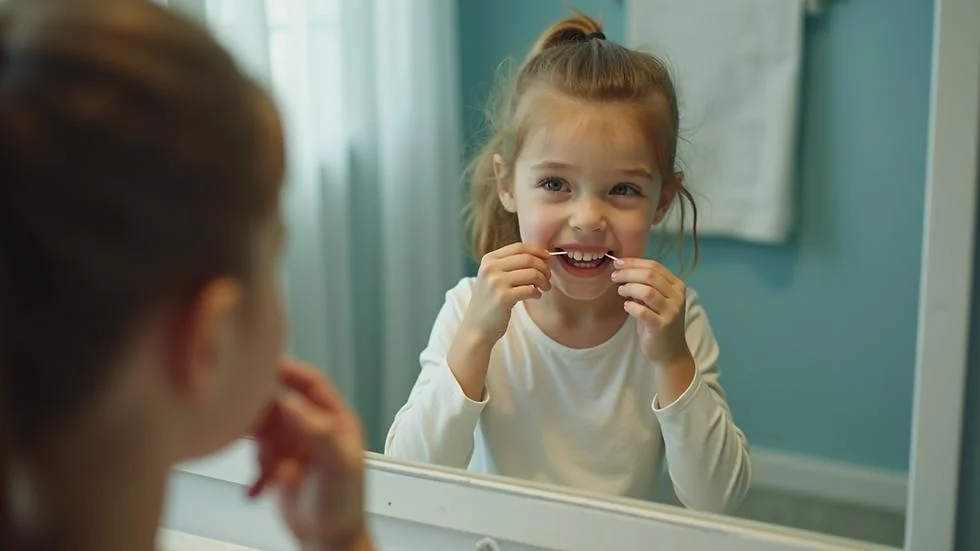
Others prefer standing behind the child in front of a mirror.
Choose a position that allows you to see the teeth and guide the floss safely.
Use Gentle Movements
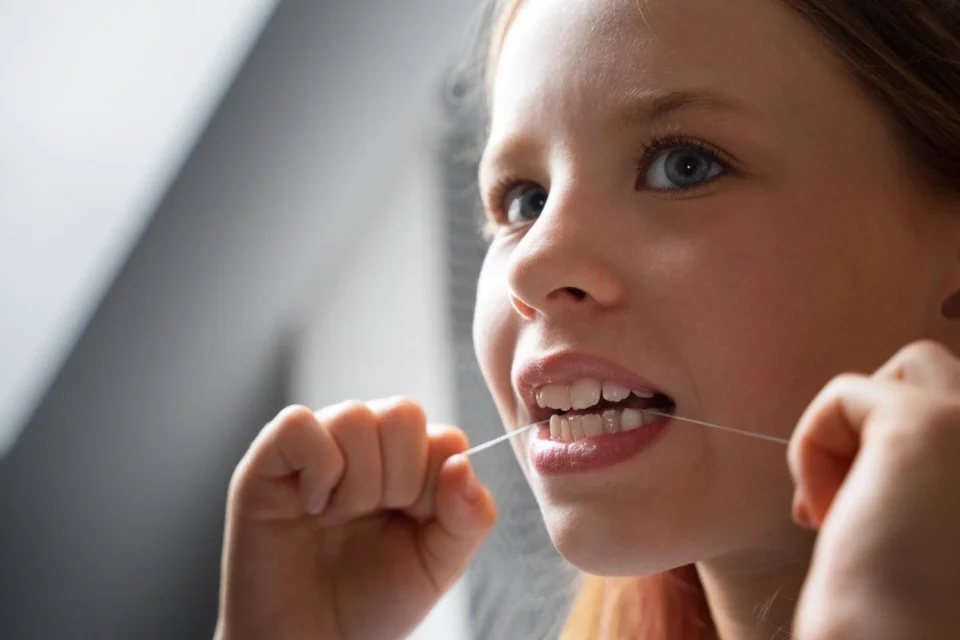
Carefully guide floss between two touching teeth.
Avoid forcing it through the contact.
Once the floss passes between the teeth, curve it gently against the side of one tooth.
Move it up and down along the surface, then repeat against the neighboring tooth.
Avoid Snapping the Floss
Forcing floss between tight teeth can irritate or injure the gums.
Use small, controlled movements.
If the contact is unusually tight or the floss repeatedly catches, ask your dentist for guidance.
Focus on the Areas That Need Cleaning
Your child’s dentist can help identify which contacts require flossing.
This can make the routine more manageable, especially when only a few baby teeth touch.
Keep the Experience Positive
Young children may resist unfamiliar routines.
Try explaining what you are doing in simple language.
For example, you might describe flossing as cleaning the tiny spaces a toothbrush cannot reach.
Make It Part of the Bedtime Routine
Flossing at a consistent time can help children know what to expect.
Many families choose to floss before or after nighttime brushing.
The exact order matters less than cleaning thoroughly and consistently.
Praise Cooperation
Positive encouragement can help children feel comfortable.
Avoid turning flossing into a punishment or a stressful confrontation.
If your child repeatedly struggles with the process, we can demonstrate age-appropriate techniques during a dental appointment.
Floss Picks vs. Traditional Floss for Kids
Both traditional string floss and floss picks can help clean between children’s teeth when used correctly.
The best choice depends on your child’s age, tooth spacing, and ability to cooperate.
Traditional String Floss
String floss allows the user to control how the floss wraps around each tooth.
It may be particularly useful when parents want to clean carefully along neighboring tooth surfaces.
However, reaching the back teeth of a small child’s mouth can be challenging.
Floss Picks
Floss picks have a small piece of floss attached to a handle.
Some parents find them easier to position inside a child’s mouth.
They may also help older children practice interdental cleaning.
However, the handle does not automatically guarantee proper technique.
Are Floss Picks as Effective?
Both tools can remove plaque when used appropriately.
The effectiveness depends on technique, accessibility, and consistency.
A floss pick should be guided along the tooth surfaces rather than moved forcefully through the contact.
Which Is Easier for Toddlers?
Many parents prefer child-sized floss picks because they are easier to hold and maneuver.
However, adults should perform or closely supervise the cleaning.
Small dental tools should not be left with very young children because of injury or choking concerns.
Can Children Use Water Flossers?
Water flossers may be useful for certain patients, including some children with orthodontic appliances.
However, suitability depends on the child’s age, coordination, and dental needs.
Young children should not use a water flosser independently without appropriate supervision.
A dentist can help determine whether it is a suitable option.
Does the Brand Matter?
Choosing a safe, age-appropriate product matters more than selecting a particular brand.
Some oral hygiene products carry the American Dental Association Seal of Acceptance, indicating they meet relevant safety and effectiveness standards.
Finding the Right Tool
At Gentle Touch Family Dentistry, we can help families choose flossing tools that fit their child’s teeth and developmental abilities.
The most useful tool is one that allows effective, comfortable cleaning.
Common Flossing Mistakes to Avoid
Flossing is generally safe when performed correctly.
However, certain habits can make the process uncomfortable or less effective.
Snapping Floss Against the Gums
One common mistake is pushing floss forcefully through a tight contact.
This can injure sensitive gum tissue.
Instead, use gentle, controlled movements.
Cleaning Only Between the Front Teeth
The back teeth can be difficult to reach.
However, they often have tight contacts where plaque accumulates.
Parents should pay attention to all areas that require interdental cleaning.
Moving Floss Only Straight Up and Down
Floss should gently follow the contour of each tooth.
Simply moving it through the gap without cleaning the neighboring surfaces may leave plaque behind.
Using Too Much Force
More pressure does not make flossing more effective.
Aggressive movements can cause discomfort and gum irritation.
Letting Young Children Floss Without Supervision
A young child may not recognize when they are using too much pressure or missing important areas.
Adult assistance helps maintain both safety and effectiveness.
Giving Up After Minor Bleeding
Bleeding can sometimes occur when the gums are inflamed or flossing technique is too forceful.
However, persistent bleeding should not be considered normal.
Continue appropriate gentle cleaning and ask a dentist to evaluate bleeding that persists, is heavy, or occurs without an obvious cause.
Expecting Flossing to Replace Brushing
Flossing cleans areas between teeth, while brushing removes plaque from other accessible surfaces.
Children need both.
Skipping Professional Dental Visits
Even children who brush and floss consistently may develop cavities or other dental problems.
Routine examinations help identify concerns that cannot always be seen at home.
How Often Should Kids Floss?
Children should generally clean between touching teeth once daily.
The American Dental Association recommends daily interdental cleaning as part of a complete oral hygiene routine.
Is Morning or Night Better?
Either can work.
Many parents prefer nighttime because it fits naturally with brushing before bed.
However, the most important factor is consistency.
Should Kids Floss Before or After Brushing?
Both approaches can be effective.
Parents should choose the order that makes the routine easier to maintain.
Do Kids Need to Floss After Every Meal?
Usually not.
Daily flossing is generally sufficient for routine plaque removal.
However, food trapped between teeth may need to be removed gently when it causes discomfort.
What If My Child Misses a Day?
Missing an occasional day does not mean your child will immediately develop a cavity.
Resume the usual routine rather than making the experience stressful.
Should Children Brush Twice Daily?
Yes.
Children should brush twice daily with fluoride toothpaste using an amount appropriate for their age.
Parents should assist or supervise brushing until their children can clean their teeth effectively.
How Long Should the Routine Take?
There is no universal flossing duration for every child.
The time depends on the number of teeth that touch and how easily the areas can be cleaned.
Focus on thorough, gentle cleaning rather than rushing or following a strict timer.
When to Ask a Dentist About Flossing
Parents do not need to solve every oral hygiene concern on their own.
A dental appointment provides an opportunity to ask questions about tooth spacing, flossing tools, and technique.
Your Child’s Teeth Are Touching
If you notice adjacent baby teeth beginning to touch, ask your dentist which areas need flossing.
We can demonstrate an appropriate technique.
Flossing Causes Pain
Flossing should not regularly cause significant pain.
If your child experiences discomfort, we can evaluate whether the technique, tooth contact, or another dental concern may be contributing.
The Gums Bleed Frequently
Persistent bleeding deserves professional evaluation.
Gum inflammation is one possible cause, but other conditions may also be involved.
Floss Repeatedly Shreds or Gets Stuck
A tight contact, rough tooth surface, or dental restoration may cause floss to catch.
Avoid forcing the floss or attempting to adjust the tooth or restoration at home.
Your Child Has Braces or Other Appliances
Orthodontic appliances can make cleaning between teeth more challenging.
Specialized flossing tools may be helpful.
The appropriate method depends on the appliance and your child’s needs.
You Notice Possible Cavities
Dark spots, sensitivity, food repeatedly becoming trapped, or discomfort while chewing should be evaluated.
Cavities between teeth may not be visible without professional examination or appropriate dental imaging.
Your Child Refuses to Floss
Resistance is common among younger children.
A dental team can provide practical suggestions and demonstrate techniques that make the routine easier.
You Are Unsure Whether Your Child Is Ready
If your child wants to floss independently, we can help you assess their coordination and technique.
The goal is to build confidence while ensuring their teeth are cleaned properly.
Pediatric Dental Care in Tooele
Healthy dental habits begin well before permanent teeth appear.
As children grow, their oral hygiene needs change with tooth eruption, spacing, and coordination.
At Gentle Touch Family Dentistry, we provide family-focused dental care for children in Tooele, UT, and nearby communities.
We help parents understand how to protect baby teeth, care for developing permanent teeth, and establish age-appropriate brushing and flossing habits.
Guidance for Your Child’s Development
During dental visits, we assess your child’s teeth and gums and discuss daily cleaning routines.
We can explain which teeth need flossing and whether your child is ready to begin practicing independently.
Help With Brushing and Flossing
Our team can demonstrate gentle oral hygiene techniques and recommend suitable tools.
We understand that each child develops coordination at a different pace.
Evaluating Cavity Risk
Some children may be more susceptible to tooth decay because of frequent sugar exposure, tight contacts, previous cavities, or other factors.
We consider these concerns when recommending preventive care.
Supporting Healthy Baby Teeth
Primary teeth are important for chewing, speech development, and maintaining space for permanent teeth.
Helping children care for them early supports their oral health as they grow.
Professional Dental Cleanings
Even with careful brushing and flossing, plaque can harden into tartar.
Professional cleanings remove deposits that ordinary home care cannot eliminate.
The appropriate cleaning schedule depends on your child’s oral health and individual needs.
Learn more about our Pediatric Dentistry services and how we support children at different stages of dental development.
Parents can also explore our Teeth Cleaning services to understand the role of professional cleaning alongside daily home care.
Our goal is to help families establish practical, comfortable routines that support healthy teeth and gums.
FAQs About Flossing for Kids
At what age should kids start flossing?
Children should begin flossing when two neighboring teeth touch. This may happen during the toddler years, but the timing varies with dental development.
Do toddlers really need to floss?
Yes, if adjacent teeth touch. Parents should gently clean these areas because toddlers usually cannot floss effectively on their own.
Can a 5-year-old floss independently?
A 5-year-old can begin practicing, but most children still need adult help to clean thoroughly and avoid injuring their gums.
Are floss picks safe for children?
Child-appropriate floss picks can be useful with adult assistance or supervision. Parents should choose suitable products and avoid leaving small oral hygiene tools with very young children.
Should children floss every day?
Yes. Cleaning between touching teeth once daily helps remove plaque from areas that brushing may miss.
What if my child’s gums bleed when flossing?
Bleeding may result from inflammation or overly forceful technique. Use gentle movements and schedule a dental evaluation if bleeding persists, is heavy, or occurs repeatedly.
Build Healthy Flossing Habits With Gentle Touch Family Dentistry
Teaching children to floss is an important step toward developing good oral hygiene habits.
However, parents do not need to wait for a particular birthday before introducing the routine.
Once neighboring teeth begin touching, cleaning between them becomes an important part of protecting the teeth and gums.
At Gentle Touch Family Dentistry, we help parents throughout Tooele, UT, understand how their children’s dental care needs change as they grow.
Our team provides pediatric dental examinations, professional cleanings, and practical recommendations for maintaining healthy smiles at home.
Whether your toddler has just developed their first tight tooth contacts or your older child is learning to floss independently, we can help you choose an appropriate approach.