Table of Contents
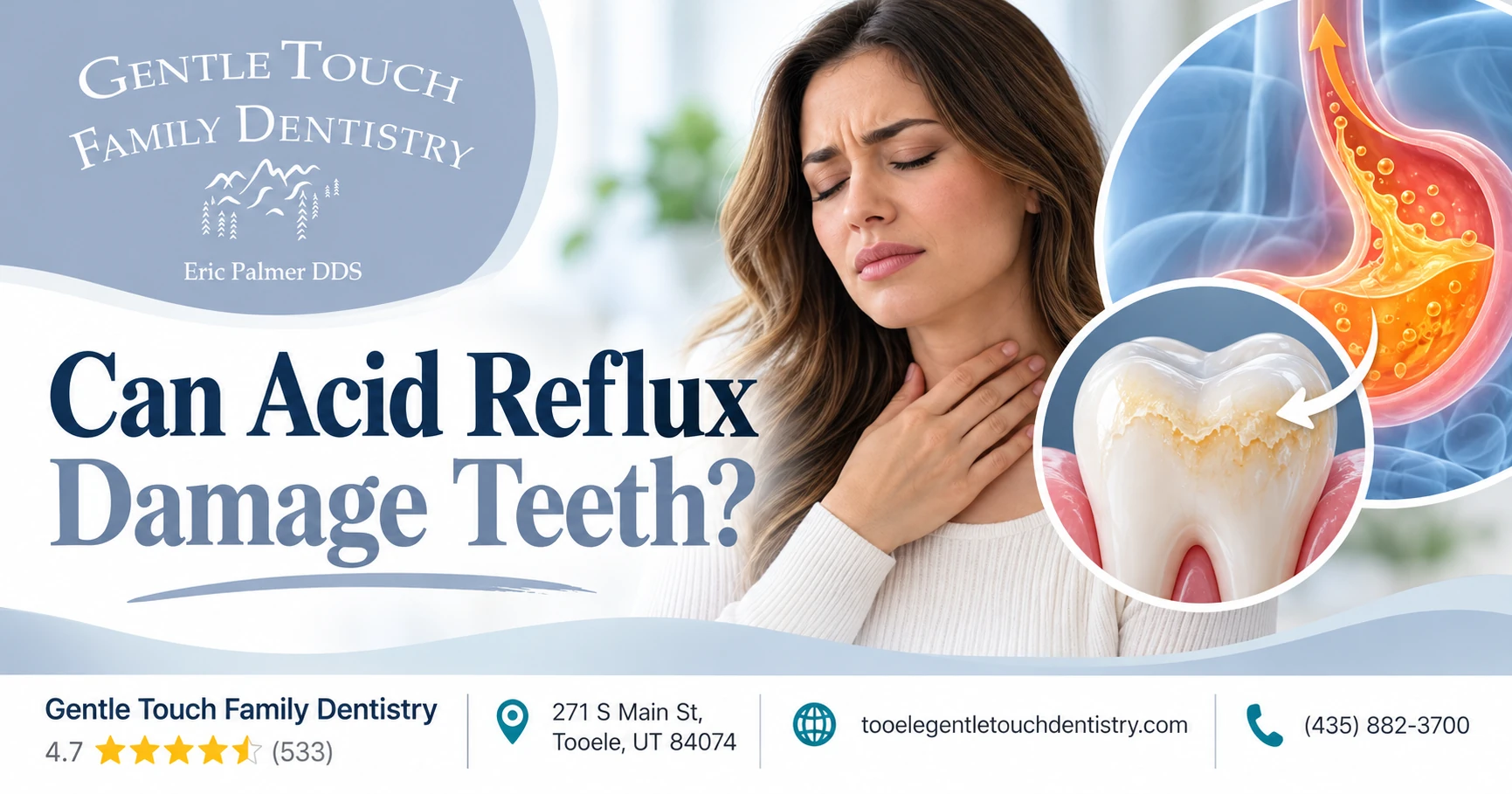
Yes. Frequent acid reflux can damage teeth when stomach acid repeatedly reaches the mouth and comes into contact with tooth enamel. Unlike cavities, which involve acids produced by bacteria, this type of damage is called dental erosion and occurs when acids chemically dissolve mineralized tooth structure.
Occasional reflux does not mean your teeth will automatically become damaged. The concern increases when acid exposure is frequent or prolonged enough to overwhelm the protective effects of saliva.
Over time, enamel erosion may change the shape or appearance of teeth and can expose the softer dentin underneath. This may lead to increased sensitivity and make affected teeth more vulnerable to additional wear.
If you experience frequent reflux, protecting your teeth is only one part of the picture. A dentist can monitor your enamel, while a medical provider can evaluate and manage the reflux itself.
Can Acid Reflux Damage Teeth?
Yes. Acid reflux can contribute to erosive tooth wear.
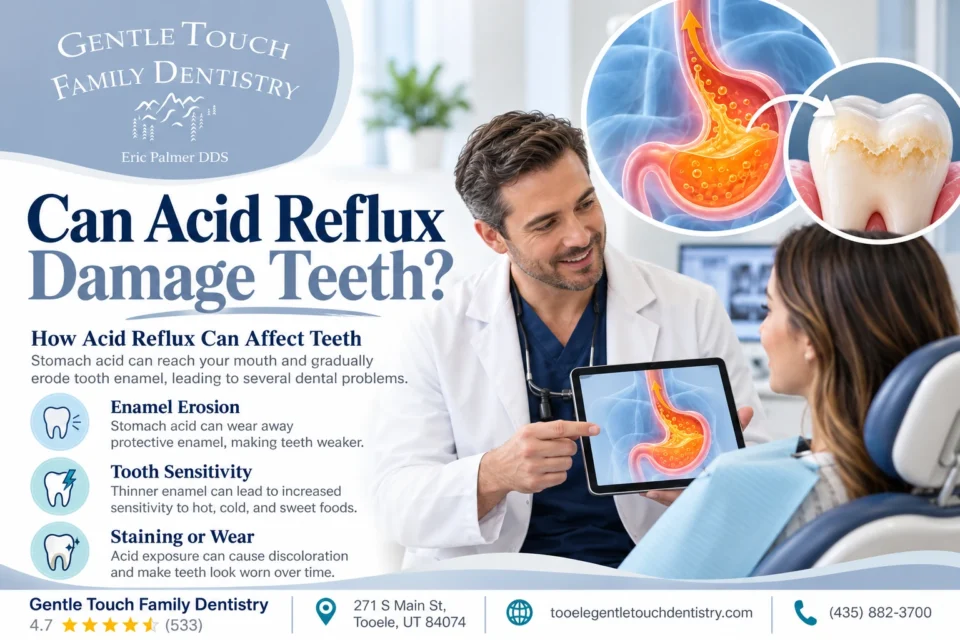
Gastroesophageal reflux occurs when stomach contents travel back into the esophagus. In some cases, that material can reach the throat or mouth. Because stomach contents are highly acidic, repeated exposure can gradually soften and dissolve tooth enamel.
This is different from a cavity.
With cavities, bacteria in dental plaque use sugars and starches to produce acids that attack enamel. With dental erosion, acid reaches the tooth from another source, such as:
- Stomach acid from reflux
- Repeated vomiting
- Acidic foods
- Soda and other acidic drinks
Both processes can result in mineral loss, but their causes and patterns can differ.
The ADA identifies gastroesophageal reflux disease as an important intrinsic source of acid associated with dental erosion.
How Does Stomach Acid Affect Tooth Enamel?
Enamel is the hard outer covering that protects the visible portion of your teeth.
Although enamel is highly mineralized, it can still be affected by repeated acid exposure.
When stomach acid reaches the mouth, it can lower the pH around the teeth and begin softening the enamel surface. If this happens repeatedly, small amounts of mineralized tooth structure can gradually be lost.
The ADA describes dental erosion as a progressive and irreversible chemical loss of hard tooth tissue caused by acids rather than bacterial activity.
Saliva provides some natural protection because it helps dilute and buffer acids.
Problems can develop when:
- Reflux happens frequently
- Acid remains in contact with the teeth repeatedly
- Saliva flow is reduced
- Reflux occurs during sleep, when saliva production and swallowing are lower
- Dietary acids add to the overall acid exposure
The effects are usually gradual rather than something that happens after a single episode of heartburn.
What Are the Signs of Acid Reflux Tooth Damage?
Early enamel erosion may be difficult to recognize yourself.
As erosive wear progresses, a dentist may notice changes in the texture, shape, or appearance of the teeth.
Possible signs include:
- Increased sensitivity to hot or cold
- Teeth that appear smoother or shinier than before
- Flattened chewing surfaces
- Small depressions or “cupping” on biting surfaces
- Changes in tooth shape
- Yellowing as underlying dentin becomes more visible
- Chipped or worn edges
- Increasing sensitivity
The ADA notes that dental erosion can create loss of normal enamel texture along with flattened, smoothed, or cupped chewing surfaces. More advanced erosion can expose dentin and cause hypersensitivity.
These signs are not unique to acid reflux.
Grinding, acidic foods and drinks, aggressive wear, and other conditions may create similar changes, which is why a dental examination is useful for determining the likely cause.
Which Teeth Are Most Affected by Acid Reflux?
The pattern of erosion can sometimes offer clues about where the acid is coming from.
Because reflux brings stomach acid into the mouth from inside the body, erosion may affect tooth surfaces differently from erosion caused primarily by beverages or foods.
ADA guidance notes that gastric-acid erosion commonly affects the inner, or palatal, surfaces of upper teeth as well as chewing surfaces. Lower teeth can also be affected.
Reflux occurring at night may be especially relevant because saliva production and swallowing decrease during sleep. The ADA notes that, while lying down, acid exposure may particularly affect lower molars in some patients.
However, there is no single pattern that proves someone has GERD.
A dentist will consider the appearance of the teeth together with:
- Your dental history
- Diet
- Dry mouth
- Grinding habits
- Reflux symptoms
- Medications
- Other possible sources of acid exposure
Can Acid Reflux Cause Tooth Sensitivity?
Yes. Repeated acid exposure can eventually contribute to sensitive teeth.
As enamel becomes thinner or is lost, more of the underlying dentin may become exposed. Dentin is more sensitive than enamel and contains microscopic structures that can transmit temperature changes toward the inner portion of the tooth.
As a result, you may notice discomfort when consuming:
- Cold water
- Ice cream
- Hot coffee
- Hot foods
- Sweet foods
- Acidic drinks
The ADA identifies exposed dentin and hypersensitivity among possible consequences of significant erosive tooth wear.
Sensitivity does not automatically mean reflux is responsible. Cavities, gum recession, cracked teeth, worn fillings, grinding, and other conditions can also cause similar symptoms.
A dental evaluation can help distinguish among those possibilities.
Can Enamel Lost From Acid Reflux Grow Back?
No. Tooth enamel that has been physically lost through erosion does not grow back.
Early acid exposure can soften and demineralize the enamel surface, and preventive measures may help strengthen remaining enamel and slow additional damage.
However, once erosion has caused actual structural loss, that missing enamel cannot regenerate.
The ADA describes erosive tooth wear as a progressive and irreversible loss of mineralized tooth structure.
That makes prevention and early recognition especially important.
Depending on the degree of erosion, a dentist may focus on:
- Reducing additional acid exposure
- Strengthening and protecting remaining tooth structure
- Managing sensitivity
- Monitoring wear over time
- Restoring damaged teeth when necessary
The appropriate approach depends on how much tooth structure has already been affected.
How Can You Protect Your Teeth From Acid Reflux?
Managing the source of the acid is important.
If you experience frequent reflux, talk with your physician or another qualified healthcare provider about the underlying condition. NIDDK recommends medical evaluation when someone believes they may have GERD or when symptoms do not improve with appropriate lifestyle measures or over-the-counter treatment.
From a dental standpoint, several habits may help reduce additional acid exposure.
Rinse with water after reflux
Rinsing can help clear and dilute acid remaining in the mouth.
The ADA recommends rinsing with water following acidic exposure rather than immediately brushing the teeth.
Use fluoride toothpaste
Brush regularly with a soft-bristled toothbrush and fluoride toothpaste.
Fluoride helps strengthen remaining tooth structure and is an important part of cavity prevention.
Stay hydrated
Saliva helps neutralize and clear acids from the mouth.
Drinking water throughout the day can support normal moisture levels, especially if dry mouth is also an issue.
Limit unnecessary additional acid exposure
Someone already experiencing frequent reflux may benefit from paying attention to other acidic exposures, such as repeatedly sipping:
- Soda
- Sports drinks
- Energy drinks
- Citrus drinks
- Other highly acidic beverages
Acid from diet and acid from reflux can both contribute to erosive tooth wear.
Address the reflux itself
Dental precautions cannot stop stomach acid from reaching your mouth.
If reflux is frequent, controlling the underlying medical condition is an important part of reducing repeated exposure. GERD diagnosis and treatment should be discussed with your medical provider.
Should You Brush Immediately After Acid Reflux?
It is generally better not to brush immediately after an acidic episode.
Acid temporarily softens the enamel surface. Brushing while that surface is softened may add mechanical wear.
Instead, the ADA recommends rinsing your mouth with water after acidic exposure and brushing with a soft-bristled toothbrush and fluoride toothpaste rather than brushing immediately after the acid exposure.
After reflux:
- Rinse your mouth thoroughly with water.
- Avoid scrubbing the teeth immediately.
- Continue your normal oral hygiene routine once the immediate acidic exposure has passed.
- Use a soft-bristled toothbrush and fluoride toothpaste.
Avoid trying to neutralize frequent reflux solely with home dental remedies.
If reflux repeatedly reaches your mouth, the source should also be evaluated medically.
How Can Preventive Dental Care Help?
Preventive dental care can help detect erosion before you notice obvious changes yourself.
During routine visits, your dentist can examine teeth for:
- Changes in enamel texture
- Flattened or cupped surfaces
- Exposed dentin
- Tooth sensitivity
- Changes in shape or color
- Additional wear
- Cavities that may occur alongside erosion
The ADA recommends evaluating a patient’s health history and acid-exposure risk factors when signs of erosive tooth wear are present.
Regular visits also allow your dental team to compare changes over time.
Depending on your situation, preventive recommendations might include fluoride products, changes to oral hygiene techniques, dietary guidance related to acidic exposure, or additional monitoring.
If reflux appears to be contributing to enamel damage, your dentist may also recommend that you discuss the condition with your physician.
Learn more about protecting your teeth and gums on our preventive dentistry page.
When Should You Schedule a Dental Exam?
Consider scheduling a dental exam if you have frequent reflux and notice:
- New or increasing tooth sensitivity
- Teeth that appear worn or flattened
- Changes in the edges of your teeth
- Yellowing that may be related to thinning enamel
- Small depressions on chewing surfaces
- Chipping or increased wear
- Pain when eating or drinking
You do not need to wait until your teeth become painful.
Erosion may develop gradually, and a dentist may be able to identify changes before they become obvious at home.
A dental exam can also help determine whether your symptoms are related to erosion or another issue such as tooth decay, grinding, gum recession, or a damaged restoration.
Learn more about what we evaluate during a visit on our dental exam page.
Frequent reflux itself should also be discussed with a medical provider. NIDDK recommends seeing a doctor if you believe you have GERD or if reflux symptoms continue despite appropriate lifestyle measures or nonprescription treatment.
For patients in Tooele, Gentle Touch Family Dentistry can evaluate your teeth for signs of erosion and help you develop a dental prevention plan based on what we find.
Visit our Tooele dentist page to learn more about local dental care.
FAQs
Can acid reflux ruin your teeth?
Frequent or prolonged acid reflux can contribute to progressive enamel erosion.
The amount of damage varies depending on how often the teeth are exposed to stomach acid, how long exposure continues, saliva flow, and other risk factors. Occasional heartburn does not automatically mean significant tooth damage has occurred.
Can a dentist tell if you have acid reflux?
A dentist may recognize a pattern of enamel erosion that raises concern about repeated stomach-acid exposure, but a dental examination alone does not diagnose GERD.
Your dentist can discuss the findings and recommend medical evaluation when reflux appears to be a possible contributor.
Does acid reflux cause cavities?
Acid reflux and cavities are different processes.
Reflux can erode enamel directly through exposure to stomach acid, while cavities primarily develop when bacteria produce acids from sugars and starches. Severe enamel erosion may expose underlying dentin and leave teeth more vulnerable to additional dental problems.
Can enamel damaged by acid reflux repair itself?
Lost enamel cannot grow back.
Early surface softening may be managed by reducing acid exposure and strengthening the remaining tooth structure, but enamel that has physically eroded away cannot regenerate.
Should I brush my teeth after having acid reflux?
Do not scrub your teeth immediately after an acidic episode.
Rinse your mouth with water first. The ADA specifically recommends rinsing rather than brushing immediately after acidic exposure because the enamel surface may temporarily be softened.
Should I see a dentist or doctor about acid reflux?
Often, both professionals have different roles.
A dentist can identify and monitor dental erosion and help protect your remaining tooth structure. A medical provider evaluates and treats frequent reflux or GERD. If you think you have GERD, NIDDK recommends discussing your symptoms with a doctor.