
Table of Contents
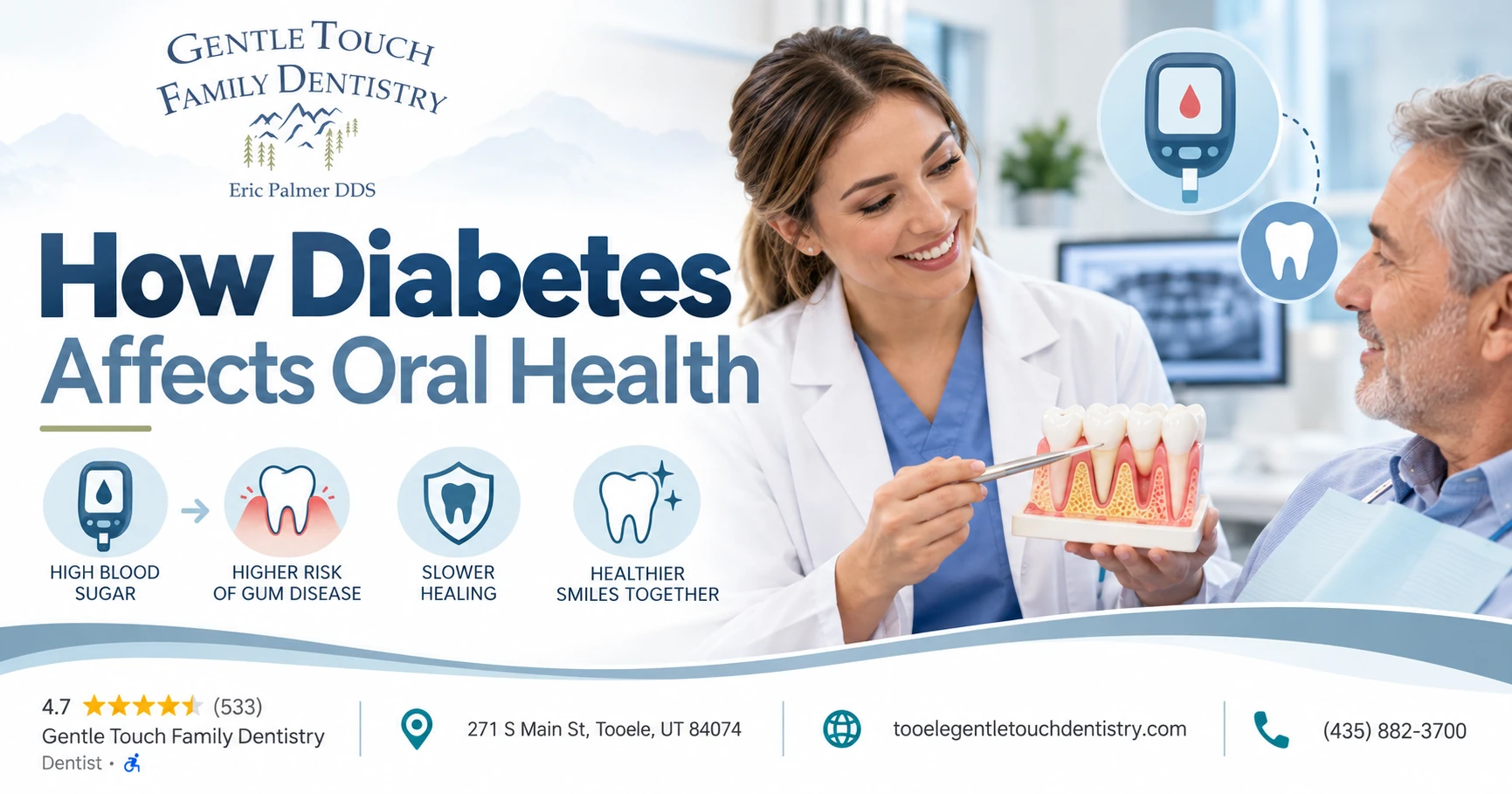
Diabetes can affect more than blood sugar. It can also influence the health of your gums, saliva, and other tissues in your mouth.
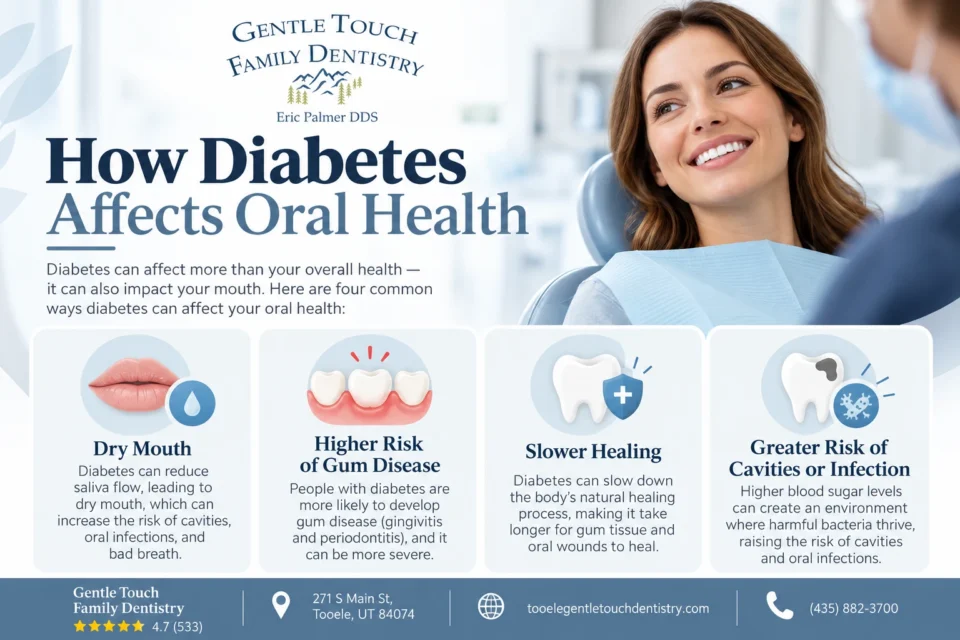
People with diabetes have a higher risk of periodontal disease, and diabetes may also contribute to dry mouth, slower healing, and certain oral infections. These risks can be greater when blood glucose is not well controlled.
That does not mean everyone with diabetes will develop dental problems. Consistent oral hygiene, regular dental care, avoiding tobacco, and following the diabetes care plan provided by your healthcare team can all help protect your mouth.
For patients with diabetes, dental care works best as one part of overall health care rather than as a substitute for medical diabetes management.
How Does Diabetes Affect Oral Health?
Diabetes can affect several systems that help keep the mouth healthy.
According to the National Institute of Dental and Craniofacial Research, people with diabetes have a greater chance of developing periodontal disease. Diabetes can also contribute to dry mouth and may slow healing in the mouth.
Possible oral health concerns include:
- Inflamed or bleeding gums
- Periodontal disease
- Dry mouth
- Increased risk of tooth decay associated with reduced saliva
- Slower healing
- Increased susceptibility to some oral infections
- Thrush, a fungal infection that can cause white patches in the mouth
The degree of risk varies from person to person.
Factors such as blood glucose control, smoking, oral hygiene, medications, existing gum disease, and regular access to dental care can all make a difference.
Why Does Diabetes Increase the Risk of Gum Disease?
Diabetes and periodontal disease have a well-established relationship.
High blood glucose can interfere with the body’s ability to respond to infection. CDC notes that high blood sugar can weaken white blood cells, which are an important part of the body’s defense against infections, including those that occur in the mouth.
At the same time, dental plaque contains bacteria that can irritate the gums.
When plaque is not consistently removed, gum inflammation can develop. In a person with diabetes particularly when blood glucose is not well controlled periodontal disease may occur more often or become more severe.
Possible signs include:
- Gums that bleed easily
- Red or swollen gums
- Gum tenderness
- Gum recession
- Persistent bad breath
- Changes in the way teeth fit together
- Loose teeth in more advanced disease
The relationship may also work in both directions. NIDCR notes that gum disease may make blood glucose harder to control, while the ADA describes the relationship between diabetes and periodontitis as bidirectional, although research on the exact effects varies.
If you have persistent gum symptoms, learn more about evaluation and treatment on our periodontal treatment page.
Can Diabetes Cause Dry Mouth?
Yes. Diabetes can be associated with dry mouth, also called xerostomia.
Dry mouth occurs when there is not enough saliva to keep the mouth comfortably moist. NIDCR identifies diabetes as one of several conditions that can contribute to persistent dry mouth.
Saliva plays several important roles. It helps:
- Wash food particles away
- Keep oral tissues moist
- Make chewing and swallowing easier
- Control harmful microorganisms
- Supply minerals that help protect teeth
When saliva flow is reduced, patients may experience:
- A sticky or dry feeling
- Cracked lips
- Difficulty swallowing
- Burning or soreness
- Bad breath
- Mouth sores
- Increased risk of tooth decay or oral infections
Some medications can also cause dry mouth, so diabetes itself may not always be the only factor.
If dry mouth continues regularly, mention it to both your dentist and healthcare provider rather than simply assuming it is unavoidable.
How Does Diabetes Affect Healing in the Mouth?
Diabetes can slow healing, particularly when blood glucose is not well controlled.
NIDCR states that diabetes may interfere with healing and can complicate the treatment of periodontal disease. The ADA also identifies impaired or delayed wound healing among possible oral manifestations associated with uncontrolled diabetes.
This can matter after:
- Dental extractions
- Periodontal procedures
- Other oral surgery
- Injuries inside the mouth
- Treatment for an oral infection
Healing varies among individuals, so having diabetes does not automatically mean a dental procedure will heal poorly.
It does mean your dentist should know about your diabetes and relevant medical history before treatment. That information allows the dental team to plan appropriately and, when needed, coordinate with your medical provider.
Can Diabetes Increase the Risk of Oral Infections?
Yes. Diabetes especially when blood glucose is elevated can make it harder for the body to fight certain infections.
CDC explains that high blood sugar can weaken the function of white blood cells involved in fighting infection.
One oral infection associated with diabetes is oral candidiasis, commonly called thrush.
Thrush may cause:
- White patches inside the mouth
- Soreness
- Irritated oral tissues
- An unpleasant taste or other discomfort
NIDCR notes that dry mouth and higher glucose levels in saliva may help create conditions that contribute to thrush in people with diabetes.
Not every white patch or sore is thrush, so unexplained oral changes should be professionally evaluated rather than self-diagnosed.
What Oral Health Warning Signs Should Patients With Diabetes Watch For?
Patients with diabetes should pay attention to changes in their teeth, gums, and oral tissues.
Contact a dental professional if you notice:
- Gums that bleed regularly
- Red or swollen gums
- Gum tenderness
- Persistent bad breath
- Gum recession
- Loose teeth
- Persistent dry mouth
- Mouth sores that are not improving
- White patches inside the mouth
- Tooth pain or sensitivity
- Swelling
- A persistent bad taste
NIDCR specifically advises people with diabetes to watch for swollen or bleeding gums, dryness, soreness, white patches, and a bad taste in the mouth.
These symptoms do not necessarily mean diabetes is the direct cause.
A dental examination can help determine whether the problem is related to gum disease, decay, dry mouth, infection, or another oral condition.
How Can Good Blood Sugar Control Support Oral Health?
Following the diabetes management plan provided by your healthcare team can also support oral health.
NIDCR states that good blood glucose control is important for controlling and preventing oral problems. People whose diabetes is poorly controlled tend to develop gum disease more frequently and more severely than people whose diabetes is better controlled.
CDC similarly notes that managing diabetes helps reduce the risk of gum disease and other oral health problems.
This does not mean dental care can control diabetes by itself.
Blood glucose targets, medications, diet plans, insulin use, and other medical decisions should be managed with the patient’s physician or diabetes care team.
From the dental side, it is helpful to:
- Tell your dentist that you have diabetes
- Keep your medical history updated
- Share relevant medication information
- Follow your healthcare provider’s diabetes treatment plan
- Tell your dentist about changes in your health
Medical and dental care can work together without either replacing the other.
What Daily Dental Habits Are Most Important?
The basics matter.
For patients with diabetes, a consistent home routine can help reduce plaque buildup and support healthy teeth and gums.
Brush twice a day
Brush with fluoride toothpaste at least twice daily.
Pay attention to the gumline, where plaque can contribute to inflammation.
Clean between your teeth
Clean between your teeth regularly, ideally every day, using floss or another interdental cleaning method recommended by your dentist.
NIDCR recommends regular interdental cleaning as part of basic oral hygiene.
Watch for gum changes
Do not ignore repeated bleeding, swelling, recession, or persistent bad breath.
These symptoms should be evaluated rather than managed only by brushing harder.
Address dry mouth
If your mouth feels persistently dry, tell your dentist or medical provider.
NIDCR notes that strategies such as staying hydrated and chewing sugar-free gum may help some people with dry-mouth symptoms, depending on the cause.
Avoid tobacco
Smoking increases the risk of gum disease and may further complicate oral health for people with diabetes. Both CDC and NIDCR advise avoiding or quitting tobacco.
Why Are Regular Dental Exams Important for Patients With Diabetes?
Regular dental care gives your dentist an opportunity to identify changes before they become more advanced.
A dental exam may include evaluation of:
- Gum inflammation
- Periodontal pockets
- Plaque and tartar buildup
- Tooth decay
- Dry mouth
- Existing restorations
- Oral sores or infections
- Changes in the tissues of the mouth
NIDCR notes that people who are at higher risk for gum disease because of a medical condition such as diabetes may need dental visits more frequently, depending on their individual situation.
CDC likewise recommends regular dental exams and professional cleanings for people with diabetes and encourages patients to tell their dentist that they have the condition.
There is no one-size-fits-all dental schedule.
Your dentist can recommend an interval based on your gum health, cavity risk, blood glucose history, dry mouth, previous dental treatment, and other individual factors.
Learn more about routine evaluations on our dental exam page.
When Should You Contact a Dentist?
Do not wait for your next routine visit if you notice a new or worsening oral health problem.
Contact a dentist if you experience:
- Frequent or unexplained gum bleeding
- Swollen or painful gums
- Gum recession
- A loose tooth
- Persistent tooth pain
- Significant dry mouth
- White patches or recurring mouth sores
- Swelling around a tooth or gum
- An oral wound that does not appear to be healing normally
- Persistent bad breath or a bad taste
People with diabetes should also make sure their dentist knows about their medical diagnosis and current medications.
If your dental team has concerns about your overall health or how diabetes may affect planned treatment, they may recommend coordinating with your physician or other healthcare provider.
For patients in Tooele, Gentle Touch Family Dentistry can evaluate your teeth and gums, monitor changes over time, and help develop an oral care plan based on your individual needs.
Learn more about local care on our Tooele dentist page.
FAQs
Does diabetes cause gum disease?
Diabetes does not guarantee that someone will develop gum disease, but it is an important risk factor.
People with diabetes have a higher likelihood of periodontal disease, particularly when blood glucose is not well controlled.
Why do my gums bleed if I have diabetes?
Bleeding gums are commonly associated with gum inflammation and should not automatically be blamed on diabetes.
Diabetes can increase susceptibility to periodontal problems, so frequent bleeding is worth having evaluated by a dentist.
Can diabetes make your mouth dry?
Yes. Diabetes can contribute to dry mouth, although medications and other conditions may also be responsible.
Persistent dry mouth can increase the risk of cavities and oral infections because saliva normally helps protect the teeth and control microorganisms.
Does diabetes make dental work heal more slowly?
It can, particularly when diabetes is not well controlled.
Both NIDCR and the ADA identify slower or impaired healing as a potential concern associated with diabetes. Individual healing varies, so your dentist should consider your medical history when planning treatment.
Can gum disease affect blood sugar?
There is evidence of a two-way relationship between diabetes and periodontal disease.
NIDCR notes that gum disease may make blood glucose harder to control, while the ADA reports associations between periodontitis and glycemic control. However, research on how much periodontal treatment changes blood glucose outcomes is not completely consistent.
How often should someone with diabetes see a dentist?
There is no single schedule that is appropriate for every patient.
Regular dental exams are important, and some people with diabetes or increased gum-disease risk may benefit from more frequent visits. Your dentist can recommend a schedule based on your individual oral health and risk factors.