Table of Contents
If one tooth hurts but looks normal, the source of the discomfort may simply be difficult to see. Problems can develop beneath the enamel, inside the tooth, around its root, along the gumline, or in nearby tissues without causing an obvious hole, crack, or swelling.
Possible causes range from tooth sensitivity and bite pressure to hidden decay, a small crack, gum irritation, or inflammation inside the tooth. Sometimes, the tooth that seems to hurt is not even where the problem started.
Unexplained tooth pain does not automatically mean something serious is wrong. However, recurring, persistent, or worsening pain deserves professional evaluation because appearance alone cannot show everything happening in and around a tooth.
Tooth Pain With No Visible Problem?
Hidden dental issues may be causing your discomfort. Schedule an exam today and get the answers you need.
Why Can One Tooth Hurt When Nothing Looks Wrong?
The visible portion of a tooth is only part of its structure.
Beneath the outer enamel is dentin, and deeper inside the tooth is the pulp, which contains nerves and blood vessels. The tooth is also supported by tissues around its root and gums.
A problem affecting one of these areas may cause discomfort before you can see anything unusual in the mirror.
For example, early decay can develop in an area that is difficult to see. A very small crack may cause pain without being readily visible. Inflammation inside the tooth can also produce significant sensitivity even when the enamel appears intact.
This is why dentists consider more than the tooth’s appearance when investigating unexplained pain.
What Are the Common Causes of Unexplained Tooth Pain?
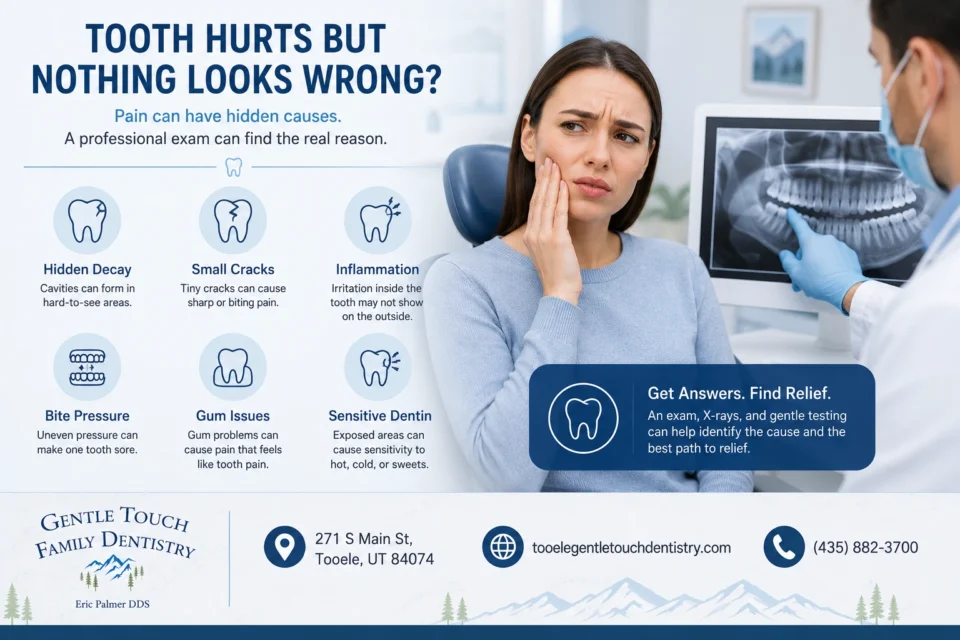
Several dental problems can cause a tooth to hurt without producing an obvious visible change. The symptoms often overlap, so the cause cannot reliably be determined from discomfort alone.
Early or hidden tooth decay
Not every cavity begins in an easily visible location.
Decay can develop between teeth or in other areas that are difficult to inspect at home. Early decay may cause no symptoms at all, while other cases can produce sensitivity to cold, sweets, or pressure.
A dental examination and appropriate imaging may help identify decay that cannot be seen by simply looking at the tooth.
Small or hidden cracks
A cracked tooth does not always have a large, visible fracture.
Small cracks can sometimes cause sharp or inconsistent pain, particularly while chewing. Some patients notice discomfort when biting down or when releasing pressure after a bite.
Very small cracks can also be challenging to identify, which means additional clinical testing may be necessary. Understanding why teeth crack without an injury can also help explain how repeated chewing pressure, grinding, older fillings, and natural wear may contribute to hidden fractures.
Teeth grinding or clenching
Grinding or tightly clenching the teeth can place repeated pressure on individual teeth and their supporting tissues.
This can make a tooth feel sore or tender even when there is no visible damage. Some people grind their teeth while sleeping and may not realize they are doing it.
Other possible clues can include jaw soreness, morning discomfort, or signs of wear on the teeth.
Inflammation inside the tooth
The pulp inside a tooth contains nerves that can become irritated or inflamed.
This may happen for several reasons, including decay, trauma, repeated stress, or damage to the tooth. Symptoms can vary from sensitivity to hot or cold temperatures to spontaneous or throbbing pain.
Because the problem is inside the tooth, the outside may still appear normal.
Gum-related problems
Pain that feels like it is coming directly from a tooth can sometimes involve the gum or supporting tissues around it.
Inflammation, periodontal problems, or irritation near the tooth can produce tenderness that is difficult for a patient to distinguish from tooth pain.
Bite-related pressure
Sometimes one tooth receives more pressure than the surrounding teeth when you bite or chew.
Changes in how the teeth meet can make a tooth or its supporting tissues sore, particularly during chewing. A dentist can evaluate your bite to determine whether pressure may be contributing to the symptoms.
Exposed or sensitive dentin
Enamel protects the more sensitive dentin underneath it. If dentin becomes exposed because of enamel wear or changes around the gumline, the tooth may become sensitive.
Cold beverages, sweets, or even cool air can sometimes trigger brief discomfort.
Pain coming from another area
Dental pain can occasionally be referred pain. This means you perceive discomfort in one tooth even though the actual source is another tooth or nearby structure.
That can make diagnosing unexplained tooth pain particularly difficult without a professional examination.
What Symptoms Can Help Identify the Cause?
The way a tooth hurts can provide useful information, but symptoms alone cannot confirm a diagnosis.
Pay attention to what triggers the discomfort, how long it lasts, and whether it is changing.
Sensitivity to hot or cold
Brief sensitivity to cold or heat can occur for several reasons, including exposed dentin or irritation of the tooth.
Pain that continues after the hot or cold stimulus has been removed may provide your dentist with additional diagnostic information.
Pain when biting
If the tooth hurts when you bite down or release pressure, your dentist may investigate possibilities such as a crack, bite-related stress, or inflammation around the tooth.
Try to notice whether the discomfort occurs every time you chew or only when you bite in a particular way.
Throbbing or spontaneous pain
Pain that develops without eating, drinking, or touching the tooth can sometimes suggest that the tissues inside or around the tooth are irritated.
The severity and duration of the pain are important details to share with your dentist.
Sensitivity to sweets
Sweet foods and beverages can sometimes trigger sensitivity in teeth affected by decay or exposed dentin.
This symptom does not prove that a cavity is present, but it can be useful information during an evaluation.
Pain that comes and goes
Intermittent tooth pain can be easy to dismiss, especially if it disappears for days at a time.
However, recurring pain is still worth discussing with a dentist. The temporary absence of symptoms does not necessarily mean the underlying cause has resolved.
Pain that is difficult to pinpoint
Sometimes it is surprisingly difficult to determine which tooth actually hurts.
You may feel discomfort throughout one side of the mouth or believe one tooth is responsible when the source is nearby. A dental evaluation can help isolate where the symptoms originate.
How Is Tooth Pain Diagnosed When the Tooth Looks Normal?
When there is no obvious cavity, fracture, or swelling, diagnosing tooth pain may require gathering several pieces of information.
A dentist will typically begin by asking about your symptoms. Details such as when the pain started, what triggers it, how long it lasts, and whether it has become more frequent can provide useful clues.
A clinical examination allows the dentist to inspect the tooth, gums, bite, and surrounding structures for changes that may not be obvious to you.
Depending on your symptoms, the evaluation may also involve:
- Dental X-rays or other appropriate imaging
- Bite or chewing-pressure tests
- Gentle tapping or pressure tests
- Hot or cold sensitivity testing
- Pulp vitality testing
- Evaluation of the gums and supporting tissues
- Assessment of how your teeth come together when you bite
Imaging can provide valuable information about areas that cannot be directly seen. However, not every dental problem is immediately obvious on a standard X-ray. Very small cracks and some early conditions, for example, may require additional testing or monitoring.
If you’re experiencing unexplained tooth pain, a professional [dental exam]([Dental Exam Service Page]) can help determine what may be causing the symptoms rather than relying on appearance alone.
What Are the Treatment Options for Unexplained Tooth Pain?
Treatment depends entirely on what is causing the discomfort.
There is no single treatment for a tooth that hurts but looks normal because several different conditions can produce similar symptoms.
Depending on the diagnosis and severity of the problem, care may involve:
- Managing tooth sensitivity
- Treating an area of decay
- Addressing bite-related pressure
- Protecting a cracked or damaged tooth
- Treating inflammation or problems involving the tooth’s pulp
- Addressing gum or periodontal concerns
- Monitoring a tooth when the cause is not immediately clear
The goal is to identify the source of the pain before deciding what treatment, if any, is appropriate.
This is also why attempting to diagnose persistent tooth pain at home can be difficult. Two patients with very similar symptoms may have completely different underlying causes.
Can Tooth Pain Go Away on Its Own?
Some minor tooth sensitivity or temporary irritation can improve.
For example, short-term sensitivity following certain dental procedures or mild irritation from temporary pressure may settle as the area recovers.
But disappearing pain does not always mean the underlying problem has resolved.
A tooth may hurt intermittently, and some dental conditions can change in how they feel as they progress. Repeatedly waiting for the discomfort to disappear can delay diagnosis of a problem that may be easier to manage earlier.
Consider having the tooth evaluated if pain keeps returning, persists, becomes more intense, or begins interfering with eating, sleeping, or normal activities.
Finding Quality Dental Care in Tooele: What to Look for in a Dentist
Finding quality dental care is an important part of maintaining [...]
Learn More
When Is Tooth Pain a Dental Emergency?
Not every toothache requires emergency treatment, but certain symptoms deserve prompt attention.
Contact a dental professional promptly if you experience:
- Severe or rapidly worsening tooth pain
- Facial or gum swelling
- Fever occurring along with dental symptoms
- Significant trauma to a tooth or mouth
- A loose or displaced tooth following an injury
- Increasing difficulty opening your mouth
- Difficulty swallowing or breathing
- Other rapidly worsening or concerning symptoms
Difficulty breathing or swallowing can indicate a potentially serious situation and warrants urgent medical attention.
For additional information about urgent dental problems and available care, visit our [Emergency Dentistry Page].
When Should You Schedule a Dental Exam?
You do not have to wait for tooth pain to become severe before having it evaluated.
Consider scheduling a dental examination when discomfort lasts, repeatedly returns, becomes stronger, or consistently occurs with chewing, temperature changes, or other triggers.
An evaluation can also be appropriate when you simply cannot explain why the tooth hurts.
Even when the tooth looks completely healthy from the outside, an examination may help identify changes that are difficult or impossible to see at home.
Patients in Tooele and surrounding communities can visit our [Tooele Location Page] for information about local dental care.
FAQs
Why does my tooth hurt if there is no cavity?
A cavity is only one possible cause of tooth pain. Sensitivity, small cracks, grinding or clenching, gum problems, bite pressure, or irritation inside the tooth can also cause discomfort without an obvious cavity.
Can a tooth be infected without looking abnormal?
Problems involving the tissues inside or around a tooth may not always produce an obvious visible change, particularly early on. Persistent or worsening pain, swelling, fever associated with dental symptoms, or other concerning changes should be professionally evaluated.
Why does my tooth hurt when I bite but look normal?
Pain while biting can have several possible causes, including a small crack, inflammation around the tooth, or excessive bite pressure. Because these conditions can produce similar symptoms, a dentist may use bite tests, imaging, and other examination methods to investigate the cause.
Why does one tooth suddenly become sensitive?
Sensitivity can develop when dentin becomes exposed or when a tooth is affected by decay, irritation, grinding, a crack, or another dental condition. A dentist can help determine the cause if the sensitivity persists or worsens.
Can an X-ray always show what is causing tooth pain?
No. Dental X-rays can reveal many problems that are difficult to see during a visual examination, but they do not show every possible cause of tooth pain. Some small cracks or early conditions may require clinical testing, additional evaluation, or monitoring.
Should I see a dentist if the pain comes and goes?
Recurring pain is worth discussing with a dentist even if the tooth stops hurting between episodes. The pattern may provide useful diagnostic information, and the absence of pain does not always confirm that the underlying issue has resolved.
Get Answers About the Tooth That’s Bothering You
When a tooth hurts but looks normal, uncertainty can sometimes be more stressful than the symptom itself. You do not need to determine the cause on your own or wait until the problem becomes obvious.
At Gentle Touch Family Dentistry, we can evaluate the tooth and surrounding areas, discuss what your symptoms may indicate, and explain appropriate next steps based on what we find.
If one tooth has been persistently or repeatedly bothering you, consider scheduling an evaluation to find out what may be causing the discomfort.
Find the Cause of Your Tooth Pain
A tooth can hurt even when everything looks normal. Call now for a professional dental evaluation and relief.