Table of Contents
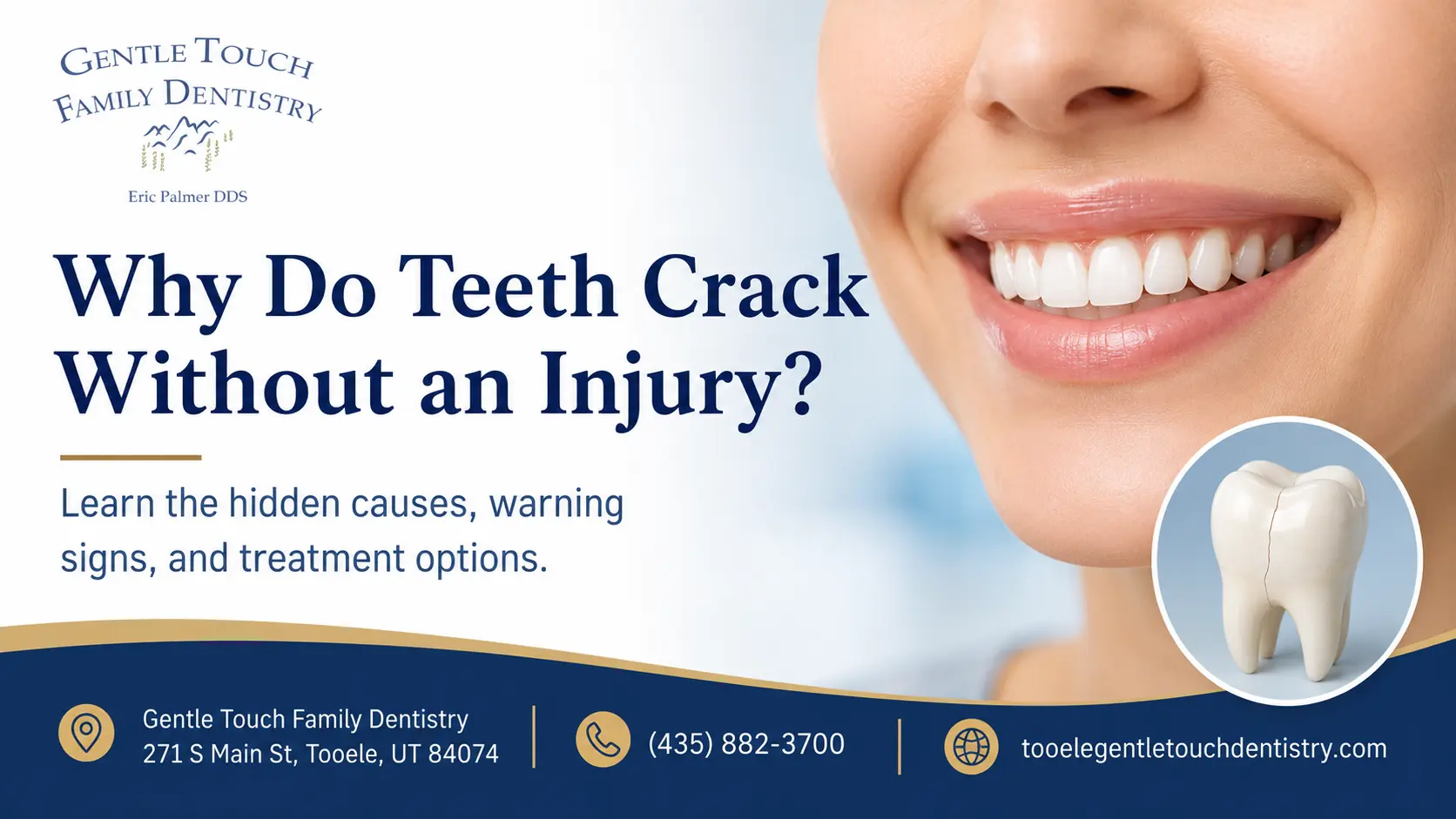
A tooth does not have to be hit or visibly damaged to develop a crack. In many cases, teeth crack gradually after months or years of repeated pressure from chewing, grinding, large restorations, or normal wear.
Some cracks are extremely small and may not be visible when you look in the mirror. They can also cause symptoms that come and go, making it difficult to identify which tooth is responsible. Pain while biting, sudden sensitivity, or unexplained discomfort may be the first sign that something is wrong.
Because tooth enamel cannot repair itself after it cracks, persistent symptoms should be evaluated by a dentist. Early diagnosis may provide more options for protecting the tooth and preventing the crack from extending deeper.
Sudden Tooth Crack? Get It Checked
A hidden dental problem may be the cause. Schedule an exam now to protect your tooth.
Why Can Teeth Crack Without an Injury?
Teeth withstand pressure every day. Chewing a meal may not feel harmful, but repeated forces can gradually create stress within a tooth, especially when its structure has already been weakened.
Common reasons teeth crack without a noticeable injury include the following.
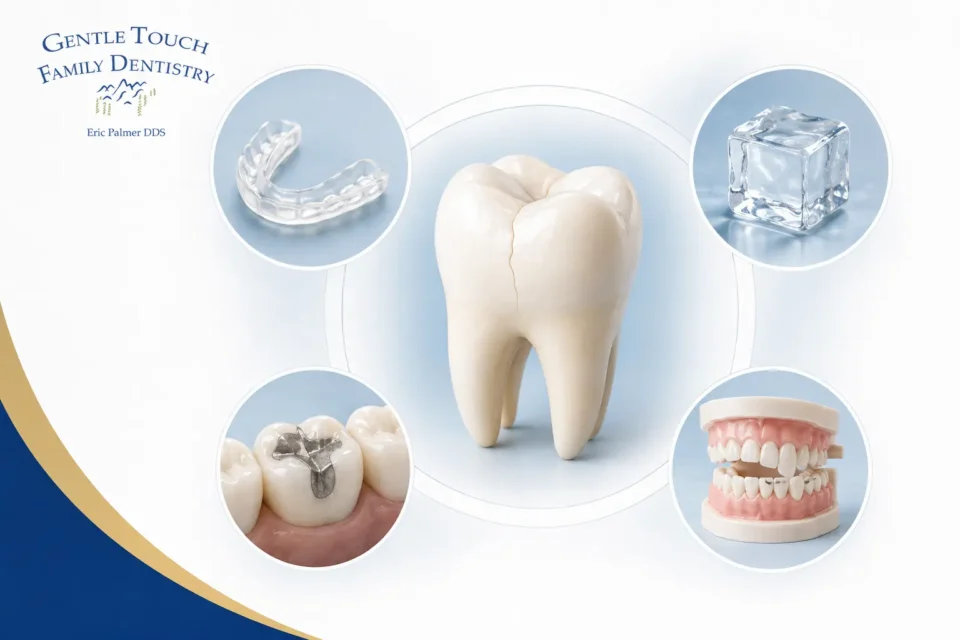
Teeth grinding or clenching
Grinding or tightly clenching your teeth, also known as bruxism, places repeated pressure on the enamel. This often happens during sleep, so a person may not realize how much force is being applied.
Over time, grinding may wear down the teeth or contribute to small cracks. Morning jaw soreness, flattened chewing surfaces, headaches, and tooth sensitivity can be additional signs of nighttime grinding.
Biting hard foods or objects
A crack may begin after biting something particularly hard, even when there is no dramatic moment of injury. Ice, unpopped popcorn kernels, hard candy, bones, and fruit pits can place concentrated pressure on one part of a tooth.
Using your teeth to open packages, hold objects, or cut materials can create similar stress. The American Dental Association advises avoiding ice, popcorn kernels, and hard candy because they can crack teeth.
Large or older fillings
A large filling replaces part of the natural tooth structure. Although the restoration repairs an area of decay or damage, the remaining walls of the tooth may be thinner and less able to withstand repeated chewing forces.
This does not mean every filled tooth will crack. It means a heavily restored tooth may require closer monitoring, particularly if the filling is large, worn, loose, or surrounded by weakened enamel.
Age-related wear
Teeth experience thousands of chewing cycles over many years. As a result, small structural changes and areas of wear may develop gradually.
A tooth that has tolerated normal pressure for decades may eventually become more vulnerable to cracking, especially when age-related wear is combined with grinding, decay, or an older restoration.
Uneven bite pressure
When one tooth receives more pressure than the surrounding teeth, it may be placed under repeated stress. This can happen because of tooth alignment, missing teeth, a restoration that feels too high, or changes in the way the upper and lower teeth come together.
A dentist can evaluate whether uneven bite forces may be contributing to discomfort or tooth damage.
Rapid temperature changes
Sudden changes between very hot and very cold foods may cause the tooth structure to expand and contract. Temperature changes alone do not necessarily cause a healthy tooth to fracture, but they may contribute to stress in a tooth that is already weakened.
For example, chewing ice immediately after drinking a hot beverage may place more strain on a vulnerable tooth than either temperature would by itself.
Tooth decay or weakened enamel
Decay removes healthy tooth structure and can leave the tooth less resistant to pressure. A tooth with a large cavity may crack during ordinary chewing rather than during a major accident.
Decay can also develop around or beneath an older filling, which is another reason regular dental examinations remain important.
What Are the Common Symptoms of a Cracked Tooth?
Cracked tooth symptoms are not always constant. Discomfort may appear only when you bite in a particular direction, eat something cold, or release pressure after chewing.
Possible warning signs include:
- Sharp pain when biting or chewing
- Pain when releasing your bite
- Sensitivity to cold, heat, or sweet foods
- Intermittent pain that comes and goes
- Discomfort that is difficult to trace to one tooth
- Tenderness or swelling around the affected tooth
- A rough edge or visible line on the tooth
- Pain that becomes more frequent over time
Pain while biting and sensitivity to temperature, especially cold are commonly associated with cracked teeth. However, cracks may be difficult to see and can occasionally be missed on standard dental X-rays.
These symptoms can also occur with cavities, loose fillings, gum problems, or infections. This is one reason patients sometimes ask why one tooth hurts when nothing looks wrong, since the cause may be hidden beneath the surface or too subtle to identify without a professional examination.
A professional examination is therefore important rather than assuming that a crack is the cause.
How Is a Cracked Tooth Diagnosed?
Diagnosing a cracked tooth may require more than simply looking at the tooth. Some fractures are visible, while others are extremely fine or hidden beneath a filling or the gumline.
During an evaluation, a dentist may:
- Ask when the pain occurs and what triggers it
- Examine the tooth and surrounding gums
- Check for visible fracture lines or damaged restorations
- Apply controlled pressure to different parts of the tooth
- Test the tooth’s response to cold or other stimuli
- Evaluate how the upper and lower teeth meet
- Use magnification or a special light to look for a crack
- Take dental X-rays to look for decay, infection, bone changes, or other problems
Dental imaging can provide valuable information, but very small cracks do not always appear clearly on a standard X-ray. The diagnosis may instead depend on the pattern of symptoms and findings from several clinical tests.
In more complicated cases, a general dentist may recommend evaluation by an endodontist, a dentist who specializes in diagnosing tooth pain and treating problems involving the tissue inside the tooth.
What Are the Treatment Options for a Cracked Tooth?
Treatment depends on the crack’s location, depth, symptoms, and whether the inner tissue of the tooth has been affected. Not every cracked tooth requires the same procedure.
Dental bonding or a filling
Small chips or limited areas of damage may sometimes be repaired with tooth-colored bonding material or a filling. This approach is generally used when enough healthy tooth structure remains and the crack has not severely weakened the tooth.
A dental crown
A crown covers the visible portion of a tooth and may be recommended when a crack or large restoration has weakened the tooth’s structure. By surrounding the tooth, a crown can help distribute biting pressure and reduce movement between damaged sections.
The decision to use a crown depends on the type and extent of the crack. Patients who want to understand how crowns are used to protect weakened teeth can learn more on the dental crowns service page.
Root canal therapy
If a crack reaches the pulp of the soft tissue containing nerves and blood vessels inside the tooth the area may become inflamed or infected. Root canal therapy may be recommended to remove the affected tissue and seal the inside of the tooth.
A crown is often used afterward to protect the remaining tooth structure, but the exact treatment plan depends on the condition of the tooth.
Tooth extraction
Some cracks extend too far beneath the gumline or divide the tooth into separate sections. When the damage is too extensive for the tooth to be restored predictably, extraction may be necessary.
However, a crack does not automatically mean the tooth must be removed. Treatment options should be evaluated before making that decision, since many cracked teeth may still be treatable.
How Often Should You Really Visit the Dentist?
Most people have heard the advice to visit the dentist [...]
Learn More
Can a Cracked Tooth Heal on Its Own?
A cracked tooth cannot heal itself in the way a cut in the skin or a broken bone can. Enamel does not regenerate after it has fractured.
Symptoms may temporarily improve when you stop chewing on the affected side, but that does not mean the crack has closed. Repeated biting pressure may allow the fracture to grow or irritate the tissue inside the tooth.
The outlook depends on where the crack begins and how far it extends. A small, treatable crack may be stabilized, while a deeper crack may require more extensive care. This is why it is generally better to have unexplained biting pain or sensitivity evaluated before the discomfort becomes severe.
How Can You Prevent Teeth from Cracking?
Not every crack can be prevented, but reducing unnecessary pressure and maintaining healthy tooth structure can lower the risk.
Helpful steps include:
- Avoid chewing ice, hard candy, popcorn kernels, and other very hard foods.
- Do not use your teeth to open packages or hold objects.
- Wear an athletic mouthguard during contact sports or activities with a risk of facial injury.
- Ask your dentist about a nightguard if you grind or clench your teeth.
- Have worn, loose, or damaged fillings evaluated.
- Treat cavities before they weaken a larger portion of the tooth.
- Attend regular dental examinations.
- Mention any recent changes in your bite or chewing comfort.
- Avoid chewing exclusively on one side of your mouth.
Routine preventive care also gives a dentist an opportunity to identify weakened restorations, decay, abnormal wear, and other factors that may increase fracture risk. More information about exams and preventive care is available through the general dentistry page.
When Should You See a Dentist?
Schedule a dental evaluation when pain while biting, temperature sensitivity, or unexplained tooth discomfort persists, returns repeatedly, or becomes worse. Ongoing tooth pain should be assessed even when you cannot see a crack.
Contact a dentist promptly if you notice:
- Increasing or constant tooth pain
- Swelling around a tooth or along the gums
- A visible crack or broken piece of tooth
- Pain that interferes with eating or sleeping
- Prolonged sensitivity after hot or cold foods
- A bad taste, drainage, or other possible signs of infection
- Fever or facial swelling associated with dental pain
Swelling, fever, spreading facial swelling, difficulty swallowing, or difficulty breathing may indicate a more urgent problem and should not be ignored.
Patients in Tooele who are experiencing possible cracked tooth symptoms can arrange an examination through the practice’s Tooele location page. A dental evaluation is the most reliable way to determine whether the problem is a crack, another dental condition, or a combination of issues.
FAQs
Can a tooth crack from normal chewing?
Yes. Normal chewing may crack a tooth that has already been weakened by a large filling, decay, grinding, age-related wear, or a previous small fracture. The food itself may not be unusually hard; it may simply apply pressure to a vulnerable area.
Why does my tooth hurt when I bite but not at other times?
A small crack can allow sections of the tooth to move slightly under pressure, irritating the tissue inside. Pain may occur while biting or when the pressure is released. Cavities, loose fillings, and bite problems can cause similar symptoms, so an examination is needed to confirm the cause.
Can a cracked tooth be invisible?
Yes. Some cracks are too small to see without magnification, and they may not appear clearly on a standard dental X-ray. Dentists often combine symptom history, bite tests, visual examination, imaging, and other tests to reach a diagnosis.
Does every cracked tooth need a crown?
No. Treatment depends on the crack’s size, depth, location, and effect on the tooth. Minor damage may be treated with bonding or a filling, while a weakened tooth may benefit from a crown. Deeper cracks may require root canal therapy or, in severe cases, extraction.
Is a cracked tooth a dental emergency?
Not every crack requires emergency treatment, but it should still be evaluated. Seek prompt care when there is severe pain, swelling, a broken section of tooth, or signs of infection. Earlier evaluation may improve the chances of protecting the natural tooth.
What should I do while waiting for my appointment?
Avoid chewing on the affected side and stay away from very hard, hot, or cold foods if they trigger discomfort. Keep the area clean with gentle brushing and flossing. Do not place aspirin directly on the tooth or gum, and do not attempt to glue or repair the tooth yourself.
Protect Your Tooth Before the Crack Gets Worse
A cracked tooth may not always cause constant pain, but symptoms such as sensitivity, discomfort while biting, or swelling should not be ignored. Early evaluation can help identify the location and severity of the crack before more damage develops.
At Gentle Touch Family Dentistry, we carefully assess your tooth, explain the available treatment options, and recommend a plan based on your comfort and long-term oral health. Prompt care may help reduce discomfort, preserve more of the natural tooth, and prevent the need for more extensive treatment. Schedule a dental evaluation with our team today.
Cracked Tooth Without an Injury?
Do not wait for the pain to worsen. Call today for a professional dental evaluation and treatment.