Table of Contents
What happens during a comprehensive dental exam? Your dentist reviews your medical and dental history, examines your teeth and gums, checks your bite and jaw, and looks for unusual changes in your oral tissues. Dental X-rays or additional tests may be recommended when necessary. The purpose is to evaluate your overall oral health, identify potential problems, and develop recommendations based on your individual needs.
At Gentle Touch Family Dentistry in Tooele, UT, we want patients to feel comfortable and informed throughout their appointments. Whether you are visiting us for the first time or returning after a long break, understanding each step of a comprehensive dental examination can help you know what to expect and why these evaluations matter.
Quick Answer: What Is a Comprehensive Dental Exam?
A comprehensive dental exam is a detailed evaluation of your teeth, gums, bite, jaw, and other oral structures.
Unlike an appointment focused on one specific problem, a comprehensive examination considers several aspects of oral health to identify existing conditions and potential risk factors.
It also provides an opportunity to review your dental history and discuss concerns that may not be immediately visible.
A comprehensive dental examination may include:
- Reviewing your medical and dental history.
- Discussing symptoms and oral health concerns.
- Examining teeth for decay, wear, chips, or cracks.
- Checking existing fillings, crowns, and other restorations.
- Evaluating gum and periodontal health.
- Assessing how your teeth fit together.
- Checking the jaw for relevant symptoms or abnormalities.
- Examining oral soft tissues for unusual changes.
- Reviewing existing dental X-rays or recommending new images when necessary.
- Discussing findings and possible treatment options.
Not every patient receives identical tests or procedures.
For example, someone experiencing jaw discomfort may need a more detailed bite or jaw evaluation.
Another patient with a history of periodontal disease may require additional measurements of the tissues supporting their teeth.
The examination should reflect your dental history, current symptoms, and clinical findings.
A comprehensive exam also differs from a professional cleaning.
Both may occur during the same appointment, but the examination focuses on evaluating oral health, while cleaning focuses on removing plaque and tartar.
Review of Your Dental and Medical History
A comprehensive dental examination typically begins with a review of your health history.
This may involve completing or updating a patient information form and discussing relevant changes with our dental team.
Although these questions may seem unrelated to your teeth, general health can influence dental treatment and oral health risks.
Previous Dental Problems
We may ask about past cavities, gum disease, extractions, root canals, or other dental procedures.
This helps us understand areas that may need closer monitoring.
For example, someone who has experienced frequent cavities may benefit from an individualized cavity-risk assessment.
Current Symptoms
Patients should mention any concerns, including:
- Tooth sensitivity.
- Pain when chewing.
- Bleeding gums.
- Jaw soreness.
- Persistent bad breath.
- Dry mouth.
- Changes in tooth appearance.
- Loose or damaged dental restorations.
Even mild symptoms can provide useful information.
You do not need to wait until a problem becomes severe before mentioning it.
Medical Conditions
Certain medical conditions can affect oral health or influence treatment planning.
For example, diabetes may affect periodontal health, while conditions associated with reduced saliva flow can increase cavity risk.
We consider relevant health information when making recommendations.
Medications
Some medications may cause dry mouth, affect bleeding, or require additional precautions during dental treatment.
It is helpful to provide an accurate medication list, including prescription medications, over-the-counter products, and relevant supplements.
Allergies and Previous Reactions
We may ask about allergies or reactions to medications and dental materials.
This information supports appropriate treatment planning.
Dental Anxiety
Patients who feel nervous about dental visits should let us know.
We can explain each step of the examination and discuss ways to make the experience more comfortable.
The purpose of reviewing your history is not to complicate your appointment. It is to help us understand your needs before the clinical examination begins.
Examination of Your Teeth and Existing Dental Work
After reviewing your history, we examine the teeth and visible dental restorations.
This part of the visit helps identify decay, structural damage, and changes that may affect chewing or oral comfort.
Checking for Tooth Decay
We examine accessible tooth surfaces for visible signs of cavities or enamel changes.
Some early areas of mineral loss may appear different from healthy enamel.
However, tooth decay is not always visible during a clinical examination.
Additional imaging may be useful when indicated.
Looking for Chips and Cracks
Small chips or cracks can develop from biting forces, trauma, or other causes.
We look for visible damage and ask about symptoms such as sharp pain when chewing.
Certain cracks are difficult to detect and may require additional testing.
Evaluating Tooth Wear
Teeth gradually experience wear over time.
However, excessive flattening, shortening, or enamel loss may suggest grinding, erosion, or other contributing factors.
We consider the pattern and extent of wear before recommending treatment.
Examining Existing Fillings
Dental fillings can function well for many years.
However, they may eventually develop wear, fractures, or other problems.
We assess their visible condition and consider whether additional evaluation is necessary.
An older filling does not automatically need replacement because of its age.
Checking Crowns and Bridges
Crowns and bridges may require monitoring for damage, looseness, or changes around their margins.
We also consider how these restorations function when you bite and chew.
Looking at Missing Teeth
If you have missing teeth, we may evaluate how the remaining teeth and surrounding tissues are functioning.
However, replacing a missing tooth is not automatically necessary in every situation.
Recommendations depend on oral health, function, and personal treatment goals.
Understanding the Findings
If we identify an area of concern, we explain what we observed.
Some changes require treatment, while others may be appropriate to monitor over time.
The objective is to make recommendations based on clinical findings rather than assume every irregularity requires a procedure.
Gum and Periodontal Health Evaluation
Healthy gums and supporting bones are essential for maintaining stable teeth.
A comprehensive dental examination therefore includes evaluating the condition of the tissues surrounding your teeth.
Looking for Gum Inflammation
We examine the gums for redness, swelling, bleeding, and other signs of irritation.
Plaque-related gingivitis is one common cause of inflammation.
However, gum symptoms can have several possible explanations.
Checking for Gum Recession
Gum recession occurs when the gumline moves away from its previous position, exposing more of the tooth or its root surface.
Recession may be associated with periodontal disease, mechanical forces, or other factors.
We assess the condition rather than assuming a single cause.
Measuring Periodontal Pockets
When appropriate, we may use a periodontal probe to measure the spaces between the teeth and gums.
These measurements help evaluate periodontal health.
Deeper measurements can indicate concerns requiring further examination, although their significance depends on additional findings.
Evaluating Bleeding
Bleeding during periodontal probing may indicate inflammation.
However, the absence of bleeding does not guarantee that the gums are healthy.
For example, smoking can affect the way gum inflammation appears.
Reviewing Bone Support
If periodontal disease or other concerns are suspected, dental X-rays may provide information about the bone supporting the teeth.
The need for imaging depends on clinical findings and individual risk.
Gingivitis Versus Periodontitis
Gingivitis involves inflammation of the gums without the attachment and bone loss characteristic of periodontitis.
Periodontitis can damage the supporting structures of teeth and may require more involved treatment.
Early identification helps us recommend appropriate care.
What Happens If Gum Problems Are Found?
Some patients may benefit from improved daily plaque control and routine professional cleaning.
Others may require scaling and root planing or additional periodontal care.
We explain the findings before recommending treatment.
Bite, Jaw, and Tooth Wear Assessment
A comprehensive dental exam may also include evaluating how your teeth come together and whether your jaw is functioning comfortably.
Not every patient needs an extensive bite analysis.
However, certain symptoms or patterns of tooth wear may suggest that additional examination is appropriate.
Checking How Your Teeth Meet
We may ask you to bite down so we can assess how the upper and lower teeth contact.
This helps identify concerns involving chewing comfort or unusual pressure.
However, a bite that appears uneven does not automatically require correction.
Looking for Grinding-Related Wear
Teeth grinding, also called bruxism, can contribute to flattened biting surfaces, chipped teeth, or damaged restorations.
Some patients grind while sleeping and may not realize it.
Visible tooth wear can provide clues, although it does not necessarily prove that grinding is currently occurring.
Discussing Jaw Symptoms
We may ask whether you experience:
- Jaw soreness.
- Clicking or popping.
- Difficulty opening your mouth.
- Pain while chewing.
- Morning jaw tightness.
- Headaches associated with jaw discomfort.
These symptoms can have several causes.
A dental examination helps determine whether further assessment may be useful.
Evaluating Tooth Alignment
The position of the teeth can affect how they contact one another.
However, not every alignment difference is a dental problem.
Treatment is considered when there is a meaningful functional, structural, or other clinical concern.
Checking Existing Restorations
A filling or crown may occasionally contribute to uncomfortable biting.
If you notice that one tooth touches before the others after dental treatment, let us know.
Discussing Protective Options
When tooth grinding contributes to damage, a protective night guard may be appropriate.
However, a night guard does not necessarily eliminate grinding itself.
Recommendations should be based on the underlying findings and your symptoms.
Oral Cancer and Soft Tissue Screening
A comprehensive dental examination includes evaluating relevant soft tissues inside and around the mouth.
This helps identify visible or palpable changes that may require further attention.
What Areas Are Examined?
We may examine the:
- Lips.
- Inner cheeks.
- Tongue, including its sides and underside.
- Gums.
- Floor of the mouth.
- Roof of the mouth.
- Visible throat area.
- Jaw and neck, as appropriate.
The examination generally involves looking at the tissues and gently feeling certain areas.
What Changes May Be Concerning?
Possible findings include persistent sores, unusual lumps, red or white patches, unexplained thickening, or other changes in tissue appearance.
However, many oral abnormalities have noncancerous causes.
An unusual finding does not automatically mean cancer is present.
Does the Screening Hurt?
The visual and physical examination is generally quick and painless.
An existing sore area may be sensitive to touch.
Can a Dental Exam Diagnose Oral Cancer?
No.
A clinical examination can identify suspicious changes, but it cannot confirm oral cancer.
A biopsy or specialist evaluation may be necessary for diagnosis.
What Happens If Something Is Found?
If an area appears suspicious, we may recommend prompt referral or biopsy.
Other findings may be monitored when clinically appropriate.
The next step depends on the appearance, history, and level of concern.
Why Mention Symptoms Between Appointments?
Some oral abnormalities develop between routine visits.
Patients should schedule an evaluation for an unexplained sore that persists, a new lump, difficulty swallowing, or another concerning change.
A recent normal dental examination does not eliminate the need to investigate new symptoms.
When Dental X-Rays May Be Recommended
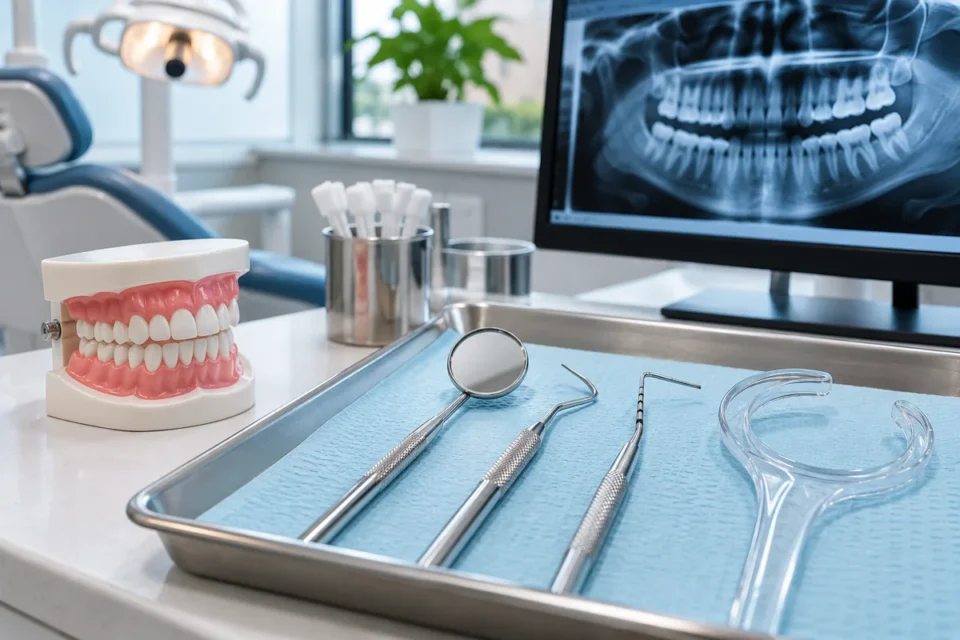
Dental X-rays provide images of structures that cannot always be evaluated through visual examination alone.
However, not every comprehensive exam requires new X-rays.
The decision depends on your symptoms, dental history, previous imaging, and current clinical findings.
Why Are X-Rays Useful?
Dental imaging can help identify certain conditions involving teeth and supporting structures.
These may include:
- Decay between teeth.
- Bone loss associated with periodontal disease.
- Some infections around tooth roots.
- Certain impacted or unerupted teeth.
- Other abnormalities requiring further evaluation.
However, X-rays do not reveal every dental problem.
For example, some cracks may not be visible on routine images.
Bitewing X-Rays
Bitewing images are commonly used to evaluate the crowns of upper and lower teeth together.
They can help identify decay between teeth and provide information about certain supporting structures.
Periapical X-Rays
Periapical images show an individual tooth or a small group of teeth, including the roots and surrounding bone.
These may be useful when evaluating pain, infection, or other localized concerns.
Panoramic Imaging
A panoramic image provides a broader view of the jaws and teeth.
It may be appropriate in selected situations, such as evaluating developing or impacted teeth or other conditions.
However, it is not automatically required for every patient.
Are Dental X-Rays Safe?
Dental X-rays use ionizing radiation, so imaging should be recommended when its expected diagnostic benefit justifies the exposure.
Modern dental imaging techniques and appropriate radiation-reduction practices help limit unnecessary exposure.
The American Dental Association’s 2026 guidance emphasizes performing a clinical examination before deciding which images are necessary.
How Often Are X-Rays Needed?
There is no identical schedule for everyone.
A patient with frequent cavities may need imaging at different intervals than someone with stable oral health.
We consider individual risk factors rather than automatically recommending the same images at every visit.
What If You Have Previous X-Rays?
Existing images may provide useful information.
When available and clinically suitable, reviewing previous X-rays can help avoid unnecessary repeat imaging.
How Dentists Identify Cavities and Other Problems
Dental diagnosis involves combining several sources of information.
A visual examination alone may identify certain problems, but other conditions require additional assessment.
Visual Examination
We inspect the teeth for discoloration, surface breakdown, cracks, and other visible changes.
However, a dark spot does not automatically indicate a cavity.
Some discoloration results from staining or other nondecay conditions.
Dental Imaging
When indicated, X-rays may help identify decay between teeth or changes involving deeper structures.
Imaging results must be interpreted alongside the clinical examination.
Reviewing Symptoms
Tooth sensitivity, pain when biting, and spontaneous discomfort can help identify areas requiring closer attention.
However, symptoms are not always specific to one condition.
Additional Diagnostic Tests
Depending on the concern, we may recommend tests such as checking how a tooth responds to temperature or evaluating discomfort during biting.
These tests can help assess certain tooth or pulp-related conditions.
Not every patient requires them.
Detecting Early Cavities
Some early enamel changes may be managed with fluoride, dietary adjustments, improved home care, and monitoring.
A cavity that has progressed to structural breakdown may require a restoration.
The recommendation depends on the extent and activity of the decay.
Evaluating Cracks
Certain cracks are visible during examination.
Others may require focused testing and can remain difficult to identify.
A normal X-ray does not necessarily rule out a cracked tooth.
Looking for Possible Infections
Swelling, tenderness, abnormal tooth responses, or certain imaging findings may suggest an infection.
Additional testing helps determine the likely cause.
Considering the Complete Picture
No single observation should automatically determine treatment.
We consider the patient’s history, clinical findings, diagnostic results, and individual needs.
This approach helps us distinguish conditions requiring immediate treatment from changes that may be monitored.
What Happens After the Exam?
Once the examination is complete, we explain the findings and discuss whether any follow-up care is recommended.
The next steps vary from patient to patient.
Reviewing Your Results
We discuss areas that appear healthy and any concerns identified during the visit.
Patients are encouraged to ask questions about unfamiliar dental terms or findings.
Discussing Preventive Care
If no significant problems are found, we may recommend continuing your current routine or making small adjustments.
These might involve brushing technique, fluoride use, interdental cleaning, or dietary habits.
Monitoring Minor Changes
Some findings do not require immediate treatment.
For example, a stable area of mild tooth wear may be monitored over time.
We explain why monitoring may be appropriate and what changes would require reassessment.
Recommending Treatment
If a cavity, gum problem, damaged restoration, or another concern is found, we explain the possible treatment options.
Some conditions may require filling or periodontal care.
More complicated problems may need additional evaluation or referral.
Explaining Follow-Up Appointments
A comprehensive exam does not necessarily mean every treatment or cleaning procedure will occur on the same day.
Depending on the schedule and findings, additional appointments may be needed.
Discussing Future Exam Frequency
Many patients attend dental checkups approximately every six months.
However, the recommended interval depends on cavity risk, gum health, medical factors, and other individual needs.
Supporting Informed Decisions
At Gentle Touch Family Dentistry, we want patients to understand why a treatment is being recommended.
We explain the findings and available options so you can participate in decisions about your oral health.
A comprehensive dental exam is an opportunity to understand your dental condition, not simply a checklist of procedures.
Comprehensive Dental Exams in Tooele
A comprehensive dental examination helps establish a clear picture of your oral health.
For patients who have not visited the dentist recently, it can also provide a useful starting point for future care.
At Gentle Touch Family Dentistry, we provide dental examinations for individuals and families throughout Tooele, UT, and nearby communities.
Our team understands that every patient’s dental history, concerns, and treatment needs are different.
A Thorough Review of Your Oral Health
We evaluate your teeth, gums, oral tissues, and other relevant structures.
When appropriate, we may recommend diagnostic imaging or additional testing to better understand a specific concern.
Clear Explanations Throughout the Visit
We believe patients should understand what is being examined.
Whether we are evaluating a sensitive tooth or checking the condition of existing dental work, we explain our findings and recommendations.
Attention to Preventive Care
Dental examinations help identify changes that may not yet cause symptoms.
This provides opportunities to discuss preventive measures, monitoring, or treatment when appropriate.
Care for Different Stages of Life
Children, adults, and older patients have different oral health needs.
We consider age, dental development, medical history, and individual risk factors when recommending care.
Comfortable, Individualized Appointments
If you have dental anxiety or concerns about a particular part of the examination, let us know.
We can discuss the process and address your questions.
To learn more about our clinical examination services, visit our Dental Exam page.
For information about ongoing routine care, explore our Dental Checkup page.
Our goal is to help patients understand their oral health and receive recommendations based on their actual needs.
FAQs About Comprehensive Dental Exams
How long does a comprehensive dental exam take?
The time varies based on your dental history, symptoms, and whether additional testing is needed. A first visit or an appointment involving complex concerns may take longer than a routine examination.
Does a comprehensive dental exam hurt?
Most parts of the examination are painless. Patients may experience mild sensitivity when an existing sore area or tender tooth is evaluated. Let your dentist know if anything feels uncomfortable.
Are dental X-rays always included in a comprehensive exam?
No. X-rays are recommended based on clinical findings, dental history, symptoms, and individual risk factors. Some patients may not need new imaging during every visit.
Is a comprehensive dental exam the same as a cleaning?
No. The examination evaluates your oral health and identifies potential problems. A professional cleaning removes plaque and tartar. Both services may be performed during the same appointment.
Can a comprehensive exam find cavities before they hurt?
Yes. Dentists can identify some early enamel changes and cavities before symptoms begin. Dental X-rays may help detect decay in areas that are difficult to examine visually.
How often should I schedule a comprehensive dental exam?
The appropriate interval depends on your oral health, medical history, and individual risk factors. Many patients attend checkups around every six months, but your dentist may recommend a different schedule.
Understand Your Oral Health With Gentle Touch Family Dentistry
A comprehensive dental examination provides more information than whether your teeth have cavities.
It helps us evaluate the condition of your gums, existing dental work, bite, jaw, and oral tissues while identifying concerns that may require further attention.
At Gentle Touch Family Dentistry, we help patients throughout Tooele, UT, understand their oral health through thorough examinations and individualized dental recommendations.
Whether you are scheduling your first appointment with our team, returning after time away from dental care, or simply want a better understanding of your smile, we are here to help.
During your visit, we review your health history, examine relevant oral structures, and discuss whether any additional tests or treatment may be appropriate.
We also explain the difference between findings that require care and changes that can be monitored.
Our goal is to make your appointment informative and comfortable while helping you make confident decisions about your dental health.
If you have been wondering what happens during a comprehensive dental exam, our team can walk you through the process and answer your questions.
Schedule your dental examination with Gentle Touch Family Dentistry in Tooele, UT. Call (435) 882-3700 or visit our office at 271 S Main St, Tooele, UT 84074.
We look forward to helping you maintain a healthy smile through personalized dental care and regular examinations.