Table of Contents
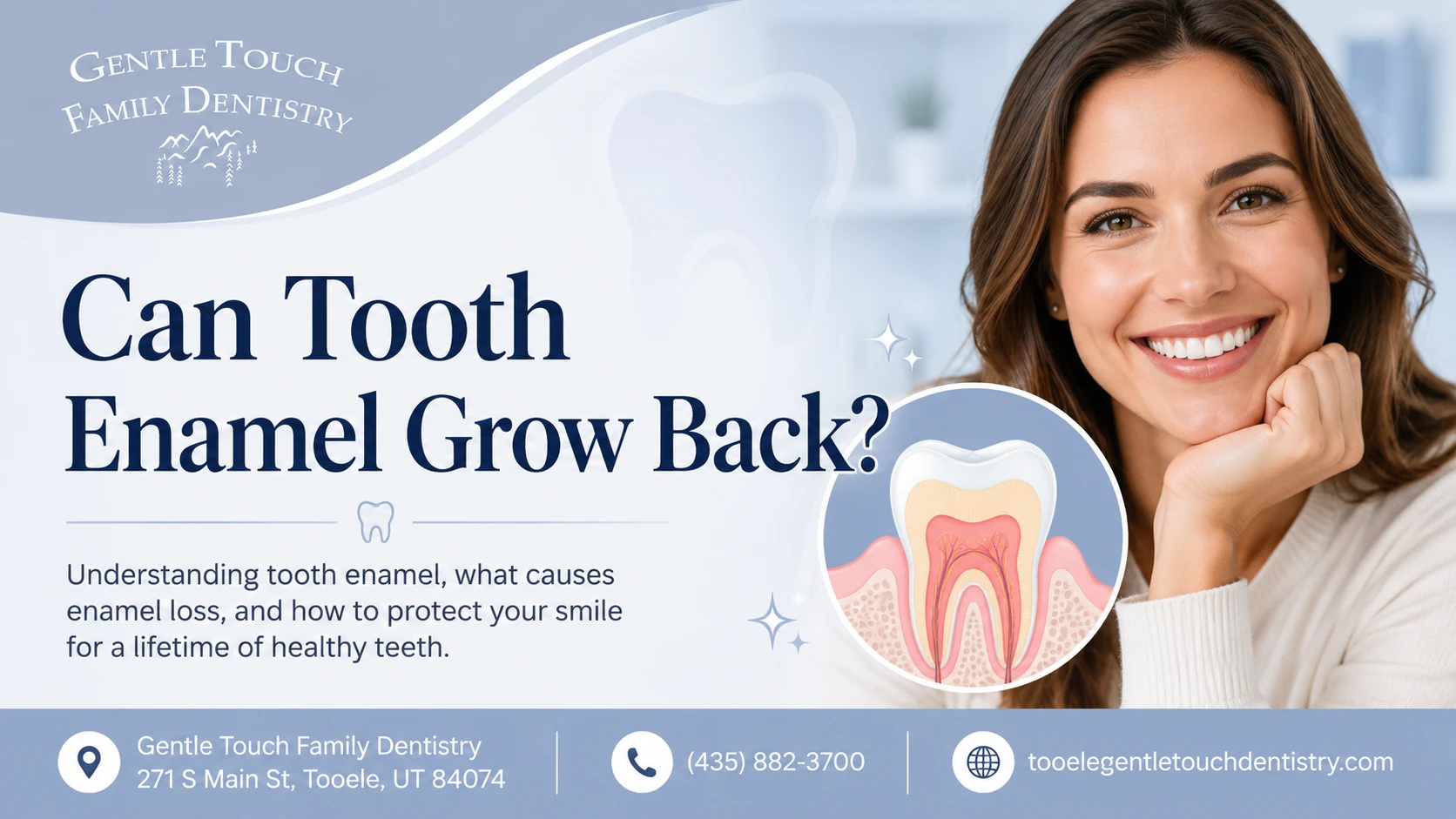
If your teeth have become more sensitive, look different, or show signs of wear, you may wonder whether damaged enamel can repair itself. The short answer is that tooth enamel cannot grow back once it has been physically lost.
Enamel-forming cells are present while teeth develop but are lost after the teeth erupt. Because mature enamel does not contain the cells needed to rebuild itself, enamel that has been worn away, chipped, or permanently eroded cannot regenerate like bone or skin can.
However, there is an important difference between rebuilding lost enamel and remineralizing enamel that is still present. During the earliest stages of tooth decay, minerals can leave the enamel without the surface completely breaking down. Saliva and fluoride can help return minerals to these weakened areas and strengthen the remaining enamel.
Understanding can tooth enamel can grow back and what remineralization actually means can help you avoid misleading claims and focus on practical ways to protect the enamel you still have.
Can Tooth Enamel Grow Back?
No. Once tooth enamel has been physically lost, your body cannot naturally grow a replacement layer.
Enamel develops before and during tooth eruption through specialized cells called ameloblasts. These cells produce the enamel that forms the hard outer surface of the tooth. Once a tooth erupts, the enamel-forming cells are no longer present, leaving mature enamel without a cellular repair mechanism.
This means natural enamel cannot simply grow back after it has been:
- Worn away
- Eroded by repeated acid exposure
- Chipped
- Lost because of an advanced cavity
- Damaged through significant tooth wear
Products that claim to completely “regrow” missing natural enamel should therefore be viewed carefully.
Dentistry can still do a great deal to protect a damaged tooth. Fluoride and saliva can strengthen enamel that remains during early mineral loss, while restorative treatments may replace or protect tooth structure when permanent damage has already occurred.
The important distinction is this:
Remineralization strengthens existing enamel. It does not create entirely new enamel where tooth structure has already been lost.
What Is Tooth Enamel?
Enamel is the hard, mineral-rich outer layer covering the visible crown of each tooth. It protects the softer structures underneath, including dentin and the dental pulp.
Enamel is more than 95% mineral by weight and is considered the hardest mineralized tissue in the human body. Its structure helps teeth withstand the forces created by biting and chewing over many years.
Despite that strength, enamel is not indestructible.
Every day, your teeth experience a balance between demineralization and remineralization.
Demineralization occurs when acids remove minerals from enamel. This can happen when bacteria in plaque use sugars and starches from foods and beverages to produce acids. Acidic foods and drinks can also expose teeth directly to acids.
Saliva helps counteract this process. It washes away food particles and provides minerals that can return to the enamel. Fluoride can further encourage remineralization and make enamel more resistant to future acid attacks.
Problems develop when mineral loss repeatedly exceeds the mouth’s ability to replace those minerals or when actual tooth structure is physically lost.
Because enamel cannot regenerate after permanent loss, protecting it is an important part of maintaining your natural teeth.
What Causes Enamel to Wear Away?
Enamel damage can have several causes. Sometimes more than one factor contributes to the same area of wear.
Frequent acidic foods and drinks
Acidic beverages are a common contributor to dental erosion.
Soft drinks, sports drinks, energy drinks, fruit juices, and other acidic beverages can gradually dissolve mineral from tooth surfaces when exposure is frequent. Acidic candies and foods can also contribute. The ADA identifies frequent acidic beverage consumption as an important risk factor for erosive tooth wear.
Frequency matters. Slowly sipping an acidic drink throughout the day creates repeated exposure that can be harder on enamel than consuming the same beverage during a meal.
Tooth decay
Tooth decay and dental erosion are different processes, although both can result in mineral loss.
With tooth decay, bacteria in dental plaque use sugars and starches and produce acids. Those acids remove minerals from enamel. If demineralization continues faster than remineralization can occur, the enamel eventually breaks down and a cavity forms.
Acid reflux and repeated vomiting
Not all damaging acids come from food.
Stomach acid can reach the teeth in people experiencing frequent acid reflux or repeated vomiting. Because stomach acid is highly acidic, repeated exposure may contribute to erosive tooth wear.
If reflux or vomiting occurs regularly, discuss it with the appropriate healthcare provider as well as your dentist. Addressing the source of the acid is an important part of protecting your teeth.
Grinding and clenching
Grinding or clenching can contribute to mechanical tooth wear.
Over time, repeated tooth-to-tooth forces may cause flattened chewing surfaces, worn edges, small fractures, or other changes. Grinding may also occur alongside acid erosion, making the pattern of wear more complicated.
A dentist can examine the teeth and determine whether grinding, erosion, or another factor may be involved.
Aggressive brushing
Brushing harder does not necessarily clean teeth better.
The ADA notes that excessive or aggressive brushing may contribute to abrasion in some circumstances. Normal brushing with a soft-bristled toothbrush and fluoride toothpaste, however, is unlikely to cause significant erosive enamel wear.
The goal is thorough cleaning with gentle pressure rather than forceful scrubbing.
Biting hard objects
Chewing ice, biting pens, opening packages with your teeth, or biting other hard objects can increase the risk of enamel chips and fractures.
Even though enamel is extremely strong, concentrated force can still damage it.
What Are the Signs of Enamel Damage?
Early enamel damage may be difficult to recognize at home. Some people do not notice any symptoms until the wear becomes more advanced.
Possible signs include:
- Increasing tooth sensitivity. Cold, hot, sweet, or acidic foods may cause discomfort when dentin becomes less protected.
- Changes in tooth color. Teeth may appear more yellow when thinning enamel allows more of the naturally yellowish dentin underneath to show through. Discoloration can also have many other causes.
- Smooth or shiny areas. Erosive wear can change the normal texture of tooth surfaces.
- Flattened chewing surfaces. Teeth may appear increasingly flat when wear affects areas used for biting and chewing.
- Small chips or rough edges. Damaged tooth structure may become more vulnerable to chipping.
- Cupping or shallow depressions. The ADA identifies cupping or flattening of chewing surfaces as possible signs of erosive tooth wear.
- White spots associated with early decay. Areas of early mineral loss may sometimes appear chalky or white before an actual cavity forms.
Sensitivity or discoloration does not automatically mean you have enamel erosion. Cavities, gum recession, cracks, staining, and other dental conditions may produce similar symptoms.
That is why persistent or noticeable changes are better evaluated professionally than diagnosed from appearance alone.
Can Early Enamel Damage Be Remineralized?
Yes, early mineral loss can sometimes be remineralized if the enamel surface is still intact.
This process occurs during the earliest stage of tooth decay.
When acids begin removing minerals from enamel, a physical cavity may not yet exist. Saliva can return calcium and other minerals to the weakened tooth surface, while fluoride can encourage remineralization and increase resistance to future acid attacks.
This is why fluoride toothpaste is such an important part of everyday cavity prevention.
However, remineralization has limits.
If enough mineral is lost that the enamel structure collapses and a physical cavity develops, the missing tooth structure cannot simply be mineralized back into place. At that point, professional restorative treatment may be needed.
The same distinction applies to erosion.
Fluoride may help strengthen remaining enamel and offer some protection, but enamel that has already been physically lost through erosive wear does not regenerate. The ADA describes erosive loss of mineralized tooth structure as progressive and irreversible once actual structure has been removed.
Think of remineralization as reinforcing and repairing the mineral content of an existing wall not rebuilding an entire section after the wall itself is gone.
How Can You Protect Your Tooth Enamel?
Since permanently lost enamel cannot naturally grow back, protecting the enamel that remains is especially important.
A few everyday habits can reduce unnecessary acid exposure and support a healthier mouth.
- Brush twice a day with fluoride toothpaste. Fluoride promotes remineralization and helps make enamel more resistant to acid attacks.
- Use a soft-bristled toothbrush. Brush thoroughly but gently rather than aggressively scrubbing your teeth.
- Clean between your teeth daily. Floss or another appropriate interdental cleaner helps control plaque in areas your toothbrush cannot easily reach.
- Reduce frequent acidic beverages. Soda, sports drinks, energy drinks, and fruit juice can expose teeth to dietary acids. Drinking them less frequently can reduce repeated acid challenges.
- Avoid sipping acidic beverages for hours. The longer and more frequently teeth encounter acid, the more opportunities there are for erosive damage.
- Drink or rinse with water after acidic foods and beverages. The ADA recommends rinsing with water after acidic exposures rather than immediately brushing.
- Limit frequent sugary snacks and drinks. Repeated sugar and starch exposure gives cavity-causing bacteria more opportunities to produce acids.
- Do not use your teeth as tools. Avoid opening packaging, cracking objects, or chewing ice with your teeth.
- Mention grinding or clenching to your dentist. If you notice flattened teeth, frequent chips, jaw soreness, or other signs of grinding, a dental evaluation can help determine whether excessive forces are contributing.
- Address recurring reflux or vomiting. Because stomach acid can contribute to tooth erosion, persistent symptoms should be discussed with an appropriate medical provider.
- Keep up with preventive dental care. Dental visits give your dentist an opportunity to identify areas of early decay, erosion, or unusual tooth wear before greater damage develops.
Professional Teeth Cleaning can also support your home-care routine by removing plaque and hardened tartar that cannot be completely removed with ordinary brushing and flossing. The practice’s current teeth-cleaning page confirms that professional cleanings are offered for patients in Tooele.
The goal is not to follow a perfect or overly restrictive routine. Consistent habits that limit repeated acid exposure and control plaque can make a meaningful difference.
When Should You See a Dentist?
Not every minor change in a tooth means significant enamel damage, but symptoms that persist or worsen should be evaluated.
Consider scheduling a dental visit if you notice:
- Increasing or persistent tooth sensitivity
- Sensitivity concentrated in one tooth
- Teeth that appear increasingly worn or thin
- New white, brown, or dark areas
- Visible chips or cracks
- Rough or uneven tooth edges
- Flattened chewing surfaces
- Increasing yellow or translucent appearance
- Pain when biting or chewing
- Repeated chipping
- A visible hole in a tooth
- Changes that continue despite improving your oral-care habits
Your dentist can determine whether the problem involves enamel erosion, early tooth decay, an established cavity, grinding, gum recession, a crack, or another condition.
Treatment depends on what is found.
Very early mineral loss may benefit from fluoride and changes in home care. Sensitivity caused by exposed dentin may require desensitizing products or other preventive measures. When a significant amount of tooth structure has already been lost, bonding, fillings, crowns, or another restorative approach may sometimes be recommended.
Patients in Tooele do not need to wait until a tooth becomes painful before asking about visible wear or sensitivity. Earlier evaluation can help determine whether an area simply needs monitoring or whether steps should be taken to prevent further damage.
FAQs
Can tooth enamel really grow back?
No. Once natural enamel has been physically lost, the body cannot produce a new layer because the enamel-forming cells are no longer present after tooth eruption. Early mineral loss in enamel that is still intact, however, may be strengthened through remineralization.
What is the difference between enamel regrowth and remineralization?
Regrowth would mean creating new enamel to replace tooth structure that has already been lost. Remineralization instead restores minerals to weakened enamel that is still present. Fluoride and minerals in saliva can support this process during early mineral loss.
Can fluoride rebuild tooth enamel?
Fluoride can help remineralize and strengthen existing enamel during early mineral loss, but it cannot recreate a section of enamel that has already been physically worn or broken away.
Can enamel erosion make teeth sensitive?
Yes. As erosive wear progresses, dentin may become less protected or exposed, resulting in sensitivity. The ADA lists dentin hypersensitivity among possible signs of progressive erosive tooth wear.
Why do my teeth look more yellow if my enamel is wearing down?
Dentin underneath enamel has a naturally more yellow appearance. If enamel becomes thinner, more of that color may show through. However, staining and other dental conditions can also change tooth color, so discoloration alone does not confirm enamel loss.
Can toothpaste repair damaged enamel?
Fluoride toothpaste can support remineralization of early mineral loss and help strengthen remaining enamel. It cannot regrow enamel that has already been physically lost or fill a cavity where the tooth structure has broken down.
Protect the Enamel You Have With Gentle Touch Family Dentistry
Your enamel may not be able to grow back once it is physically lost, but that does not mean you are powerless to protect your teeth. Fluoride, consistent oral hygiene, sensible dietary habits, and professional dental care can help strengthen remaining enamel and reduce the risk of additional damage.
At Gentle Touch Family Dentistry, we help patients in Tooele understand changes such as sensitivity, enamel wear, discoloration, and chipped teeth. If you have noticed persistent sensitivity or visible changes in your tooth surfaces, our dental team can evaluate what is happening and recommend appropriate next steps.
Protecting enamel is much easier than replacing tooth structure after it has been lost. Paying attention to early changes and maintaining a consistent preventive routine can help preserve your natural smile for years to come.