Table of Contents
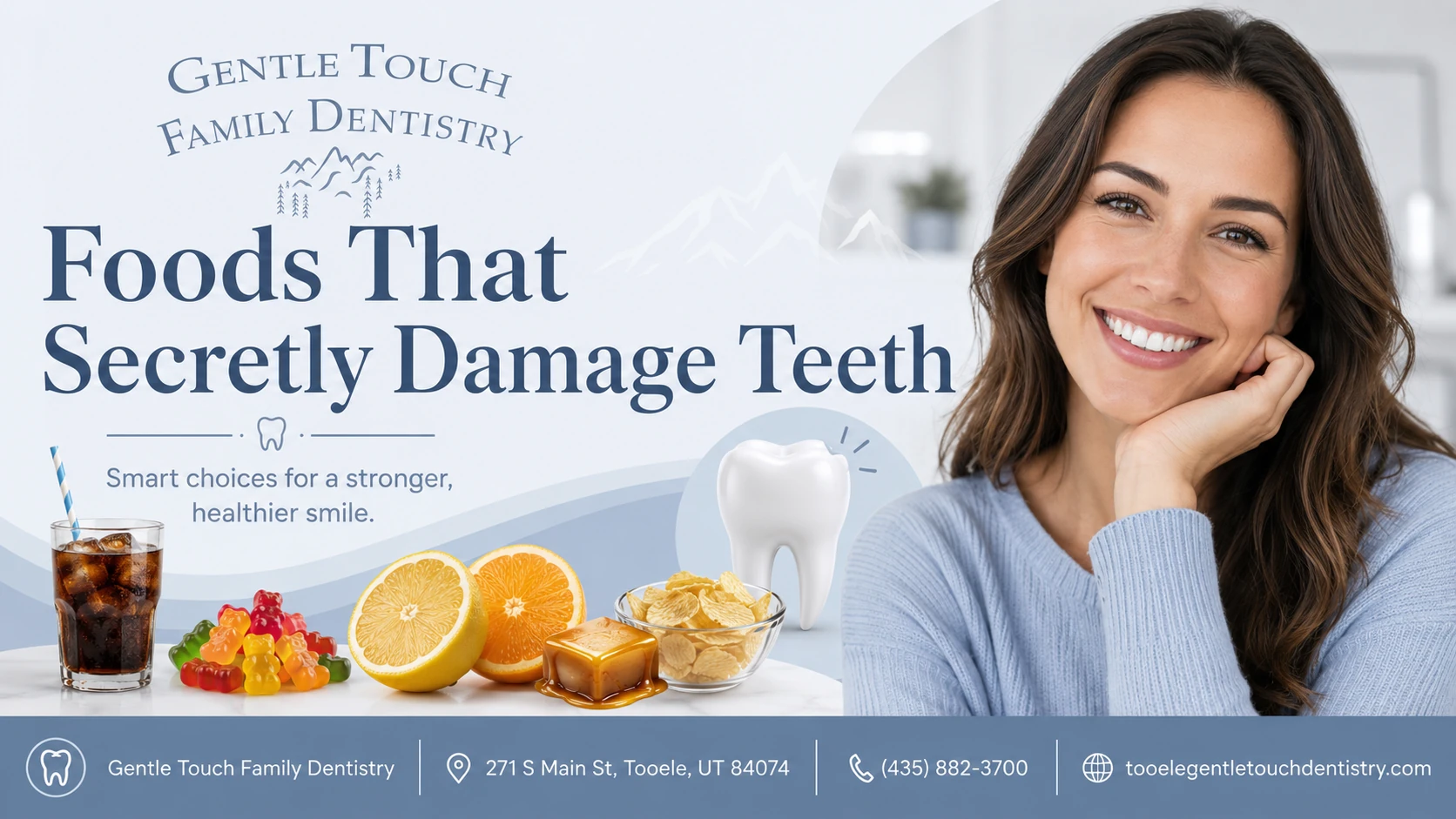
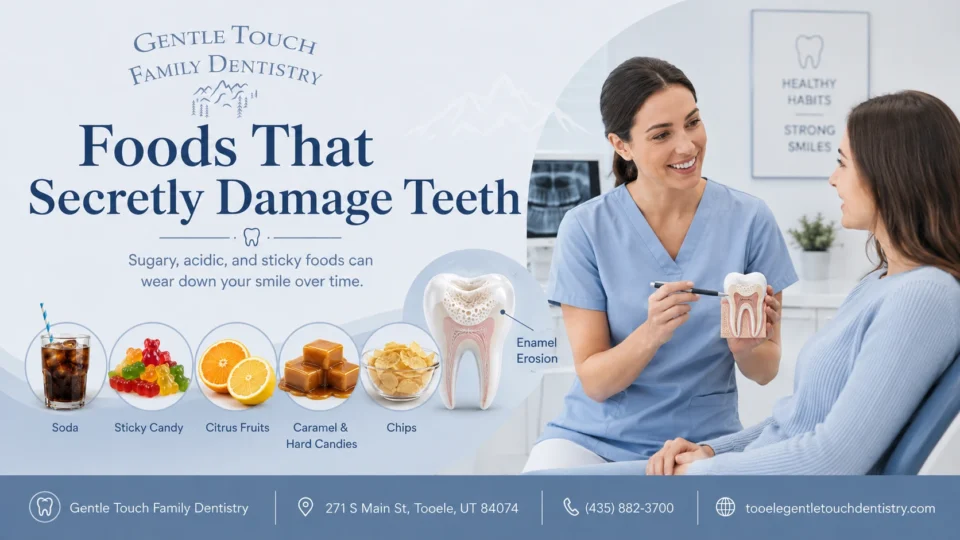
Some of the foods that affect your teeth are obvious, such as candy and soda. Others can be easier to overlook. Dried fruit, crackers, flavored drinks, citrus, sports drinks, and even certain foods marketed as healthy can expose teeth to sugar, starch, or acid.
That does not mean you need to eliminate these foods from your diet. When it comes to foods that damage teeth, how often you eat or drink them and how long they remain in contact with your teeth can matter just as much as the food itself.
Bacteria in dental plaque use sugars and starches from foods and drinks to produce acids. Repeated acid exposure can cause enamel to lose minerals and, over time, contribute to cavities. Acidic foods and beverages can also directly contribute to enamel erosion when consumed frequently.
Knowing which everyday habits may create more frequent acid exposure can help you make realistic changes without giving up everything you enjoy.
What Foods Can Secretly Damage Your Teeth?
Foods do not usually damage teeth simply because you eat them once. Dental problems tend to develop through repeated exposure combined with factors such as plaque buildup, oral hygiene habits, saliva flow, and individual cavity risk.
Some foods and drinks worth paying closer attention to include:
- Sticky candy and gummies
- Dried fruit
- Cookies, pastries, and sweet snacks
- Crackers, chips, and other refined starches
- Soda and sweetened beverages
- Sports and energy drinks
- Fruit juice
- Citrus fruits and other acidic foods
- Sour candies
- Sweetened coffee and tea
- Flavored waters containing acids or sugar
These foods affect teeth in different ways.
Sugars and starches can provide fuel for bacteria that produce cavity-causing acids. Sticky foods may remain on or between the teeth longer. Acidic foods and drinks can temporarily create a more acidic environment and, with frequent exposure, may contribute to enamel erosion.
The goal is not to create a list of foods you are never allowed to eat. Instead, it helps to understand frequency, timing, and portion size so you can reduce unnecessary exposure while maintaining a balanced diet.
How Do Sugary and Sticky Foods Affect Teeth?
Sugar contributes to tooth decay indirectly.
Certain bacteria in dental plaque use sugars from foods and drinks and produce acids. Those acids remove minerals from tooth enamel. Saliva and fluoride help replace some of those minerals, but when acid attacks happen repeatedly, mineral loss can eventually outpace repair and a cavity can develop.
This is why both how much sugar you consume and how frequently your teeth are exposed to it can matter.
For example, sipping a sweetened drink for several hours may expose your teeth to repeated acid attacks. Finishing the same drink with a meal generally creates a shorter exposure period.
Sticky foods can create another challenge because they may remain in the grooves of teeth or between teeth longer than foods that clear from the mouth easily.
Examples include:
- Caramel
- Gummies
- Sticky candy
- Fruit snacks
- Dried fruit
- Certain granola bars
Dried fruit is a good example of why foods should not simply be categorized as “healthy” or “unhealthy” for teeth. Fruit can provide useful nutrients, but dried varieties can be concentrated in sugar and may stick to tooth surfaces.
Starchy foods can also play a role. Foods such as crackers, bread, chips, and similar refined carbohydrates can break down into sugars in the mouth and may become trapped around teeth. The ADA notes that carbohydrate consumption is an important factor in the cavity process because bacteria can ferment dietary carbohydrates and produce acids.
You do not necessarily need to avoid these foods. Eating them as part of a meal and maintaining good oral hygiene can help reduce their impact.
Can Acidic Foods and Drinks Damage Enamel?
Yes. Frequent exposure to acidic foods and beverages can contribute to dental erosion, which is the chemical loss of hard tooth structure caused by acids rather than cavity-causing bacteria.
Unlike early mineral loss from tooth decay, significant enamel lost through erosion cannot simply grow back.
Common sources of dietary acid may include:
- Carbonated soft drinks
- Sports drinks
- Energy drinks
- Fruit juices
- Citrus fruits
- Sour candies
- Vinegar-heavy foods
- Some flavored sparkling waters
Acidic drinks are particularly important because they can wash across many tooth surfaces at once.
The ADA identifies frequent consumption of soft drinks and other acidic beverages as an important risk factor for erosive tooth wear. How often the teeth are exposed, how long the beverage remains in contact with them, and the drink’s overall composition can influence the risk.
Sugar-free does not automatically mean tooth-friendly, either. A beverage may contain little or no sugar while still being acidic enough to contribute to enamel erosion when consumed frequently.
This does not mean you need to eliminate all acidic foods. Citrus fruit, for example, can be part of a nutritious diet. The practical goal is to avoid constantly bathing the teeth in acid throughout the day.
Having acidic foods with a meal, drinking water afterward, and avoiding habits such as swishing acidic beverages around your mouth can help reduce exposure.
Are Some “Healthy” Foods Hard on Your Teeth?
Yes, but calling them “bad” foods can be misleading.
Some foods that are nutritious for the body can still present challenges for teeth depending on how often they are eaten and how they are consumed.
Dried fruit
Dried fruit can provide fiber and nutrients, but it may also be sticky and contain concentrated natural sugars. Pieces can remain around grooves or between teeth longer than fresh fruit.
Fresh fruit is often easier to clear from the mouth because of its higher water content.
Citrus fruit
Oranges, grapefruit, lemons, and similar fruits contain useful nutrients, but they are also acidic. Frequent exposure may contribute to enamel erosion, particularly when citrus is eaten or sipped throughout the day.
You do not need to avoid citrus altogether. Eating it as part of a meal rather than continuously snacking on it can help limit how often your teeth encounter acid.
Fruit juice
Fruit juice can contain natural sugars as well as acids. Sipping juice slowly throughout the day can therefore create repeated exposure.
Water is usually a better beverage for frequent sipping.
Smoothies
Smoothies can be nutritious depending on what they contain, but fruit-heavy smoothies may combine natural sugars and acids. Adding sweeteners can increase sugar exposure further.
Again, frequency matters. Drinking a smoothie with a meal is different from slowly sipping it for several hours.
Sports drinks
Sports drinks may seem healthier than soda because they are associated with exercise and hydration. However, many contain acids and sugars.
The ADA notes that frequent intake of sports drinks and other low-pH beverages may increase the risk of dental erosion.
For routine hydration, plain water is usually a more tooth-friendly choice.
Granola bars and similar snacks
Some granola bars contain added sugars and sticky ingredients that can stay around the teeth.
Reading labels can help you compare options, but you do not need to obsess over individual ingredients. Choosing snacks with less added sugar and limiting constant grazing can be a practical starting point.
How Do Snacking and Eating Habits Affect Dental Health?
One of the easiest dental-health factors to overlook is how often you eat.
Whenever cavity-causing bacteria encounter sugars or starches, they can produce acids. Your saliva helps neutralize acids and return minerals to enamel between exposures.
If you continually snack, sip sweetened coffee, drink soda throughout the afternoon, or keep reaching for small amounts of food, your teeth may experience repeated acid attacks with less time to recover.
NIDCR explains that frequent eating or drinking, particularly foods and beverages containing sugars and starches, can lead to repeated acid attacks and continued mineral loss from enamel.
Consider the difference between these two habits:
Habit 1: Eating a dessert immediately after dinner and then drinking water.
Habit 2: Eating small pieces of the same dessert every 20 minutes for several hours.
The second habit keeps exposing teeth to sugars over a much longer period.
Similar patterns can occur with:
- Slowly sipping sweetened coffee all morning
- Carrying soda and taking frequent sips
- Grazing on crackers throughout the afternoon
- Eating hard candy that dissolves slowly
- Drinking juice or sports drinks between meals
You do not have to eliminate snacks completely. If you need a snack, choosing a defined snack time rather than grazing continuously can help reduce repeated exposure.
What Are Better Tooth-Friendly Alternatives?
Protecting your teeth does not require a perfect diet. Simple substitutions can reduce frequent exposure to sugar and acid while still giving you plenty of choices.
Consider options such as:
- Water instead of soda or sports drinks for routine hydration
- Fresh fruit instead of sticky dried fruit more often
- Plain or lower-sugar yogurt instead of highly sweetened varieties
- Cheese with a meal or snack
- Crunchy vegetables such as carrots or celery
- Nuts and seeds when appropriate for your dietary needs
- Unsweetened beverages instead of drinks with added sugar
- Sugar-free gum after meals when brushing is not practical
Water is particularly useful because it does not repeatedly expose teeth to sugar and can help rinse away food debris.
Milk and some dairy products may also be less erosive options than acidic beverages. Research reviewed by the ADA suggests milk and yogurt may have protective characteristics against erosion, although individual products vary, especially when significant amounts of sugar are added.
Sugar-free gum can also stimulate saliva. Saliva helps clear food particles, buffer acids, and provide minerals involved in protecting enamel.
The best choices depend on your health, dietary needs, allergies, and personal preferences. Think in terms of better everyday patterns, not a list of forbidden foods.
How Can You Protect Your Teeth After Eating?
What you do after eating can help reduce the effect of foods and drinks on your teeth.
Try these practical habits:
- Drink water after meals and snacks. Water can help wash away food residue and reduce the amount of time acids remain in the mouth.
- Brush twice daily with fluoride toothpaste. Fluoride helps protect enamel and supports remineralization during the early stages of tooth decay.
- Clean between your teeth every day. Floss or another interdental cleaner can remove plaque and food particles that your toothbrush cannot easily reach.
- Avoid constant sipping and grazing. Give your mouth time between meals and snacks rather than repeatedly exposing teeth to sugars, starches, or acids.
- Be cautious about brushing immediately after acidic foods or drinks. The ADA recommends rinsing with water rather than immediately brushing following acidic exposures.
- Choose water for everyday hydration. Frequent soda, juice, sports drinks, and other acidic or sugary beverages can increase dental exposure throughout the day.
- Chew sugar-free gum when appropriate. This may stimulate saliva after eating when you cannot brush.
- Keep up with professional preventive care. Regular preventive dentistry visits allow your dental team to assess your cavity risk, look for enamel changes, and recommend care based on your individual needs.
Professional teeth cleaning also helps remove plaque and hardened tartar that cannot be fully removed through brushing and flossing at home.
For patients in Tooele, regular dental care can be especially useful if you are noticing new sensitivity, frequent cavities, enamel wear, or other changes despite maintaining a consistent home-care routine.
FAQs
What foods cause the most damage to teeth?
There is no single food that damages everyone’s teeth in the same way. Foods and drinks that are high in sugar, sticky, acidic, or consumed frequently can increase the risk of cavities or enamel wear. Your overall eating pattern and oral hygiene habits also matter.
Is dried fruit bad for your teeth?
Dried fruit is not inherently “bad,” but its concentrated sugars and sticky texture can allow pieces to remain around teeth. Eating it with meals, drinking water afterward, and cleaning your teeth regularly can help reduce the risk.
Are sugar-free drinks safe for enamel?
Not necessarily. Some sugar-free beverages are still acidic, which means frequent consumption may contribute to enamel erosion even without sugar. Water is generally a better choice for frequent hydration.
Does fruit damage tooth enamel?
Some fruits, particularly citrus fruits, are acidic and can temporarily expose teeth to acid. Fruit can still be part of a balanced diet. Eating acidic fruit with meals and avoiding constant exposure throughout the day can help protect enamel.
Is it better for your teeth to eat sweets with meals?
Eating sugary foods with a meal rather than repeatedly snacking on them throughout the day may reduce the number of separate acid exposures your teeth experience. Frequent sugar and starch exposure is an important factor in the cavity process.
Should I brush my teeth immediately after drinking soda or juice?
It may be better to rinse with water first rather than brushing immediately after a highly acidic drink. The ADA recommends water rinsing following acidic exposure and reducing the frequency and duration of contact between acidic beverages and teeth.
Make Tooth-Friendly Choices With Gentle Touch Family Dentistry
You do not need to give up every sweet, acidic, or starchy food to maintain a healthy smile. Paying attention to how often your teeth are exposed, drinking more water, maintaining consistent home care, and choosing tooth-friendly alternatives when practical can all help protect your enamel and reduce cavity risk.
At Gentle Touch Family Dentistry, we help patients in Tooele understand how everyday habits can affect their teeth and gums. If you are experiencing sensitivity, frequent cavities, enamel wear, or simply want personalized guidance for protecting your smile, our dental team can evaluate your oral health and recommend preventive care based on your individual needs.