Table of Contents
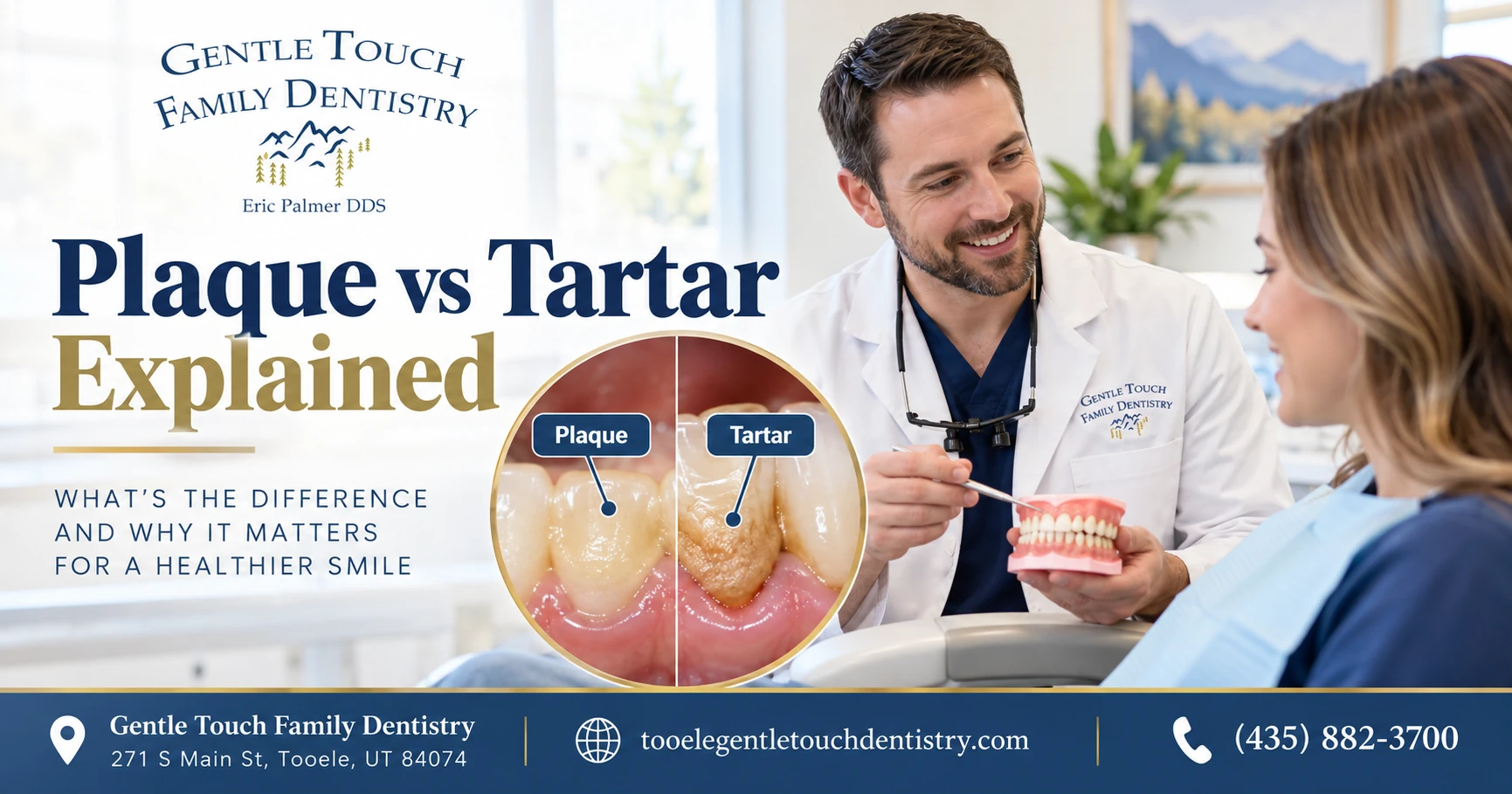
Plaque and tartar are closely related, but they are not the same thing.
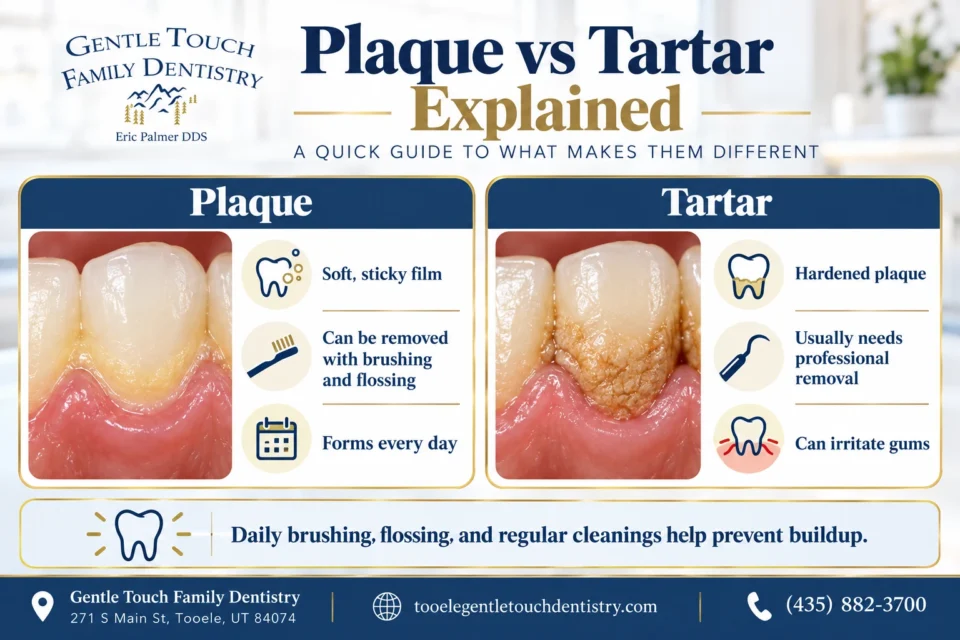
Plaque is a soft, sticky film of bacteria that continually forms on your teeth and can usually be removed with good brushing and interdental cleaning. Tartar, also called calculus, is plaque that has hardened after absorbing minerals from saliva. Once tartar forms, normal brushing and flossing cannot remove it.
That difference matters because plaque control is largely part of your everyday home routine, while tartar generally requires professional removal.
Understanding the difference can also make it easier to know why daily brushing, cleaning between your teeth, and regular dental visits all play different roles in protecting your teeth and gums.
Plaque vs Tartar: What Is the Difference?
The simplest way to compare plaque and tartar is by looking at their texture, formation, and how they are removed.
| Plaque | Tartar |
| Soft, sticky bacterial film | Hardened or mineralized plaque |
| Forms continually on teeth | Develops when plaque remains long enough to harden |
| May be difficult to see | May feel hard or rough |
| Can usually be removed with brushing and interdental cleaning | Cannot be removed with normal brushing or flossing |
| Can contribute to cavities and gum inflammation | Can make teeth more difficult to keep clean and contribute to gum problems |
| Managed largely through daily home care | Requires professional removal |
NIDCR explains that plaque is a sticky bacterial film that forms on teeth. If it is not removed, it can harden into tartar, also called calculus.
Tartar is therefore not an entirely different substance that appears on its own. It begins as plaque.
How Does Dental Plaque Form?
Dental plaque forms naturally throughout the day.
Bacteria normally live in the mouth. These bacteria combine with material from saliva and food to create a sticky biofilm on tooth surfaces.
Plaque commonly collects:
- Along the gumline
- Between neighboring teeth
- In grooves on the chewing surfaces
- Around fillings and crowns
- Around braces or other dental appliances
- In areas that are difficult to brush thoroughly
Plaque bacteria can also use sugars from foods and drinks to produce acids. Repeated acid exposure can damage tooth enamel and contribute to cavities. The ADA notes that plaque contains cavity-causing bacteria that produce acids after exposure to sugars.
Because plaque continuously reforms, the goal is not to permanently eliminate it. The goal is to disrupt and remove it regularly before it contributes to dental problems or hardens.
How Does Plaque Turn Into Tartar?
Plaque becomes tartar when it remains on the teeth long enough to absorb minerals from saliva and harden.
NIDCR describes calculus as plaque that has absorbed calcium from saliva and become hardened.
Once this mineralization occurs, the buildup becomes firmly attached to the tooth.
Tartar may form:
- Along the gumline
- Between teeth
- Behind the lower front teeth
- Around areas where plaque is frequently missed
- Below the gumline in patients with periodontal disease
How quickly tartar forms can vary among individuals.
The important distinction is that soft plaque can still be disrupted at home, while hardened tartar generally cannot.
This is why daily plaque removal is so important. Once plaque calcifies, home brushing and flossing are no longer enough to remove that deposit.
Can You Remove Plaque at Home?
Yes. Effective home care can remove much of the plaque that forms on your teeth every day.
Brush twice daily
Brush your teeth twice a day with fluoride toothpaste.
Take time to reach:
- Outer tooth surfaces
- Inner surfaces
- Chewing surfaces
- The gumline
Plaque often accumulates where the tooth meets the gum, so brushing only the centers of the teeth can leave important areas untouched.
Clean between your teeth
A toothbrush cannot fully clean tight spaces between teeth.
The ADA recommends daily interdental cleaning because floss and other interdental cleaners can remove plaque from surfaces a toothbrush cannot effectively reach.
Depending on your needs, options may include:
- Dental floss
- Interdental brushes
- Floss holders
- Water flossers
The best option is one that you can use correctly and consistently.
Pay attention to problem areas
Crowns, bridges, braces, implants, crowded teeth, and other dental work may create areas where plaque accumulates more easily.
Your dentist or hygienist can show you techniques or tools that may make those areas easier to clean.
Can You Remove Tartar at Home?
No. Once plaque has hardened into tartar, regular brushing and flossing cannot remove it effectively.
Both NIDCR and the ADA state that hardened calculus requires professional removal.
You may sometimes be able to feel tartar with your tongue as a rough or hard area that does not disappear after brushing.
Avoid trying to scrape tartar away yourself with metal tools, dental picks, or other sharp objects. Improper scraping can damage enamel or injure the gums.
Daily brushing and interdental cleaning are still useful because they help remove fresh plaque and reduce additional buildup, but existing tartar should be addressed professionally.
How Do Plaque and Tartar Affect Gum Health?
Both can contribute to gum inflammation.
Plaque that remains around the gumline can irritate the gums and contribute to gingivitis, the earliest stage of gum disease.
Signs may include:
- Red gums
- Swollen gums
- Bleeding during brushing or flossing
- Tenderness
NIDCR explains that plaque-related gingivitis can often be reversed with effective daily brushing and flossing.
Tartar can make the problem harder to control because its hardened surface remains attached to the teeth and creates an area where additional plaque can accumulate.
Plaque and tartar below the gumline can also contribute to inflammation of the tissues supporting the teeth. NIDCR notes that plaque and tartar contain bacteria that can trigger inflammation and contribute to gum disease.
If you notice persistent bleeding, swelling, gum recession, or other gum changes, schedule a dental evaluation rather than simply brushing harder.
Can Plaque and Tartar Cause Cavities?
Plaque is directly involved in the tooth decay process.
Bacteria within plaque use sugars from food and drinks and produce acids. Repeated acid exposure can weaken tooth enamel and eventually contribute to cavity formation.
Tartar itself is hardened plaque rather than a cavity, but tartar can make effective cleaning more difficult.
Its rough surface may allow additional bacterial plaque to accumulate around the area. This can make it harder to keep the tooth and gumline clean.
Daily plaque control therefore helps protect against two problems at once:
- Tooth decay
- Gum inflammation
Brushing with fluoride toothpaste and cleaning between the teeth are both important parts of reducing those risks.
How Do Professional Teeth Cleanings Remove Tartar?
Professional dental cleanings use instruments designed to remove hardened deposits that cannot be brushed away.
A dentist or dental hygienist can identify tartar buildup and remove it from the tooth surface.
The ADA describes dental hygienists as professionals who remove both plaque and calculus from teeth.
For routine buildup above the gumline, this may be part of a standard professional cleaning.
If significant buildup is present below the gums as part of periodontal disease, a different type of treatment may be recommended. For example, scaling and root planing involves removing plaque and tartar from deeper areas around affected teeth.
Not everyone with tartar needs periodontal treatment. The type of cleaning depends on the condition of your gums and how much buildup is present.
For more information about routine professional care, visit our teeth cleaning page.
How Can You Prevent Plaque and Tartar Buildup?
You cannot stop plaque from forming completely, but you can reduce how much remains on your teeth long enough to harden.
Helpful habits include:
- Brush twice daily with fluoride toothpaste
- Clean between your teeth every day
- Pay close attention to the gumline
- Clean around crowns, bridges, braces, and appliances carefully
- Limit frequent sugary snacks and drinks
- Drink water regularly
- Avoid tobacco
- Keep regular dental visits
The ADA notes that cleaning between teeth helps remove plaque before it has an opportunity to harden into tartar.
Consistency matters.
Missing plaque occasionally does not mean tartar will immediately cover your teeth, but areas that are routinely missed are more likely to develop hardened buildup over time.
Preventive dental visits can also help identify places where you may consistently miss plaque at home.
Learn more about maintaining healthy teeth and gums on our preventive dentistry page.
When Should You Schedule a Dental Cleaning?
Professional cleanings are useful even when your teeth feel clean.
Consider scheduling a dental visit if:
- You can feel hard or rough deposits on your teeth
- Your gums bleed regularly
- Your gums appear swollen or red
- You notice persistent bad breath
- You have visible buildup near the gumline
- It has been longer than your dentist recommended since your last cleaning
There is no single ideal cleaning schedule that applies to every person. The appropriate interval may depend on your oral health, history of cavities or gum disease, tartar buildup, and other risk factors.
If you already have signs of gum disease, a routine cleaning may not be the same as the periodontal treatment needed to manage deeper buildup.
For patients in Tooele, Gentle Touch Family Dentistry can evaluate your teeth and gums and recommend a cleaning schedule based on your individual needs.
Learn more about local care on our Tooele dentist page.
FAQs
Is plaque the same thing as tartar?
No.
Plaque is a soft bacterial biofilm that forms naturally on your teeth. Tartar is plaque that has absorbed minerals from saliva and hardened onto the tooth surface.
Which is worse, plaque or tartar?
Both can contribute to oral health problems, but they require different management.
Plaque can generally be removed at home before it causes problems or hardens. Tartar cannot be removed with ordinary brushing and flossing and may make it more difficult to keep the surrounding tooth and gumline clean.
Can brushing remove tartar?
No.
Brushing can remove soft plaque, but once that plaque has hardened into calculus, professional dental instruments are generally required to remove it.
How can I tell if I have plaque or tartar?
Plaque is usually soft and may feel slightly sticky or fuzzy. It may also be difficult to see.
Tartar tends to feel hard or rough and remains attached to the tooth even after thorough brushing. A dentist or hygienist can determine exactly what type of buildup is present.
Does flossing remove plaque?
Yes. Flossing and other interdental cleaners help remove plaque from between teeth, where a toothbrush cannot clean as effectively.
Daily interdental cleaning can also help prevent plaque in those spaces from hardening into tartar.
Does tartar mean I have gum disease?
Not automatically.
Tartar buildup increases the difficulty of keeping tooth and gum surfaces clean and can contribute to gum inflammation, but gum disease is diagnosed based on the condition of the gums and supporting tissues rather than tartar alone.
A dental examination can determine whether you simply need routine cleaning or whether periodontal treatment is appropriate.