Table of Contents
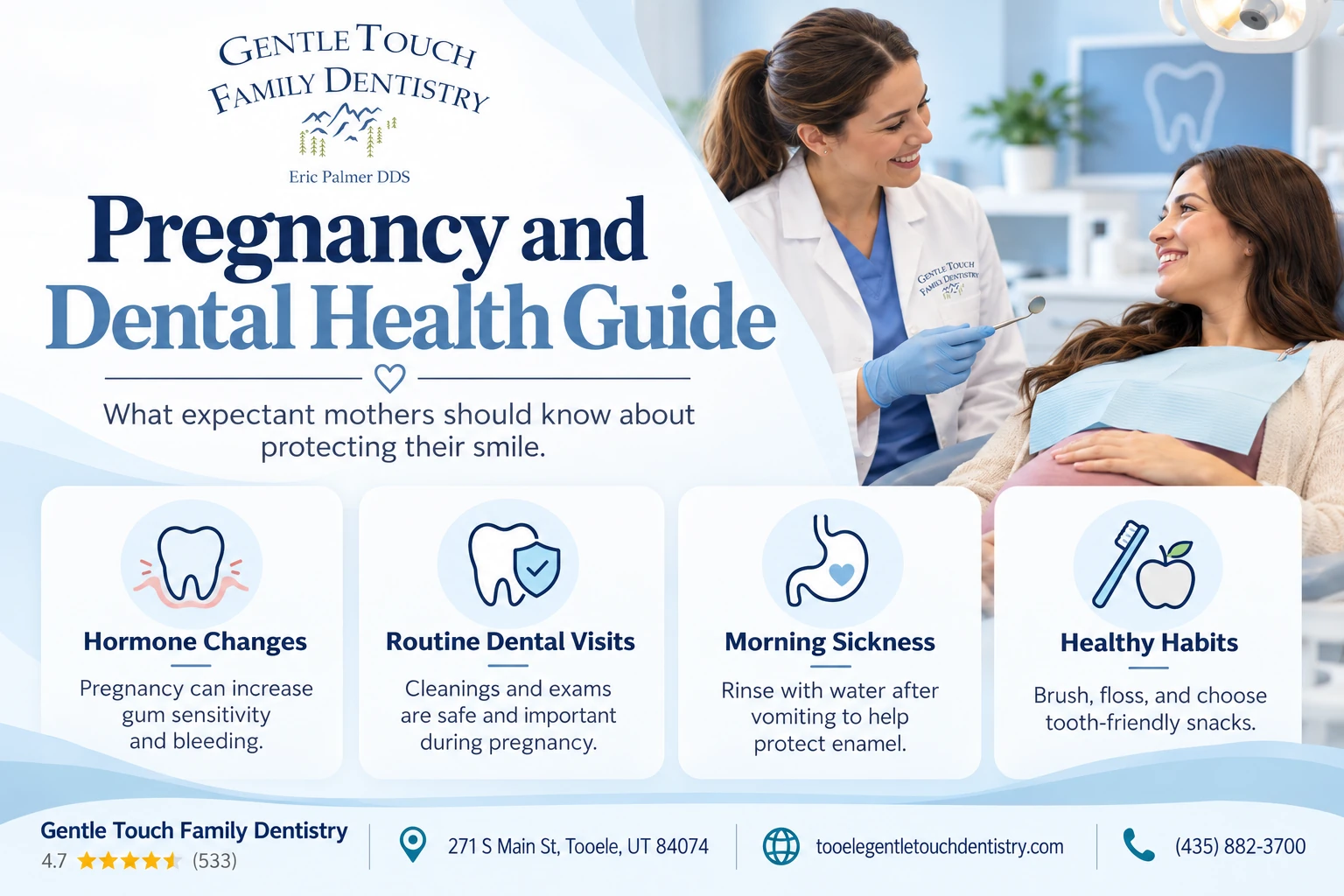
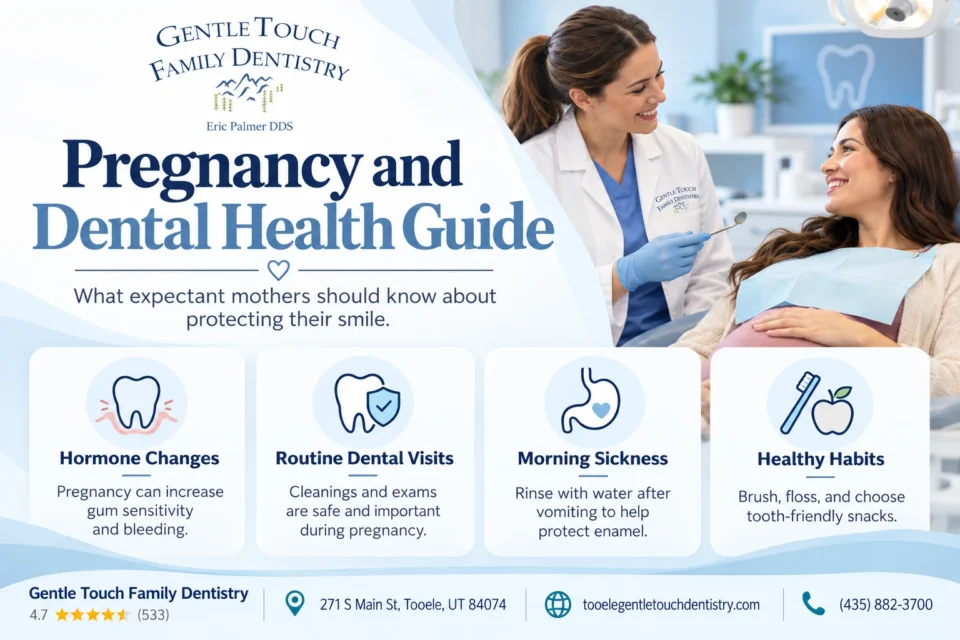
Pregnancy can bring noticeable changes to your mouth as well as the rest of your body. Hormonal changes may make your gums more sensitive to plaque, while nausea, vomiting, changes in eating habits, and dry mouth can increase the risk of other dental problems.
The good news is that routine dental care remains important during pregnancy. The American Dental Association states that preventive, diagnostic, and restorative dental care is safe throughout pregnancy, and necessary dental problems generally should not be ignored simply because you are expecting.
Let your dentist know that you are pregnant, how far along you are, and whether your pregnancy has any special medical considerations. Your dental team can coordinate with your obstetric or healthcare provider when needed.
How Does Pregnancy Affect Dental Health?
Pregnancy itself does not guarantee that you will develop dental problems, but it can change some of the conditions inside your mouth.
Common pregnancy-related oral health concerns include:
- Gums that become more sensitive to plaque
- Gingivitis
- Increased cavity risk in some patients
- Enamel erosion related to frequent vomiting
- Dry mouth
- Changes in eating or snacking habits
- Benign gum growths that occasionally develop during pregnancy
The ADA notes that gingivitis and dental caries may be more common during pregnancy. Changes in diet, increased snacking, vomiting, dry mouth, and difficulty maintaining oral hygiene during nausea can all contribute.
These changes make consistent preventive care particularly useful during pregnancy.
Why Are Gums More Sensitive During Pregnancy?
Pregnancy hormones can change how the gums respond to plaque bacteria.
As a result, gums that were previously healthy may become:
- Red
- Swollen
- Tender
- More likely to bleed during brushing or flossing
The CDC reports that pregnant patients are more likely to develop gingivitis, and hormonal changes can make gum inflammation worse.
This does not mean you should stop brushing or flossing when your gums bleed.
Plaque removal remains important. Use a soft-bristled toothbrush, brush gently but thoroughly, and continue cleaning between your teeth.
Persistent bleeding, significant swelling, gum recession, or pain should be evaluated rather than automatically dismissed as a normal part of pregnancy.
Is Dental Care Safe During Pregnancy?
Yes. Routine and necessary dental care is generally considered safe during pregnancy.
The ADA states that preventive, diagnostic, restorative, and surgical dental treatment used to maintain health or eliminate disease can be performed throughout pregnancy. Emergency procedures such as fillings, root canals, or extractions should not necessarily be delayed when they are needed, because postponing care can allow a dental problem to become more complicated.
Dental care during pregnancy may include:
- Dental examinations
- Professional cleanings
- Treatment for cavities
- Periodontal care
- Necessary restorative treatment
- Emergency dental treatment
- Local anesthesia when appropriate
Treatment decisions still depend on the individual patient.
Tell your dentist:
- That you are pregnant
- How many weeks pregnant you are
- Whether your pregnancy is considered high risk
- Which medications or supplements you take
- Whether your medical provider has given you any special instructions
If questions arise about medications, pain control, or a complicated pregnancy, your dentist may coordinate with your obstetrician or healthcare provider.
Are Dental X-Rays Safe During Pregnancy?
Dental X-rays are considered safe during pregnancy when they are clinically necessary.
The ADA’s current pregnancy guidance states that dental radiographs can be taken during pregnancy, while its updated 2026 imaging recommendations emphasize that X-rays should be ordered only when they are necessary for diagnosis or treatment.
Modern dental imaging uses very low radiation doses and focuses the beam on the area being examined.
Current ADA guidance has also changed regarding routine protective shielding. Its pregnancy guidance states that abdominal and thyroid shielding is no longer routinely recommended for dental radiographs, reflecting updated radiation-protection recommendations. Dental practices still follow applicable regulations and their imaging safety protocols.
If you are pregnant, tell the dental team before imaging. Your dentist can explain why an X-ray is recommended and how it relates to your care.
Can Pregnancy Increase the Risk of Cavities?
It can.
Pregnancy may create several conditions that make cavities more likely for some patients.
These can include:
- More frequent snacking
- Increased carbohydrate or sugar exposure
- Morning sickness
- More acid in the mouth from vomiting
- Dry mouth
- Difficulty brushing because of nausea or a sensitive gag reflex
The ADA specifically identifies dietary changes, vomiting, dry mouth, and oral hygiene difficulties related to nausea as factors that may contribute to increased cavity risk during pregnancy.
Pregnancy does not automatically cause cavities.
Daily plaque control, fluoride toothpaste, appropriate dietary habits, and regular dental care still play major roles in determining cavity risk.
What Is Pregnancy Gingivitis?
Pregnancy gingivitis is gum inflammation that occurs or becomes more noticeable during pregnancy.
Hormonal changes can make gum tissue react more strongly to plaque bacteria. The result may be redness, swelling, tenderness, or bleeding even when the amount of plaque seems relatively small.
Common signs include:
- Bleeding while brushing or flossing
- Puffy gums
- Red gums
- Tenderness along the gumline
Gingivitis is the earliest stage of gum disease and does not automatically mean you have more advanced periodontal disease.
It is still worth addressing early.
Consistent brushing, interdental cleaning, and professional dental care can help control plaque and gum inflammation during pregnancy.
How Can Morning Sickness Affect Teeth?
Frequent vomiting can expose your teeth to stomach acid.
Stomach acid can temporarily soften the enamel surface. Repeated exposure may contribute to dental erosion over time.
One important mistake to avoid is brushing immediately after vomiting.
The ADA advises patients experiencing morning sickness to avoid immediate brushing after vomiting because the enamel has just been exposed to strong acid. Instead, its pregnancy guidance recommends rinsing first; one option it lists is a diluted solution made with one cup of water and one teaspoon of baking soda to help neutralize the acid.
After vomiting:
- Rinse your mouth rather than brushing immediately.
- Allow the acidic environment in your mouth to settle.
- Resume normal brushing with fluoride toothpaste afterward.
- Tell your dentist if vomiting is frequent or your teeth become sensitive.
If morning sickness is severe or persistent, medical management should be discussed with your prenatal healthcare provider.
What Dental Care Myths Should Pregnant Patients Ignore?
Pregnancy has generated several persistent dental myths.
Myth: You should avoid the dentist until after delivery
Routine dental care does not need to stop during pregnancy.
The ADA and CDC both encourage pregnant patients to continue seeking routine and necessary dental care.
Myth: Dental X-rays are never allowed during pregnancy
Dental X-rays can be taken when they are clinically necessary. Current guidance focuses on taking images only when needed and minimizing unnecessary radiation exposure.
Myth: Bleeding gums are normal, so they can be ignored
Gum changes are common during pregnancy, but persistent bleeding can indicate gingivitis or another gum problem.
Common does not mean unimportant.
Myth: Pregnancy inevitably ruins your teeth
Pregnancy does not directly cause teeth to fall out or guarantee cavities. Hormonal changes and pregnancy-related habits may increase certain risks, but good preventive care can help protect your oral health.
Myth: Any dental treatment should wait until the baby is born
Necessary dental treatment can generally be performed during pregnancy, and delaying treatment may allow infection, decay, or pain to become more difficult to manage.
How Can You Protect Your Teeth and Gums During Pregnancy?
A consistent home routine can go a long way.
Brush twice a day
Use fluoride toothpaste and a soft-bristled toothbrush.
The ADA recommends brushing twice daily for two minutes with fluoride toothpaste during pregnancy.
Clean between your teeth daily
Floss or use another appropriate interdental cleaner to remove plaque from areas a toothbrush cannot reach.
Keep up with dental appointments
Pregnancy is not a reason to automatically skip regular preventive dental visits.
Manage frequent snacking thoughtfully
Pregnancy can change appetite and eating patterns. Frequent sugary snacks and drinks create more opportunities for cavity-causing bacteria to produce acid.
Protect your enamel after vomiting
Rinse first rather than immediately scrubbing acid-softened enamel.
Drink water
Staying hydrated helps support normal saliva flow and can rinse food debris from the mouth.
Tell your dentist about your pregnancy
Keep your dentist informed about your pregnancy, medical history, medications, and any recommendations from your prenatal care provider.
For more information about protecting your teeth and gums, visit our preventive dentistry page.
When Should You Schedule a Dental Checkup?
You do not need to wait until after pregnancy to see a dentist.
If you are due for routine care, pregnancy can be a good time to make sure your teeth and gums remain healthy.
Schedule a dental visit if you notice:
- Persistent bleeding gums
- Gum swelling or tenderness
- Tooth pain
- Sensitivity
- A broken tooth or filling
- Signs of a possible cavity
- Gum recession
- A lump or unusual growth on the gums
- Persistent bad breath
- Changes in your bite
- Enamel sensitivity related to frequent vomiting
The CDC encourages routine dental care during pregnancy, and the ADA supports regular dental examinations and treatment when needed throughout pregnancy.
A checkup also gives you an opportunity to ask questions about brushing, fluoride, morning sickness, gum changes, and other pregnancy-related dental concerns.
Learn more about routine visits on our dental checkup page.
For expectant mothers in Tooele, Gentle Touch Family Dentistry can evaluate your teeth and gums and help you maintain your oral health throughout pregnancy.
Visit our Tooele dentist page to learn more about care available locally.
FAQs
Is it safe to go to the dentist while pregnant?
Yes. Preventive, diagnostic, restorative, and necessary emergency dental care is considered safe during pregnancy.
Tell your dentist that you are pregnant and share any relevant medical information so your care can be planned appropriately.
Can I have my teeth cleaned while pregnant?
Yes. Routine professional dental care, including cleanings, can generally continue during pregnancy.
Regular plaque control can be particularly helpful because hormonal changes may make the gums more prone to inflammation.
Is it normal for gums to bleed during pregnancy?
Bleeding gums are common because pregnancy can make gum tissue more sensitive to plaque.
However, frequent bleeding should still be evaluated, especially when accompanied by significant swelling, tenderness, gum recession, or persistent bad breath.
Are dental X-rays safe while pregnant?
Yes, when clinically necessary.
Current ADA guidance considers dental radiographs safe during pregnancy and emphasizes using imaging only when it is needed for diagnosis or treatment.
Does pregnancy cause cavities?
Pregnancy does not directly guarantee cavities, but some pregnancy-related changes can increase risk.
More frequent snacking, vomiting, dry mouth, and difficulty maintaining oral hygiene during nausea can all contribute.
What should I do after vomiting from morning sickness?
Rinse your mouth rather than immediately brushing.
The ADA recommends avoiding brushing right after vomiting because stomach acid temporarily affects the enamel surface. Its pregnancy guidance lists rinsing with a diluted baking-soda-and-water solution as one option for neutralizing acid.